Midnight Over the Danube
The air in Mihail Kogălniceanu smells of damp earth and late-summer corn. For generations, nights here along the Romanian border carried only the sounds of crickets, the low hum of barge engines drifting down the Danube, and the occasional bark of a stray dog.
Then came the whine. Also making news recently: How India Dismantled Pakistan's Transboundary Flood Allegations.
It is a low, persistent rattle, like a lawnmower suspended in midair, grinding through the dark at three hundred feet. Everyone along the river knows the sound now. They know what follows: a sudden flash on the Ukrainian bank, a delayed shockwave that rattles teacups in quiet kitchens, and the sickening uncertainty of where the next piece of falling metal might land.
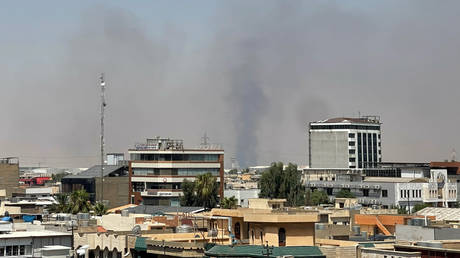
For months, the residents of these sleepy border towns watched the horizon turn orange. They saw the fires across the water in Izmail and Reni. Sometimes, stray debris skidded across the border into their own sunflower fields. The response was always diplomatic statements, stern warnings, and radar tracking. More insights on this are explored by Al Jazeera.
Until a single, cold night changed the equation.
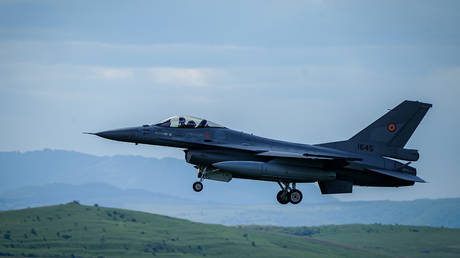
An alarm cut through the stillness of a military airbase. Pilots sprinted across tarmac slick with dew. Engines roared, scorching the night with twin jets of blue flame as two F-16 fighter jets ripped into the black sky.
For the first time since Russian forces launched their full-scale invasion of Ukraine, a NATO country didn't just watch a stray drone drift into its airspace. It locked on. It fired.
The Sound of Thunder in the Dark
Imagine standing on a quiet balcony, holding a warm mug of tea, watching the calm darkness of the river. Suddenly, the sky tears open.
The heat-seeking missile leaves the jet's wing with a sharp, pneumatic hissed crack, trailing a streak of blinding white light across the clouds. Seconds later, a bright fireball erupts in the distance, illuminating the jagged contours of the riverbank before fading into smoke.
Silence returns, but the world feels entirely different.
This was not a drill. It was a decisive line drawn in the sky.
For over two years, the war in Ukraine has bled across borders in quiet, insidious ways. Drones—cheap, mass-produced machines made of fiberglass and simple electronics—have routinely strayed past international boundaries. They test defenses. They push boundaries. They force civilians in neighboring countries to live with the constant, creeping anxiety that a stray piece of scrap metal could crash through their roof while they sleep.
In Romania, those incursions were no longer theoretical. They were happening in real-time, night after night.
To understand the weight of that missile strike, consider what it takes to scramble a supersonic fighter against a target moving at the speed of a mop-head scooter. It is an absurd contrast. A multi-million-dollar machine, built for high-altitude dogfights, hunting a flying engine wrapped in cheap composite materials.
Yet, the message carried by that single missile had very little to do with the target itself.
The Hidden Cost of Living on the Edge
Wars are often measured in maps, troop movements, and geopolitical alliances. But the true weight of a conflict is borne in small, quiet moments by people who never asked to be part of the story.
Consider a mother living in a village like Plauru, just a stone's throw from the Ukrainian port facilities. Her phone buzzes at 2:00 AM with a government alert: Seek shelter immediately. Objects may fall from the air. Where do you shelter in a home built by your grandfather? Under a wooden dinner table? In a root cellar filled with canned tomatoes and potatoes?
You lie in the dark, listening to the drone's rattle get louder, holding your child’s hand, praying the pilot overhead sees what is happening before the metal meets your roof.
The psychological toll of living on the fringe of someone else’s war is heavy. It erodes the sense of safety that home is supposed to provide. Every unexpected loud noise becomes a potential threat. Every shadow in the night sky demands an answer.
When the Romanian F-16 intercepted that drone, it wasn't just executing an intercept protocol. It was answering a fundamental demand for protection from people who have lived in the shadow of war for far too long.
A Single Spark on a Dry Plain
The decision to open fire carries massive, terrifying stakes.
In a region where nuclear-armed powers operate miles apart, a single miscalculation can cascade into something catastrophic. Radar screens show dots and vectors; they do not show intent. A radar operator must determine in seconds whether an incoming blip is an errant reconnaissance tool, a lost strike drone, or something far worse.
Pulling the trigger requires absolute certainty. Refusing to pull it risks allowing an attack on sovereign soil.
That night, the pilots had clarity. The authorization came down, the system locked, and the threat was neutralized before it could hit the ground.
The wreckage plunged into an uninhabited area, leaving behind a crater, charred wires, and a cloud of settling dust.
Morning broke over the Danube much like any other morning. The mist rose from the river, turning pink in the dawn light. Barges continued their slow journeys down the channel. Roosters crowed across the quiet yards of border villages.
Yet, as the sun climbed higher, casting long shadows across the fields where search teams combed through the dirt, everyone understood that the silence was different now. The boundary line in the sky was no longer just a drawn border on a map. It had been defended in fire and iron, leaving an indelible mark on the landscape below.