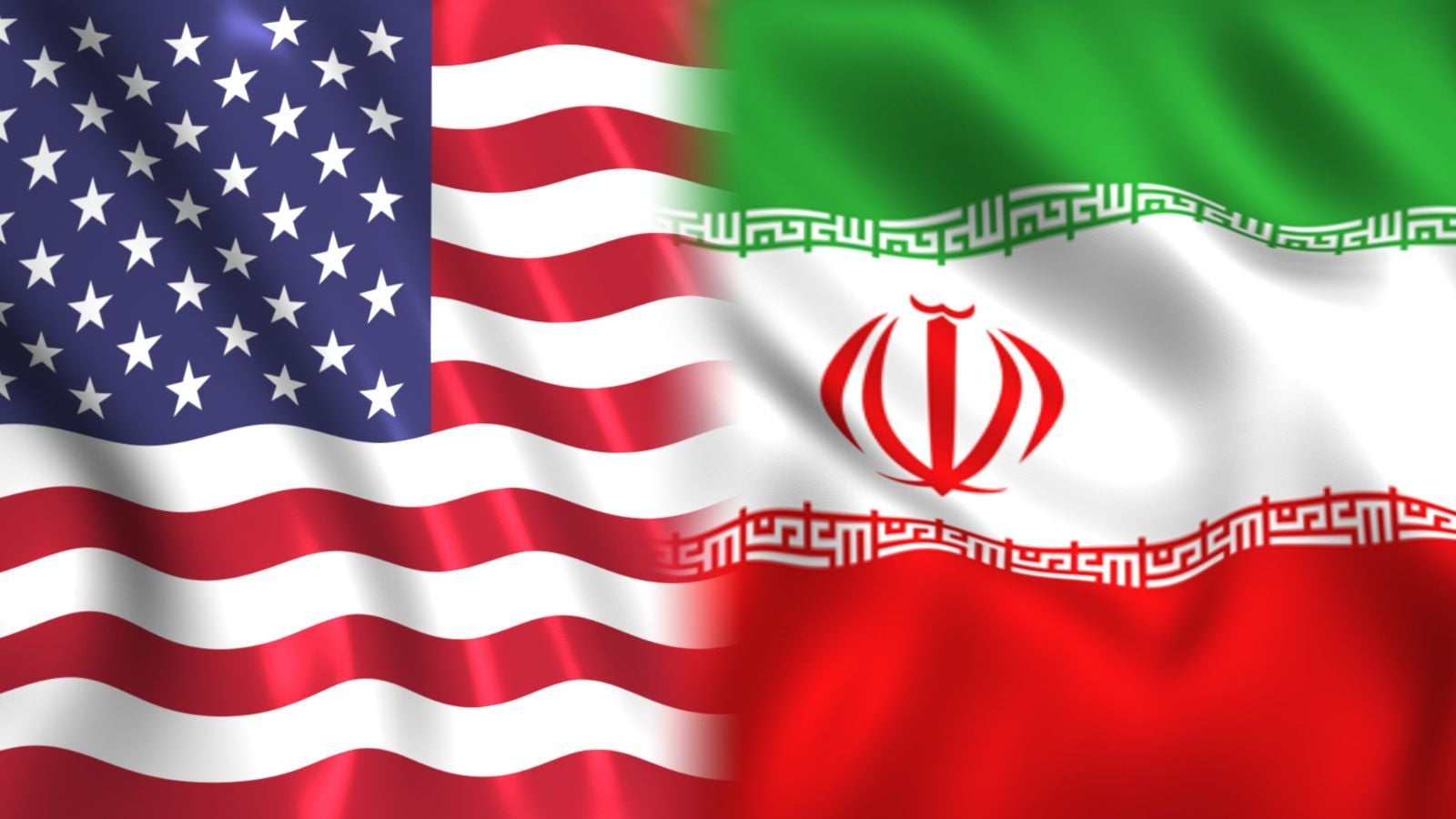
Ink dries quickly on parchment. Blood takes much longer to dry, staining stone and soil in shades of dark, rust-bitten brown that rain refuses to wash away.
Sixty days ago, the world breathed a collective, fragile sigh. Headlines blared the news of an accord, a diplomatic breakthrough, a negotiated bridge across an abyss of decades-long hatred. People poured into cafes in Tehran to argue about currency rates and future travel. Diplomats in western capitals posed for photographs beneath chandeliers, their lapel pins gleaming, holding pens that had just signed away the immediate threat of total war. For a brief, intoxicating moment, the calendar seemed to reset.
Then the sun rose on day sixty-one.
The war did not stop for the ink. It did not care about the joint communiqués or the solemn handshakes broadcast to millions of glowing screens. Out on the jagged ridgelines where the wind howls straight off the high plateau, the mortar tubes remained warm. The drones hummed through the night sky, indifferent to international law, guided only by the cold logic of microchips and coordinates.
To understand why diplomacy failed so quickly, you have to look past the mahogany tables of Geneva or Vienna. You have to step into the dust.
Imagine a man named Reza. He is a hypothetical shopkeeper in a neighborhood where the walls still bear the ghost-marks of older conflicts, patched brick meeting fresh concrete. Reza does not read foreign policy journals. He does not analyze the subtle shifts in uranium enrichment percentages or the complex mechanics of sanctions relief. He measures peace by a much simpler metric: whether the price of bread doubles tomorrow and whether his son has to dodge conscription notices.
When the deal was announced sixty days ago, Reza bought a box of sweets. He shared them with his neighbors. He whispered that maybe, just maybe, the crushing weight of isolation was about to lift. He imagined a shop stocked with imported goods, a bank account that didn't lose its purchasing power overnight, a future where his children could plan past next week.
Today, Reza’s shop shelves are emptier than they were two months ago. The currency has slid further down the precipice. The diplomatic breakthrough, reduced to practical reality on the ground, turned out to be a hollow shell—a rhetorical ceasefire that masked the hardening of positions rather than their softening.
Why does this happen with such tragic predictability?
Because international agreements are often written by people who live in abstract rooms, while wars are fought by people who live in concrete ruins.
When two adversaries sign a treaty, they are rarely signing an end to hostility. They are signing a ceasefire in the narrative war, a temporary pause to catch their breath, rearm, and position their pieces for the next phase. The recent US-Iran arrangement was framed as a grand reconciliation, but beneath the surface diplomatic spin, the structural architecture of the conflict remained completely untouched.
It is like trying to plug a gushing dam with a strip of wet tissue paper.
Consider the mechanics of mistrust. When decades of proxy skirmishes, cyber attacks, economic strangulation, and rhetorical brinkmanship have defined a relationship, a single sixty-day window cannot erase the muscle memory of violence. Trust is not a switch you flip. It is an orchard you plant, requiring years of careful watering before it yields fruit. When governments expect a multi-generational feud to evaporate because of an expedited ministerial meeting, they are not practicing diplomacy; they are practicing theater.
And theater has no ammunition.
On the ground, the war grinds on through sheer, stubborn momentum. Military supply chains, once set in motion, possess a terrifying kinetic autonomy. Generals on both sides have operational plans that do not dissolve simply because politicians sign a press release. Squadrons are scrambled because radar picks up an anomaly. Artillery batteries fire preemptively because silence is interpreted not as peace, but as an ambush in preparation.
The tragedy of the past sixty days is not that the deal failed spectacularly in a single afternoon of explosions. The tragedy is more insidious. It is the slow, grinding erosion of hope.
Every day that passes without tangible improvement on the street drains a little more life out of the civilian population. Cynicism rushes into the vacuum left by dashed expectations. The shopkeeper stops buying sweets. The young people stop believing that reform is possible from within or without. They retreat into survival mode, where the only certainty is the next crisis.
This is the invisible cost of performative peace. When leaders promise a dawn that never breaks, the subsequent darkness feels twice as black.
History is littered with these phantom accords. They are monuments to human optimism crashing against the immovable wall of realpolitik. We want simple narratives. We want the villain to sign a paper, the hero to smile, and the credits to roll while a soothing song plays in the background. Real life refuses to cooperate with Hollywood scripts.
The war grinds on because the incentives for conflict remain more lucrative than the risks of peace. For hardliners on all sides, an external enemy is not a problem to be solved; it is an asset to be managed, a permanent justification for control, budgets, and ideological purity. When peace threatens to break out, it disrupts the internal power dynamics of entire regimes. A common enemy is the easiest glue to hold a fractured society together. Take away the enemy, and you have to answer uncomfortable questions about governance, corruption, and the daily misery of ordinary lives.
So the machinery of war restarts itself. A drone takes flight. A statement is issued condemning the other side's bad faith. A new round of retaliatory measures is drawn up in secret committees.
Sixty days ago, the world was told that a corner had been turned.
Today, the road looks remarkably familiar, stretching out into the desert haze, winding past the burned-out husks of armored vehicles and the quiet, grieving homes of people who only ever wanted to sleep through the night without the sound of the sky tearing open.
The ink is dry. The blood is fresh. And the horizon remains as cold and empty as it was before the politicians ever picked up their pens.
:max_bytes(150000):strip_icc()/lake-mead-173940030-5c25228846e0fb00014e8584.jpg)
