Cold.
It is the first thing you notice on the Canadian prairies in the dead of winter, a dry, biting stillness that freezes the moisture in your nostrils before you can even finish a breath. In Wainwright, Alberta, a town of roughly six thousand people perched two hundred kilometers southeast of Edmonton, winter is not merely a season. It is a shared endurance test. It shapes the way neighbors nod to one another at the grocery store, the way trucks idle outside the local coffee shop, and the unspoken pact that when something goes wrong out on the frozen stretches of Highway 14, nobody stands alone.
On a bitter night in February 2008, something went terribly wrong.
A fire tore through a residential building in the heart of this close-knit garrison community. Before the smoke had even cleared from the rafters, the devastating truth began to ripple down the quiet, snow-packed streets. Four Canadian soldiers, stationed at the nearby Canadian Forces Base Wainwright, were caught inside. Two young men—Private David Greenslade and Private Garrett Chidley, both in their early twenties—never made it out. Two others were pulled from the wreckage with severe, life-altering injuries.
To read a standard news report from that week is to encounter a tidy arrangement of dates, ranks, and official statements. A fire occurred. Casualties were recorded. A memorial was held. Those dry, clinical facts tell you what happened, yet they miss the entire truth of what it actually felt like when tragedy befell this small town.
The Architecture of a Garrison Town
To understand the weight of that morning, you have to understand the unique ecosystem of a military town. In large metropolitan cities, the armed forces are often an abstraction—a parade on Remembrance Day, a headline from overseas, a uniform glimpsed briefly in an airport terminal.
In Wainwright, the base is the pulse.
Imagine a small town as a single, tightly woven wool blanket. In most places, the threads are civilian families whose roots go back three generations. In a garrison town, half of those threads are young men and women in their late teens and early twenties who arrived from Nova Scotia, Ontario, or British Columbia just six months ago. They rent basement suites from local retirees. They bag groceries alongside high school kids. They shovel the driveways of elderly neighbors before heading out to the training grounds at dawn. When you pull one thread violently out of that blanket, the entire fabric puckers and strains.
I have spent years reporting from communities struck by sudden, violent loss, and there is a specific, suffocating silence that descends on a town like Wainwright when tragedy strikes at home. Soldiers train for the calculated risks of deployment. At the time of the Wainwright fire, the Canadian military was deeply entrenched in the conflict in Afghanistan; every family on that base lived with a low, constant hum of anxiety about what might happen half a world away. Nobody prepares for the danger to strike in a quiet residential bedroom on a Tuesday night in Alberta.
The Invisible Stakes of the Morning After
Consider what happens next in the hours following a fatal blaze.
For the first responders—many of them volunteer firefighters who likely knew the victims by their first names, who had perhaps shared a beer with them at the legion or watched them play hockey at the Peace Memorial Multiplex—the trauma is immediate and visceral. You do not simply wash the smell of smoke out of your turnout gear and go back to your day job at the hardware store. You carry the weight of the doors you could not open fast enough.
Then there are the survivors. When a fire injures soldiers on home soil, the public spotlight tends to focus on the fatalities, leaving the wounded to navigate a long, invisible war of their own. Severe smoke inhalation and third-degree burns do not heal on a neat news cycle. They require months of agonizing skin grafts, respiratory therapy, and psychological counseling. A young soldier who enlisted to serve his country suddenly finds himself fighting to hold a coffee cup or take a deep breath without pain.
Let us step into a hypothetical scenario to grasp what that looks like behind closed doors, clearly labeling it as an illustration of the documented realities burn survivors face. Picture a twenty-one-year-old infantryman waking up in an Edmonton hospital burn unit three days after the fire. The adrenaline is gone. The room smells of antiseptic and ointment. His fellow soldiers are back in Wainwright preparing for field exercises, moving forward with the relentless rhythm of military life, while his entire future has been rewritten in sixty seconds of heat and thick black smoke. That quiet, isolated struggle is the hidden cost of a headline.
Why Small Towns Grieve Differently
How does a community absorb a blow like this without fracturing?
In big cities, grief is compartmentalized. A tragedy happens in one neighborhood while, three miles away, traffic moves smoothly and restaurants hum with Friday night chatter. In Wainwright, there is no three-mile buffer. The town council, the base leadership, the local high school, and the grocery store clerks all occupy the exact same square mileage.
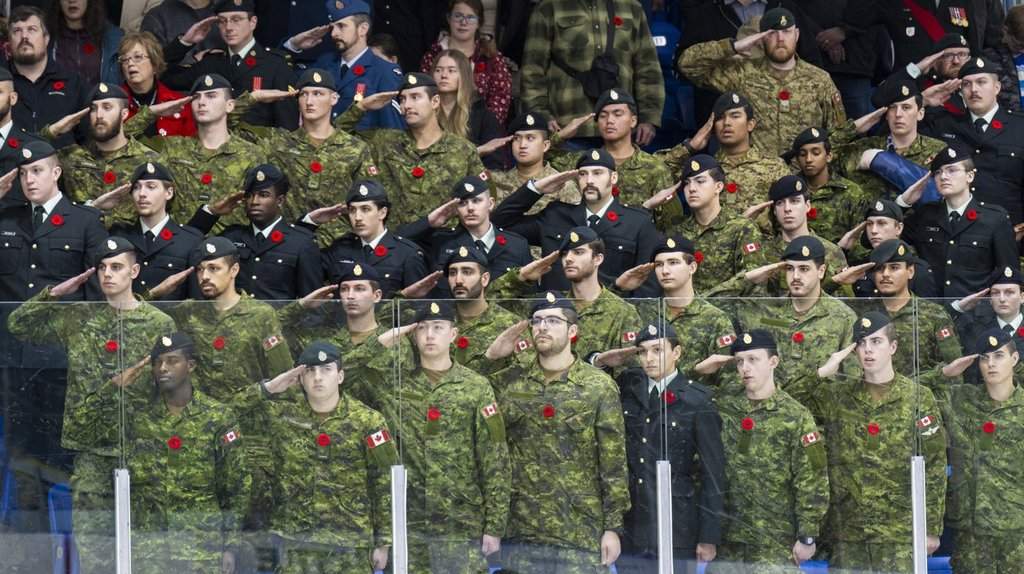
When Wainwright gathered to honor the soldiers killed and injured in the fire, the ceremony was not a distant civic duty. It was a family funeral. Flags across the town dropped to half-mast, snapping sharply in the prairie wind. Neighbors dropped off casseroles at the base family resource center, not because a committee told them to, but because feeding people is the oldest human instinct when words fail.
Historically, sociologists have observed that small, geographically isolated communities exhibit a distinct pattern of collective resilience. Because everyone shares the same physical environment and social infrastructure, individual grief rapidly converts into communal solidarity. The town does not just mourn the loss; it absorbs the duty of remembrance as a permanent civic responsibility.
Yet, if we are being completely honest, solidarity does not erase the confusion or the anger. When young people die in a house fire, there is no clear enemy to blame, no geopolitical purpose to point to for comfort. It feels senseless. Even seasoned community leaders admit privately in those moments that they do not have the answers—only the stubborn determination to show up for the grieving parents arriving from out of province, to stand beside them in the cold, and to ensure their sons are never reduced to a footnote.
The Echoes That Remain
Years pass. New recruits arrive at CFB Wainwright, their boots fresh and their faces young, walking the same streets and renting the same apartments. To a stranger driving through on the highway, the town looks much as it always has—grain elevators rising against a massive sky, pickups parked nose-in along Main Street, the steady hum of an agricultural and military hub.
Memory works differently here.
Local residents still point out the corner where the fire trucks staged that night. Memorials stand quietly, etched with names that mean everything to the mothers and fathers who still call the town on the anniversary of the blaze. The injured survivors carry their scars into middle age, living proof of both the fragility of human life and the stubborn grit required to rebuild it.
Tragedy did not merely pass through Wainwright; it altered the town's emotional architecture, proving that the true measure of a community is never found in how it celebrates its victories, but in how tightly it holds its own when the smoke finally clears.
In the quiet prairie dark, long after the cameras have packed up and the headlines have moved on to the next crisis, a porch light still stays on down the block, waiting for someone to come home.