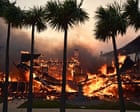
Federal lawmakers are moving to ban online wagering on natural disasters, specifically targeting markets allowing users to bet on the timing, severity, and location of wildfires. This legislative push follows mounting security warnings that speculative financial incentives attached to active emergencies could inadvertently encourage malicious arson.
When you attach a cash payout to a catastrophe, the psychology of risk shifts. Money alters behavior. Expanding on this topic, you can also read: Diplomatic Architecture of India Ethiopia Relations A Structural Analysis of the Devesh Uttam Appointment.
For years, the online prediction market ecosystem has expanded past traditional elections and corporate earnings into fringe anomalies. Ordinary users can now buy and sell contracts on everything from micro-weather patterns to sudden civil disturbances. But extending this speculative machinery to active wildfire events introduces a dangerous variable.
Consider the fundamental mechanics of prediction markets. Traders profit by acquiring contracts early based on privileged information or precise forecasting, then selling before outcomes resolve. In a standard market, an observer watches a system unfold. In an environmental disaster, an observer possesses the potential to alter the physical variables. Analysts at TIME have shared their thoughts on this trend.
Lawmakers point to a fundamental conflict of interest. A person holding a heavy financial position on a specific containment date or burn radius has a direct economic incentive to see that outcome materialize.
Wildfire arson is already notoriously difficult to deter and investigate. Law enforcement agencies face immense pressure during high-wind, low-humidity red-flag conditions. Adding decentralized financial platforms into the mix creates a shadow economy where bad actors can anonymously hedge against destruction or actively cause it for profit.
Financial regulators have historically struggled to keep pace with algorithmic betting products. These platforms operate across disparate jurisdictions, often leveraging decentralized protocols or offshore entities that evade standard compliance checks. When a wager settles instantly via cryptocurrency or digital wallets, tracing the ultimate beneficiary becomes an exhaustive forensic challenge for overworked state and federal investigators.
Insurance markets have long priced wildfire risk into property premiums, but that process relies on actuarial data and long-term climate trends. It is an entirely different beast from short-term retail speculation where an individual can throw fifty dollars at a regional forecast and hope for a sudden wind shift.
The structural integrity of emergency management depends on public trust and accurate reporting. When rumors swirl on social media platforms about disaster zones, first responders already spend valuable hours dispelling falsehoods. Introducing monetary stakes tied to emergency outcomes invites bad actors to manipulate local data, spread false evacuation alerts, or interfere with ground crews to swing short-term market odds.
The Mechanics of Speculative Hazard
To understand why wildfire betting represents a distinct threat, one must look at how modern wagering architecture functions. Traditional sportsbooks require identity verification and strict geographic compliance. Prediction markets, however, often operate on open-source smart contracts or loosely regulated exchanges.
An individual sitting hundreds of miles away from a parched canyon in California or a dry timberland in Oregon can execute a trade within seconds. They have no skin in the game regarding community safety, structural loss, or human displacement. Their only metric is the closing price of their contract.
This detachment creates moral hazard on an unprecedented scale.
Economists define moral hazard as a situation where an economic actor increases their exposure to risk because they bear no costs for doing so, or because they stand to gain from the damage. In insurance, deductibles and policy limits combat this behavior. In speculative betting, the reverse occurs. The speculator benefits directly from the chaos.
Security analysts who monitor underground forums note that bad actors constantly search for novel arbitrage opportunities. When financial instruments are tied to real-world physical events, the barrier between digital speculation and physical sabotage shrinks.
It does not require a vast criminal conspiracy to trigger a disaster. A single disaffected actor motivated by a sizable payout on a niche prediction market can cause millions of dollars in environmental devastation.
The ease of setting up anonymous digital wallets makes tracking the source of suspicious trades nearly impossible for local fire marshals. Arson investigators are trained to look for accelerants, burn patterns, and ignition devices. They are rarely equipped to analyze blockchain transactions, liquidity pools, or cross-border derivatives trading.
Regulatory Blind Spots and Legislative Pushback
The legislative response led by various US senators highlights a glaring regulatory gap. Current federal statute draws clear lines around sports betting, commodities manipulation, and insider trading in traditional securities. Yet, disaster-based contracts occupy a murky legal grey area.
Commodities regulators oversee futures contracts linked to agricultural yields and energy supplies because those markets impact the broader economy. However, betting on whether a specific forest will burn by Friday afternoon does not fit the standard definition of a commercial hedge. It is pure speculation wrapped in an emergency shroud.
Proponents of prediction markets often argue that these platforms aggregate collective wisdom and provide accurate probabilities for complex events. They point to election forecasting and economic indicators as proof of concept. But applying that logic to active emergencies ignores the fundamental difference between prediction and causation.
You can predict an election without altering the outcome by casting a ballot. You cannot safely speculate on an active wildfire when the instrument itself rewards destruction.
Critics of the proposed ban argue that prohibiting these markets infringes upon free expression and financial innovation. They contend that smart contracts are simply tools for expressing beliefs about the future.
That argument collapses under the weight of public safety realities. Free speech does not protect shouting fire in a crowded theater, and financial freedom should not protect wagering on the destruction of inhabited communities.
State attorneys general are also reviewing existing consumer protection statutes to determine if disaster betting constitutes illegal gambling or public nuisance. Several states have already issued cease-and-desist letters to smaller prediction platforms offering localized hazard contracts.
The Broader Threat Matrix
The intersection of online wagering and environmental catastrophe extends beyond wildfires. Analysts warn that if wildfire betting remains unchecked, platforms will inevitably expand into other high-stakes emergencies.
Hurricanes, flash floods, and active industrial accidents present similar speculative vulnerabilities. Imagine a market where users bet on the exact minute a chemical plant's containment wall fails, or the precise storm category at landfall. The financial incentive structure remains identical.
Emergency services are already stretched thin by climate change, aging infrastructure, and budget constraints. Forcing first responders to account for the possibility of calculated sabotage driven by digital speculators adds an intolerable burden to an already broken system.
Federal agencies must coordinate immediately to classify disaster-related derivatives as illegal financial instruments. State licensing boards need to penalize any platform that lists emergency outcomes on its board.
The allure of quick profit should never outweigh the safety of communities living in fire-prone regions. When financial markets begin profiting from smoke and ash, the boundary between commerce and criminality has vanished entirely