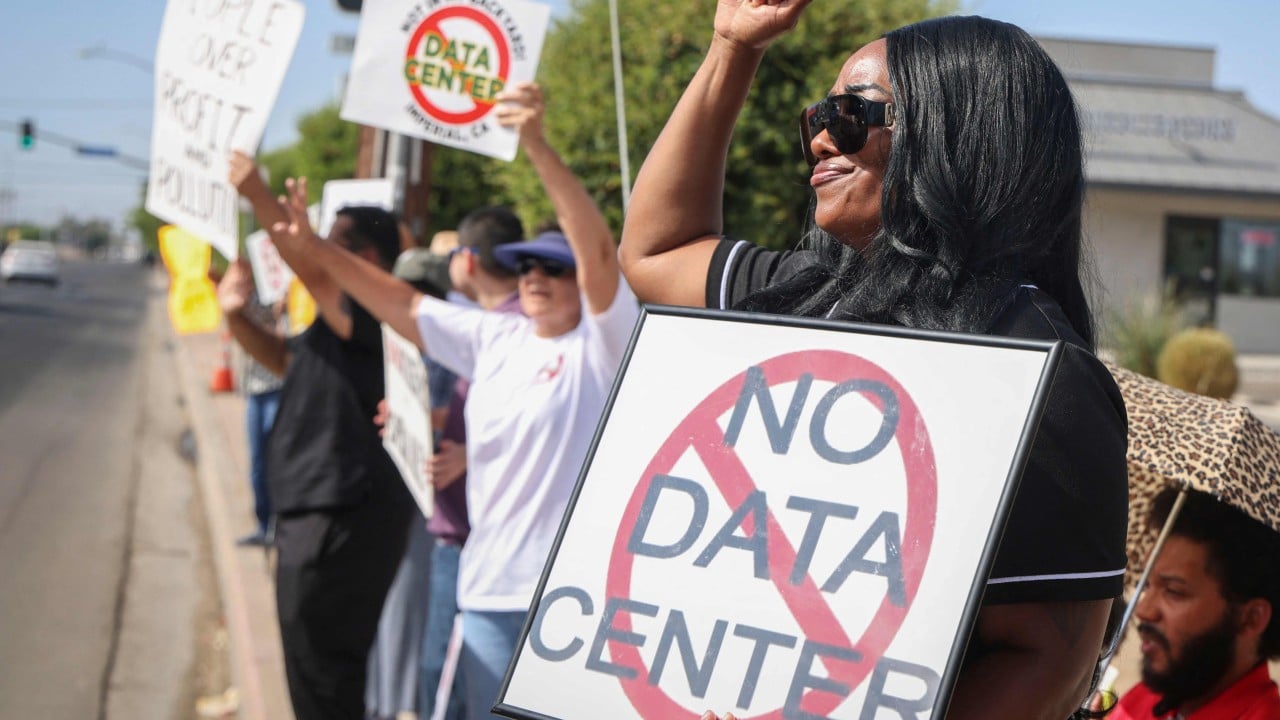
Tech executives spent billions pitching artificial intelligence as an unstoppable economic engine, yet they completely misread the room when local voters stepped into the booth on November 3, 2026. Across 10 US states, communities put data center development directly on the ballot, and the results weren't even close.
Voters rejected or restricted new facilities in nearly every single jurisdiction where the issue appeared. Out of 41 local ballot initiatives tracked across California, Florida, Illinois, Kansas, Maine, Nevada, New Jersey, North Dakota, Ohio, and Wisconsin, communities voted to keep data centers out in at least 33 municipalities. Only one town—Harwood, North Dakota—bucked the trend by rejecting a measure that would have added extra review hurdles for industrial developments. Read more on a related issue: this related article.
That landslide didn't happen by accident. If you're involved in infrastructure planning, local government, or energy policy, understanding why these votes flipped against Big Tech matters right now—because the playbook developers used over the last five years just stopped working.
Why Voters Turned Against Data Center Development
For years, developers walked into town halls with the same pitch. They promised massive capital investments, temporary construction jobs, and an expanded property tax base. City councils usually signed off behind closed doors, often signing non-disclosure agreements before residents even knew a hyperscale campus was coming to town. More journalism by The Verge highlights similar perspectives on this issue.
Then the bills arrived.
Residents living near server farms quickly realized that a warehouse full of humming servers doesn't operate like a normal factory. Once built, a massive facility might employ only a few dozen permanent staffers while consuming as much electricity as a mid-sized city. Voters started connecting their rising monthly utility bills directly to the grid upgrades required to power AI clusters.
Water consumption became the second flashpoint. Cooling millions of square feet of high-density chips takes staggering amounts of water, particularly during hot summer months when agricultural and residential supplies are already stretched thin. In Kansas, where cheap land initially attracted developers, voters passed strict bans on "high-impact data centers"—defined in local measures as facilities drawing more than 100,000 gallons of water per day.
Noise and land use sealed the deal. Constant low-frequency hums from industrial cooling fans and diesel backup generators turned quiet rural and suburban neighborhoods into industrial zones overnight. An August 2026 survey published by Heatmap captured the mood well before Election Day, showing that 75 percent of Americans opposed data center development in their own communities. According to Associated Press polling, that opposition crossed party lines completely, with 88 percent of Democrats, 80 percent of independents, and 61 percent of Republicans saying they didn't want a facility built near them.
Breaking Down the November 3 Election Day Results
When local officials ignored neighborhood protests, residents bypassed city hall entirely and gathered signatures to put zoning changes and moratoriums straight onto the midterm ballot. Looking closely at the November 3 outcomes across those 10 states shows just how coordinated and decisive the pushback became.
Ohio Became Ground Zero
Nowhere was the fight fiercer than in Ohio. Cheap land, existing power infrastructure, and aggressive state-level tax incentives turned the state into a prime target for AI buildouts. Tech firms poured millions into Ohio politics to protect their investments, yet local voters systematically dismantled their plans.
In towns like Conneaut, Defiance, Oregon, and Sunbury, voters approved initiatives banning any data center with a peak electrical load exceeding 25 megawatts. Granville, Hubbard, Piqua, Upper Sandusky, and Urbana went further, passing outright prohibitions on data center construction within city limits. Meanwhile, Grove City residents passed a rule requiring direct voter approval for any development or expansion using at least 50 acres, 20 megawatts of peak power, or 50,000 gallons of water per day. Even in Perry, where developers weren't banned outright, voters mandated that hyperscale companies provide hard financial guarantees before receiving a dime in local tax incentives.
The Midwest and Plains Followed Suit
The resistance wasn't confined to Ohio. Across Illinois, voters shut down pro-development advisory questions in Will County's Joliet—where 79 percent voted against approving AI data centers—as well as four separate townships in Madison County. At the same time, Bloomington residents voted by a 78 percent margin to advise their city to impose a moratorium on large-scale projects, and Morgan County voters backed restrictions with 88 percent support.
In Kansas, towns like Americus, El Dorado, Emporia, and Ottawa passed sweeping bans targeting high-impact facilities and large battery storage systems. Wisconsin saw a targeted strike in Janesville, where residents voted to require public approval before the city can lease, sell, or greenlight development on the former GM/JATCO site for any project exceeding $450 million.
Coastal and Western States Held the Line
On the East Coast, Maine communities leaned heavily on temporary pauses to buy time for rewriting outdated zoning codes. Voters in Brownfield, Eliot, Freedom, Peru, Sabattus, Wells, and Wiscasset all passed 180-day or six-month moratoriums on data center permitting, while North Berwick banned facilities measuring 25,000 square feet or larger. In New Jersey, Downe Township voters rejected a referral supporting data centers.
Further south and west, the pattern held firm. Edgewater, Florida passed Amendment 4 with 74 percent of the vote to prohibit new data centers from being built or expanded. Alhambra, California approved Measure DB by 84 percent to ban them outright. And in Boulder City, Nevada, residents rejected a measure that would have opened up the Eldorado Valley Transfer Area for server farms.
The Outlier in Harwood and What Comes Next in December
Out of all 41 measures decided on November 3, Harwood, North Dakota stood alone as an industry win. Roughly 76 percent of voters there rejected an initiative that would have required additional city review before approving industrial developments, including data centers. Harwood's vote proves that communities aren't universally anti-growth when they feel industrial zoning already fits their local economy—or when a proposed restriction looks like unnecessary red tape on broader industrial activity.
Still, one win in North Dakota doesn't erase the broader trend, and the ballot box pressure isn't over yet. Voters in Arkansas and North Dakota are already scheduled to weigh in on separate initiatives regarding whether to finance or prohibit data centers on December 1 and December 15, respectively.
Where Developers and Local Officials Go Wrong
Having watched municipal zoning battles play out firsthand, I can tell you the biggest mistake tech companies make isn't technical—it's political arrogance. Developers treat local permitting like a box-checking exercise rather than a public negotiation.
Here are the three unforced errors that repeatedly sink projects before a single shovel hits the dirt:
- Hiding Behind Non-Disclosure Agreements. When a city council negotiates with a shell company for months in secret, residents immediately assume they're getting a raw deal. Transparency early in site selection costs nothing compared to fighting a grassroots ballot referendum six months later.
- Offering Generic Tax Revenue Instead of Ratepayer Protections. Telling a retiree on a fixed income that a data center will bring millions to the county budget falls flat if their electric bill jumps 15 percent. Until developers legally ring-fence their grid infrastructure costs so residential ratepayers don't subsidize transmission upgrades, local opposition will keep growing.
- Ignoring Water Stress Metrics. Proposing open-loop evaporative cooling in drought-prone or agriculturally dependent counties is political suicide. Closed-loop cooling systems cost more upfront, honestly, they're becoming the bare minimum requirement for getting past basic environmental scrutiny.
Federal Permitting vs Local Zoning Power
The fallout from November 3 has already spilled into statehouses and Congress. In statewide races, candidates who campaigned on reigning in unchecked AI infrastructure won major victories, including Democrat Gina Hinojosa in the Texas governor's race and Amy Acton in Ohio.
At the federal level, lawmakers have moved in the opposite direction. Congress advanced the Bipartisan American Affordability and Jobs Act—known as Baaja—aimed at streamlining federal permitting for energy infrastructure, transmission lines, and data centers by limiting environmental lawsuits to 150 days and forcing large facilities to cover their own grid costs.
Don't assume federal permitting reform overrides a local zoning ban, though. While Washington can speed up transmission lines and limit federal environmental challenges, land-use authority still sits squarely with municipalities and counties. A federal bill won't force Sunbury, Ohio or Alhambra, California to repeal a voter-approved charter amendment banning facilities over 25 megawatts. Instead, we're heading straight into years of preemption lawsuits as states and developers test how far local ballot initiatives can go.
Practical Steps for Communities and Project Planners
If you're a resident trying to protect your town's grid and water supply—or a planner trying to build infrastructure without sparking a revolt—stop relying on outdated assumptions about how zoning works.
For local residents and civic groups:
- Check your municipal zoning definitions immediately. Most town codes still classify data centers under generic "light industrial" or "warehousing" rules written decades ago. Pushing your planning commission to create a distinct zoning category with strict megawatt and water-usage caps is far easier before a developer buys an option on local farmland.
- Demand enforceable tariff structures. Ask your state public utility commission how large-load customers are billed. Insist on separate rate classes requiring data centers to pay 100 percent of dedicated substation and transmission buildouts upfront, even if the facility later scales back operations.
For developers and site selectors:
- Lead with closed-loop cooling and behind-the-meter power. Bring concrete engineering commitments to the very first public meeting—specifically zero-water-waste cooling designs and dedicated clean power purchase agreements that don't strain local peak capacity.
- Ditch the shell companies. Put your actual brand name on the application from day one, publish full environmental and acoustic impact models before the first zoning hearing, and negotiate binding community benefit agreements directly with neighborhood stakeholders rather than behind closed council doors.


