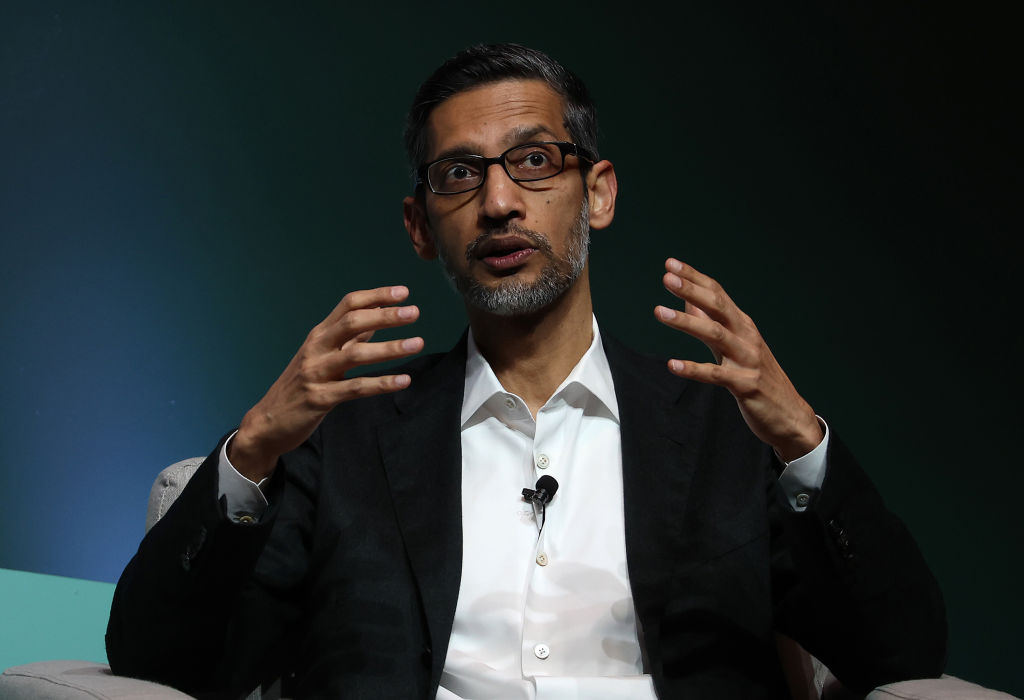
Hundreds of Stanford University graduates walked out of their commencement ceremony during a speech by Google CEO Sundar Pichai. This protest was not a random burst of student restlessness but a calculated rejection of the tech industry’s current direction. For decades, a straight line connected Stanford’s campus to the top echelons of Mountain View. That line just snapped. Students are openly revolting against the AI-driven, corporate surveillance model that now defines Big Tech, signaling a massive shift in where the brightest minds want to work.
The demonstration caught university administrators and corporate handlers off guard. As Pichai took the podium to deliver standard platitudes about innovation and changing the world, a coordinated block of students stood up, turned their backs, and silently exited the stadium.
They left behind rows of empty chairs. It was a visual execution of a growing sentiment on elite campuses: the old bargain between tech giants and top-tier talent is dead.
The Friction Behind the Photos
To understand why this happened, look at the widening gap between tech marketing and engineering reality. For twenty years, Google sold itself as a quasi-academic paradise where brilliant minds solved society's hardest problems while eating free gourmet food. That illusion has vanished under the weight of mass layoffs, activist investor demands, and a frantic, messy race to dominate artificial intelligence.
The students walking out are not anti-technology. They are deeply embedded in it. Many of them spent the last four years studying machine learning, ethics, and computer science under the shadow of Google’s nearby headquarters. They see exactly what the company is building, and they do not want their names attached to it.
The current AI gold rush requires an astronomical amount of energy and data. Tech companies are locking down exclusive content deals, scraping the public internet without consent, and scrambling to secure power grids to keep data centers humming. On campus, this looks less like progress and more like resource extraction. The idealism that once made a Google offer letter the ultimate prize has been replaced by skepticism.
The Pipeline is Clogging
Stanford practically built Silicon Valley. The university's faculty and alumni founded companies that generated trillions of dollars in market value, creating an ecosystem where graduation was merely a formality before collecting a signing bonus.
- The Historical Norm: Elite graduates competed fiercely for product management and research roles at Google, Apple, and Meta.
- The New Reality: Top talent is increasingly migrating to smaller open-source projects, defense tech startups, or boutique research firms where they have more control over their output.
This shift presents a severe talent risk for corporate tech. When the most ambitious engineers decide that working for a dominant platform is a reputational liability, the quality of that platform's innovation inevitably declines. Pichai’s speech was supposed to recruit the next generation of leadership; instead, it highlighted his company's isolation from them.
Defense Contracts and Carbon Footprints
The modern graduate’s grievances are concrete. Over the past few years, employees inside Google have protested Project Nimbus, a joint contract with Amazon to provide cloud services and machine learning tools to the Israeli government and military. The internal strife led to sit-ins, employee terminations, and a fractured corporate culture.
Stanford students watched these events unfold in real time. They saw a company that once operated under the motto "Don't be evil" punish its own workforce for asking ethical questions about military applications of their code.
[Traditional Silicon Valley Pipeline]
Stanford Capital/Talent ---> Big Tech Monopolies ---> Mass Market Ubiquity

[The New Fragmented Pipeline]
Stanford Talent ---> Open Source / Decentralized Research / Non-Tech Sectors
Furthermore, the environmental cost of the generative AI boom is becoming impossible to ignore. A single query to a modern large language model consumes significantly more power than a standard keyword search. As tech companies extend the lifespans of coal plants to keep up with the processing demands of their infrastructure, climate-conscious students are drawing a line in the sand. They refuse to spend their careers optimizing algorithms that accelerate environmental degradation.
The Illusion of the Corporate Playground
For a long time, tech monopolies suppressed dissent by offering astronomical compensation packages and campus perks that resembled luxury resorts. That strategy has hit a wall. Tech stocks are near all-time highs, yet the companies continue to cut thousands of jobs, proving to workers that loyalty is a one-way street.
The engineering students of today are highly pragmatic. They watched older siblings and mentors get laid off via automated emails after dedicating a decade to corporate tech. The psychological safety that once justified working on addictive algorithms or data-harvesting tools is gone. If the stability is gone, the ethical compromises are no longer worth making.
Typical Software Engineer Career Choice (2016 vs 2026):

2016:
[Big Tech Monopoly] 90% Preference (High pay, high prestige, perks)
[Startup/Open Source] 10% Preference (High risk, lower initial pay)

2026:
[Big Tech Monopoly] 45% Preference (High pay, low job security, ethical baggage)
[Independent/Alternative] 55% Preference (Autonomy, mission-aligned, variable pay)
This structural shift forces a rewrite of the industry's playbook. For years, the narrative was that elite tech companies were the only places where an engineer could achieve massive scale. Today, open-source frameworks allow a handful of developers to build models that rival the capabilities of systems built by corporate behemoths. The monopoly on infrastructure has cracked, and with it, the monopoly on talent.
The Tyranny of the Quarterly Report
Every major decision at companies like Google is now filtered through Wall Street’s obsession with immediate AI monetization. This environment stifles true innovation. Instead of exploring fundamental breakthroughs, engineers are tasked with cramming half-baked features into mature products to boost stock prices before the next earnings call.
This environment is toxic to young researchers who want to do meaningful work. They see their field being commoditized and rushed to market, resulting in products that hallucinate information, degrade search quality, and erode public trust in information systems. The walkout at the commencement address was a public declaration that the next generation of builders refuses to be treated as cogs in a hyper-financialized machine.
Where the Talent Goes Next
If the brightest minds are turning away from traditional tech giants, the money will inevitably follow them. A fragmentation of talent is underway. We are seeing a surge of interest in decentralized protocols, localized data models, and hardware engineering that operates outside the control of the massive cloud providers.
This is not a temporary phase of student activism that will blow over by the next recruitment cycle. The sentiment is structural. The university ecosystem is actively decoupling from the corporate entities that once funded its labs and hired its graduates.
Executives can no longer rely on their brand name alone to attract top-tier minds. The prestige has shifted from helping a trillion-dollar company increase its ad revenue to building independent systems that challenge that company's dominance. The empty seats in the Stanford stadium showed that the most valuable asset in tech—human intelligence—is walking out the door.