The air in Rome during early summer carries a heavy, suffocating heat. Inside the government offices off the Piazza Colonna, the air conditioning hums a low, desperate note against the midday sun. It is a room where decisions are usually measured in decades, weighed down by the sheer mass of European history. But on this afternoon, the conversation centers on something invisible, infinitely small, and moving at the speed of light.
Microchips. Specifically, the artificial intelligence architecture that will soon dictate which nations write the global playbook and which nations merely read it. In other updates, read about: Inside the Humanoid Robot Sprint Phenomenon Nobody is Analyzing Honestly.
For months, the geopolitical whispers had a predictable cadence. When the United States launched its ambitious Pax Silica initiative—a grand coalition designed to ring-fence Western AI development, secure semiconductor supply chains, and establish a unified front against adversarial tech—everyone expected Europe to fall into line. Then came the political friction. A public, sharp rhetorical spat between Rome and the newly inaugurated administration in Washington sent shockwaves through diplomatic channels. Commentators predicted a freezing over of transatlantic tech cooperation. They argued that pride would stall progress.
They were wrong. The Next Web has provided coverage on this critical issue in great detail.
Italy quietly signed the accord anyway.
To understand why a proud sovereign nation would swallow a bitter pill of public disrespect to join an American-led tech alliance, you have to look past the political theater. You have to look at the silicon itself.
The Cold Anatomy of a Microchip
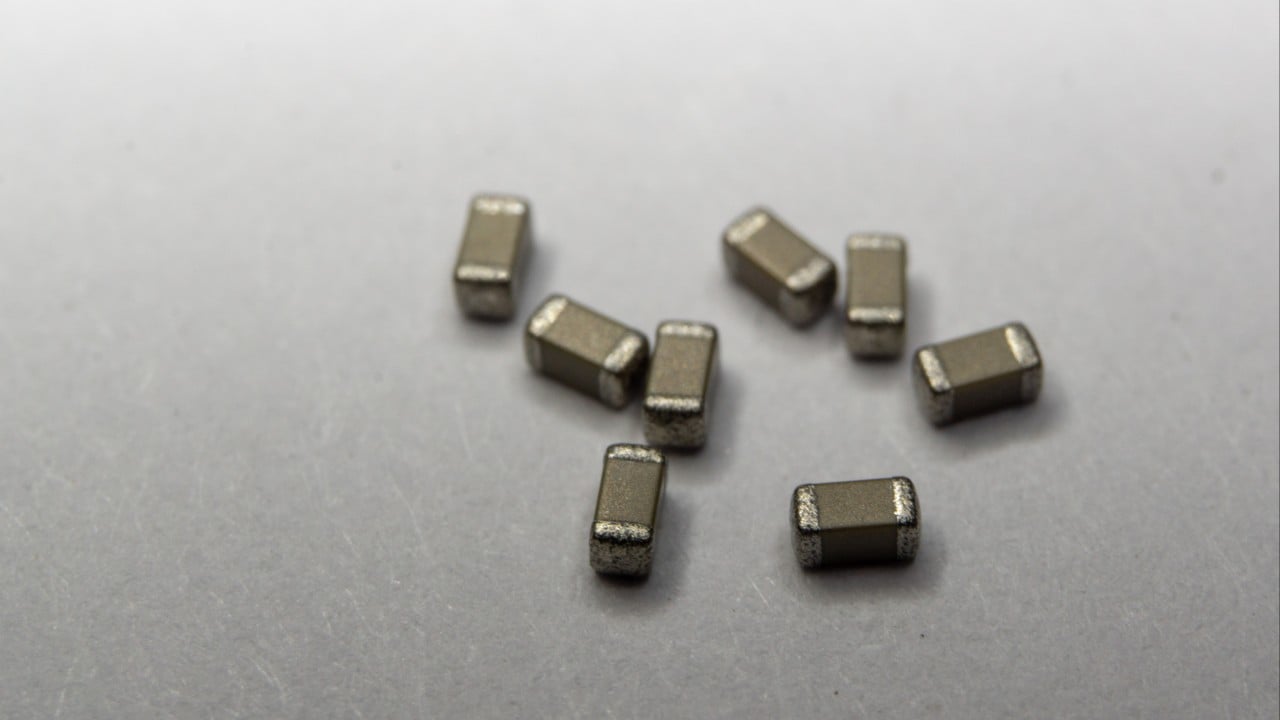
Imagine a piece of real estate smaller than a fingernail. On this microscopic canvas, engineers etch billions of microscopic pathways.
If a single pathway fails, the machine goes dark. If the supply of these chips dries up, a modern economy grinds to a halt. This is not about smartphones or faster video rendering. It is about the fundamental infrastructure of the next century. Autonomous logistics, national defense grids, predictive healthcare modeling, and energy distribution all rely on the same deeply concentrated, highly vulnerable supply chain.
Consider a hypothetical engineer named Matteo. He works at a robotics lab outside Milan. For years, Matteo’s team relied on generic components sourced globally. But over the last twenty-four months, the lead times for specialized AI processors ballooned from weeks to over a year. He watched projects stall, funding evaporate, and brilliant colleagues leave for standard software jobs in Silicon Valley.
Matteo’s frustration is not unique. It is the defining anxiety of the European tech sector.
Europe realized it was caught in a pincer movement. On one side sits the manufacturing powerhouse of East Asia, where a sudden geopolitical tremor could sever supply lines overnight. On the other side sits the raw, capitalized muscle of American tech giants, who own the foundational software models and the cloud infrastructure required to run them.
For Italy, joining Pax Silica was never about endorsing Washington's political rhetoric. It was a matter of sheer survival. Standing outside the room meant risking absolute obsolescence.
The Price of Admission
The tension between Rome and Washington was real, fueled by conflicting visions of trade tariffs and personal political rivalries. In the old arena of diplomacy, such a public falling out would require months of cooling-off periods, backchannel apologies, and watered-down communiqués.
But technology moves too fast for pride.
The Pax Silica initiative is structured as a club with strict rules of entry. Members gain preferential access to American semiconductor designs, collaborative research funding, and a shared early-warning system for supply chain disruptions. In return, they must align their export controls and restrict certain high-end tech transfers to geopolitical rivals.
It is an uneven bargain. It tilts the axis of influence heavily toward the United States, cementing Washington as the ultimate arbiter of global AI standards.
Yet, when Italian officials looked at the alternative, the choice dissolved. Staying out meant relying on an fragmented domestic strategy. Italy has pockets of immense engineering brilliance—companies specializing in industrial automation and precision components—but lacks the massive capital ecosystems required to build advanced fabrication plants from scratch.
By joining, Italy secured a seat at the table where the rules of the AI era are being written. They chose friction inside the tent over isolation outside it.
The Invisible Stakes for the Mediterranean
The impact of this decision ripples far beyond the tech corridors of Rome and Milan. It changes the economic geography of the entire Mediterranean basin.
For the past decade, Southern Europe has wrestled with a persistent brain drain, watching its youngest, brightest minds migrate north or west. The promise of Pax Silica integration offers a counter-narrative. With guaranteed access to state-of-the-art AI infrastructure, domestic Italian firms can suddenly compete on a level playing field. They can build localized, specialized AI applications for agriculture, cultural heritage preservation, and maritime logistics without needing to relocate their operations to California.
But the real problem lies elsewhere, buried beneath the optimism of international agreements.
Dependence is a habit that is hard to break. By anchoring its AI future to an American-led framework, Italy—and by extension, much of Europe—faces a subtle, creeping erosion of technological sovereignty. When you use another nation's foundational models and rely on their supply chains, your long-term roadmap is inevitably subject to their political whims. Today's ally can become tomorrow's protectionist competitor.
The Italian strategy, therefore, is one of quiet hedging. They are entering the alliance not as passive consumers, but as active, specialized contributors. They aim to make themselves indispensable within the Pax Silica ecosystem, carving out a niche in advanced materials science and automated manufacturing that Washington cannot easily replicate or replace.
The sun begins to set over Rome, casting long, amber shadows across the cobblestones of the Piazza Colonna. The diplomatic reporters have moved on to the next daily controversy, the loud headlines of the political spat already yellowing into yesterday's news.
But in the quiet labs and quiet ministries, the work is just beginning. The signatures on the treaty are dry. The data streams are already crossing the Atlantic, linking Mediterranean laboratories with American supercomputers. It is a fragile, complicated marriage born of necessity rather than affection, a calculus where survival outvotes pride every single time.
A nation's future no longer depends solely on its borders, its armies, or its historical prestige. It depends on lines of code executed on pieces of silicon so small they can slip between your fingers unnoticed.