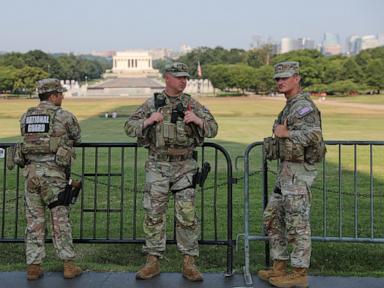
The indefinite deployment of the National Guard in Washington has transitioned from an emergency response into a permanent fixture of capital governance. What began as a temporary measure to secure federal installations has quietly solidified into an ongoing, executive-led garrison that will persist through the remainder of the presidential term. This is no longer about immediate threat mitigation. It is a fundamental realignment of how the federal government projects domestic power, using citizen-soldiers to bypass local civil authority and establish a highly visible ring of steel around the halls of power.
The consequences of this shift stretch far beyond the streets of the District of Columbia, threatening the foundational boundary between military force and domestic policing.
The Executive Playbook for an Indefinite Security Footprint
For decades, the presence of military uniform on the streets of Washington was a rare, shocking sight reserved for moments of extreme national trauma. The Bonus Army protests of 1932, the uprisings following the assassination of Martin Luther King Jr. in 1968, and the immediate aftermath of September 11 all saw troops deployed. Yet, in every historical instance, the troops withdrew as soon as the immediate crisis subsided.
Today, the crisis never ends. By maintaining a continuous rotation of National Guard units under federal funding, the administration has constructed a workaround to the traditional limits of domestic military policing.
To understand how this became permanent, one must look at the mechanics of federal deployment orders. Under normal circumstances, state governors command their respective National Guard units. The District of Columbia National Guard, however, is unique. It is the only National Guard element that reports directly to the President of the United States, with authority delegated to the Secretary of Defense. This structural anomaly allows the executive branch to bypass the friction of state-level consent. By utilizing Title 32 status, the federal government funds these operations while technically keeping the troops under a quasi-state status, avoiding the strict legal prohibitions of the Posse Comitatus Act.
Posse Comitatus forbids the use of the active-duty military for domestic law enforcement. Title 32, however, exists in a legal twilight zone. Guard members can perform security details, crowd control, and surveillance under the guise of supporting civil authorities, all while the federal treasury foots the bill. It is a legal loophole large enough to march an army through.
The Unique Vulnerability of Washington Districts
Local officials in Washington find themselves virtually powerless to contest the militarization of their own streets. Because the District lacks statehood, its local government operates under the constant shadow of congressional oversight and executive intervention. When the federal government decides that the Capitol, the National Mall, or surrounding federal enclaves require military protection, local police are simply told to coordinate.
The friction between local civil leadership and federal military commanders is growing. High-ranking sources within the metropolitan police department, speaking on the condition of anonymity, reveal that the continuous military presence has disrupted routine policing and severed community ties.
Civilian policing relies on consent and local familiarity. Military units, trained for combat and defensive operations, operate on a doctrine of force protection and area denial. When these two philosophies clash on the same block, civil liberties are inevitably the casualty. The militarized perimeter does not just keep threats out; it walls the government off from the public it is supposed to serve.
The Citizen Soldier Broken by Bureaucracy
The human cost of this endless deployment is borne by the Guard members themselves. These are not active-duty soldiers who signed up for continuous federal service. They are teachers, mechanics, nurses, and small-business owners who committed to serving their communities during localized disasters.
Instead, they find themselves stuck in an endless cycle of guard duty in the capital, pacing concrete barriers in the freezing winter and humid summer.
- Career Disruption: Prolonged deployments tear citizen-soldiers away from their civilian careers, forcing employers to find temporary replacements and stalling the professional advancement of the service members.
- Recruitment and Retention Collapse: Guard recruiters are already missing targets. The prospect of being pulled away from family for months to perform glorified security guard duties in Washington makes recruitment a near-impossible sell.
- Operational Degradation: When units are stationed in D.C., they are not training for their core military missions or preparing for natural disasters in their home states.
If a major hurricane strikes the Gulf Coast or a wildfire sweeps through the West, the states that rely on these Guard units will find their emergency response capabilities severely degraded because their personnel are tied down in Washington.
The Hidden Machinery of Federal Command
The administration defends the deployment as a necessary precaution against a vaguely defined, ever-present threat of civil unrest. However, internal defense documents suggest a different motivation. The deployment serves as a massive operational testbed for centralized executive command over domestic forces.
By normalizing the presence of troops in the capital, the executive branch conditions the public to accept a militarized domestic environment. The sight of body armor and automatic weapons at subway entrances and public parks becomes mundane. This normalization lowers the psychological threshold for deploying troops in other American cities during periods of political tension or social unrest.
The financial reality of this operation is shrouded in bureaucratic maneuvering. The cost of housing, feeding, and paying thousands of Guard members in one of the most expensive cities in the country runs into hundreds of millions of dollars per quarter. These funds are drawn from emergency defense appropriations, diverted from training budgets and equipment modernization programs. It is a massive expenditure with no clear exit criteria or definition of success.
The Permanent State of Emergency
The fundamental danger of a permanent military presence in Washington is that it relies on a feedback loop of fear. To justify the continuous expenditure and the strain on military personnel, the threat environment must always be portrayed as dire. The moment the administration admits the capital is safe, the legal and political justification for the deployment collapses.
Consequently, intelligence assessments are consistently interpreted through the most alarmist lens possible. Every protest, march, and political gathering is treated as a potential insurrection requiring military-grade security. This creates a self-fulfilling prophecy where the state must remain on a war footing to protect itself from its own citizens.
This dynamic damages the international prestige of the United States. A nation that must permanently guard its capital with military forces does not project strength; it projects profound internal instability. It signals to the world that the democratic process is so fragile that it can only survive under the protection of loaded rifles.
The current trajectory suggests that the barriers will not come down when this presidential term ends. The infrastructure of the deployment—the command structures, the funding channels, the legal justifications—is being institutionalized. Once a military footprint is established in Washington, bureaucracy dictates that it will fight to survive, inventing new missions and identifying new threats to ensure its own preservation.
The nation's capital was designed to be an open, accessible monument to self-governance. The longer the green uniforms of the National Guard remain a permanent fixture of its architecture, the more that design fades into history, replaced by the grim realities of an executive branch that relies on the sword to maintain its peace.


