Two in the morning. The house is a cavern of absolute stillness, the kind of heavy quiet that only settles over a neighborhood hours after the last television flickers out. Then, from the hallway ceiling, a single, piercing chirp slices through the dark.
Beep.
You lie there, eyes wide, staring at the ceiling fan blades rotating in slow motion. Thirty seconds pass. You pray it was a fluke, a stray electronic hiccup, a trick of your half-asleep mind.
Beep.
No luck. A smoke detector has decided that right now, at 2:04 AM on a Tuesday, its nine-volt heart is giving out. Or worse, it is one of those modern, hardwired units with a backup compartment that demands two fresh AAs before it will let you go back to sleep. You throw back the covers, your bare feet hitting the cold hardwood floor, and you stumble toward the kitchen. You know the exact drawer. Every home has one. It is the junk drawer—the graveyard of tangled charging cables, dried-out pens, takeout menus from restaurants that closed three years ago, and, somewhere beneath a roll of masking tape, a torn cardboard sleeve of alkaline batteries.
You pull it open. Your fingers sift through the clutter. You find a single AA rolling loose next to a rusty screwdriver. You find two more wrapped in a rubber band, though you have no idea if they are fresh or if your spouse tossed them back in there after swapping out the television remote last October. You need two matching, reliable cells. You have one mystery cylinder and a rising sense of dread as another sharp beep echoes from the hall.
Most people treat household power as an afterthought until the exact second it vanishes. We live in an era of sleek, rechargeable everything—phones that sip power from magnetic pucks, laptops that run for eighteen hours on a single charge, cars that plug into the garage wall like oversized toasters. Because our primary screens recharge overnight, we suffer from a collective blind spot. We forget how deeply our daily peace of mind still relies on humble, disposable cylinders of zinc and manganese dioxide.
The Invisible Infrastructure of a Quiet Home
Consider a typical Sunday morning in a fictional household—let us call them the Millers. Mark is trying to finish a cup of coffee while the rain drums against the living room window. His seven-year-old daughter, Leo, is sitting on the rug with a brand-new remote-control monster truck, the sole bright spot of a dreary weekend. Mark flips the switch on the controller. Nothing happens. He unscrews the tiny battery door on the underside of the plastic chassis, revealing four empty slots.
At the exact same moment, in the upstairs bathroom, his wife Sarah steps onto the digital scale, only to be greeted by a faint, flashing Lo on the liquid crystal display. Down the hall, the smart lock on the front door chimes a melancholy three-tone warning, signaling that its internal cells are hovering near ten percent.
None of these failures constitute a true emergency. Nobody is in danger. Yet, within the span of ten minutes, the friction of modern life has multiplied exponentially. Mark now has to put on his coat, find his keys, drive through the pouring rain to a big-box pharmacy, and pay twelve dollars for a blister pack of eight batteries—paying a massive retail markup solely because he is buying out of desperation rather than preparation.
This is the tax we pay for poor logistics. When you buy batteries four or eight at a time at a checkout counter, you are paying for thick plastic clamshell packaging, prime retail shelf space, and your own lack of foresight. The chemistry inside an eight-pack of standard alkaline batteries is identical to the chemistry inside a forty-eight-pack. The only difference is the price per cell and the state of your blood pressure when a device dies.
What Actually Happens Inside a Battery
To understand why buying in bulk makes sense—and why certain fears about bulk buying are completely unfounded—you have to look past the copper-and-black wrapper. An alkaline battery is not a tiny tank filled with liquid electricity that slowly leaks out onto your pantry shelf. Think of it instead like a compressed spring held back by a sturdy latch, or two chemical neighbors separated by a locked door.
Inside that steel casing sits a paste of zinc powder (the anode) and a mixture of manganese dioxide and carbon (the cathode), soaked in an alkaline electrolyte of potassium hydroxide. While the battery sits untouched in a box, a separator keeps those two reactive materials apart. No circuit is complete. Electrons cannot flow. The chemical potential remains locked in place, waiting.
Of course, no seal is entirely immortal. Over years, microscopic impurities and slow internal reactions gradually degrade the materials, a process engineers call self-discharge. Twenty or thirty years ago, leaving a pack of batteries in a closet for three years meant pulling out crusty, white-crusted duds that had lost half their punch. If you grew up in the nineties, your hesitation to buy forty-eight batteries at once is completely understandable. You remember the heartbreak of opening a drawer to find corroded metal and leaked acid ruining a favorite flashlight.
Modern manufacturing changed the rules. Today, standard alkaline cells from reputable manufacturers boast a shelf life of up to ten years. Thanks to purer raw materials, better internal seals, and the elimination of mercury and cadmium—which paradoxically forced engineers to design far cleaner, more stable internal chemistries—a fresh AA or AAA cell sitting in a cool, dry closet today will still hold nearly ninety percent of its original charge a decade from now.
Let that sink in. Ten years. If you buy a forty-eight-pack today, you are not racing against a ticking clock to use them up before next summer. You are simply buying a decade of domestic immunity.
The Math of Desperation Versus Preparation
Let us strip away the marketing and look at the cold arithmetic of household power. Walk into a convenience store or a supermarket aisle and look at the hanging pegs of standard AA batteries. A four-pack typically hovers around five to seven dollars. An eight-pack might run you nine or ten dollars. At those prices, you are paying well over a dollar for every single cylinder of power.
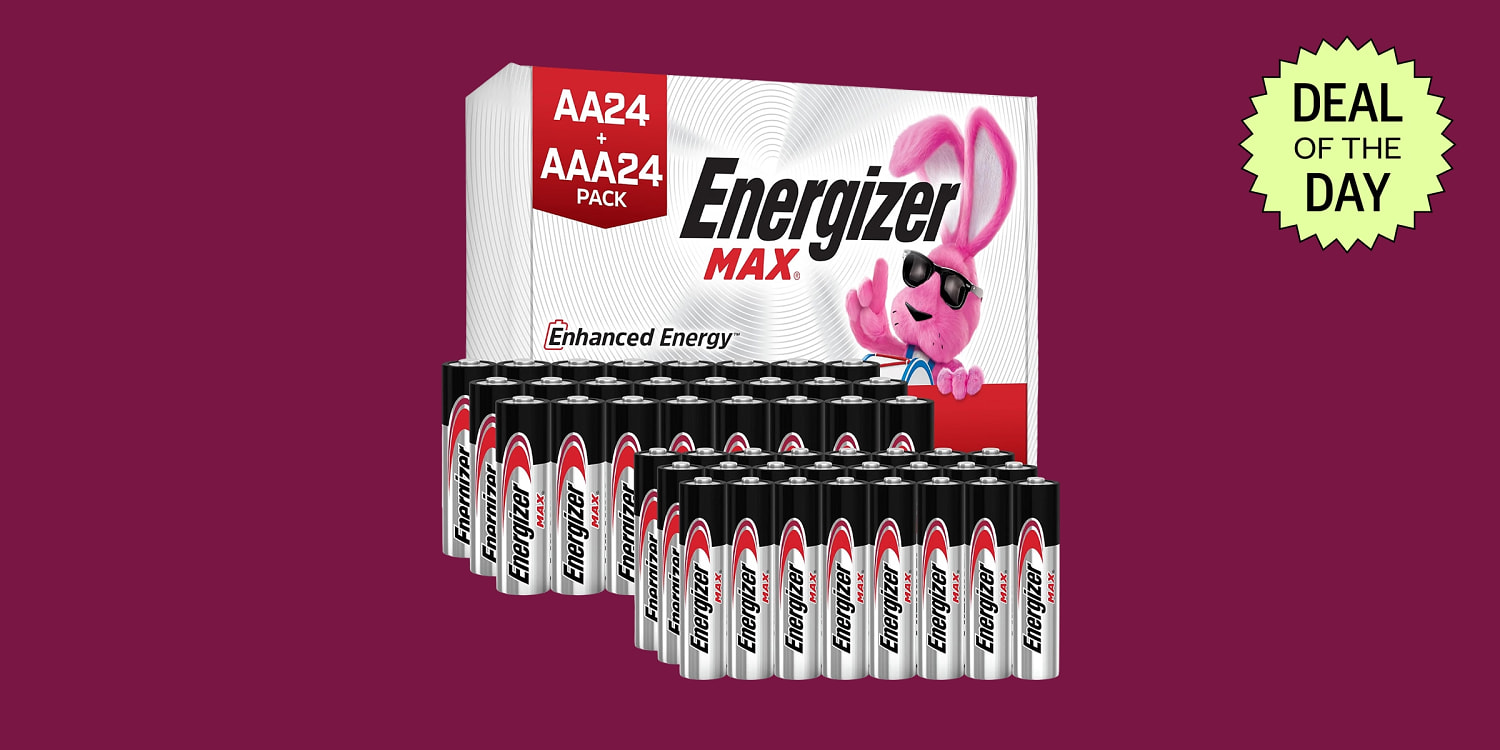
Now look at what happens when a bulk forty-eight-pack drops to nearly half off. Suddenly, the cost plummets from over a dollar per cell to somewhere around thirty or forty cents apiece. Over the course of a year, an average family of four burns through anywhere from forty to seventy disposable batteries. Between wireless computer mice, television remotes, kitchen scales, meat thermometers, flashlights, holiday decorations, children's toys, and blood pressure monitors, the consumption is relentless.
Buying in small packs is the financial equivalent of buying gasoline one gallon at a time from a boutique vendor at twice the market rate. You do it because it feels cheaper in the moment—spending six dollars hurts less than spending eighteen—but over twelve months, you quietly bleed cash.
More importantly, small packs create scarcity psychology. When you only have four batteries left in the house, you start rationing them. You pull the batteries out of the kitchen timer to put them into the TV remote. You steal cells from the spare flashlight in the hallway closet to power a wireless keyboard, telling yourself you will replace them tomorrow. Then tomorrow comes, you forget, and when a summer thunderstorm knocks out the neighborhood power grid at dusk, you click the flashlight switch and get a pathetic, dying orange glow before total darkness swallows the room.
A Lesson Learned in the Dark
I learned this lesson the hard way during an ice storm three winters ago. Freezing rain had coated the oak trees outside my house in an inch of solid glass. Around midnight, the branches began snapping like rifle shots. One massive limb tore down the service line feeding our street, plunging the entire block into silent, frigid darkness.
I felt prepared. I had candles, matches, and three heavy-duty LED lanterns stored in the hall closet. I grabbed the first lantern and clicked it on. Nothing. I opened the base and realized I had cannibalized its batteries two months earlier for a portable radio during a camping trip. I grabbed the second lantern. It flickered weakly for ten seconds and died—someone had left it switched on inside the closet weeks before. The third lantern took D-cells, and I had none.
I ended up sitting at my kitchen table by the light of a single vanilla-scented birthday candle, watching my phone battery drop from twenty-two percent to fourteen percent while the house temperature crept steadily downward. All around me were devices designed to keep me safe and comfortable, rendered completely useless by a collective twenty dollars' worth of missing alkaline cells.
The next morning, once the plows cleared the main road, I drove to the nearest hardware store. The battery aisle looked like a war zone. Panicked neighbors were grabbing whatever overpriced four-packs remained on the hooks. I vowed then that I would never again treat basic household power as a just-in-time purchase.
How to Actually Store a Bulk Stash
If you decide to take advantage of a steep discount on a forty-eight-pack, the way you store that box determines whether you get the full ten-year lifespan or a drawer full of ruined metal. People make three classic mistakes the moment a bulk box arrives on their doorstep.
First, they dump all forty-eight batteries loose into a single plastic bin or drawer. Never do this. When loose batteries jostle against one another, the positive terminal of one cell can easily bridge against the negative casing of another, or against a stray paperclip, key, or coin. That creates a dead short circuit. The battery heats up, drains its energy into nothing, and risks rupturing its seal. Keep them in their original cardboard packaging, or transfer them into a dedicated slotted organizer where every cell sits in its own isolated cradle.
Second, people store their reserves in the wrong climate. A garage, an attic, or a damp basement is terrible for battery chemistry. Extreme heat accelerates the internal chemical reactions, eating away at the shelf life, while high humidity invites rust along the steel casing. Contrary to a persistent myth from the 1970s, you should never put alkaline batteries in the refrigerator or freezer. Cold temperatures do not preserve modern cells; instead, pulling cold batteries out into a warm room causes condensation to form on the metal contacts, leading directly to corrosion and ruined electronics. A hall linen closet, a bedroom drawer, or a high pantry shelf—somewhere room-temperature and dry—is ideal.
Third, people mix old and new cells. When a device takes four batteries and dies, it is tempting to test them one by one, find the single weak culprit, and replace just that one while leaving three partially drained cells inside. That is a recipe for leakage. As the older cells hit zero, the fresh battery continues pushing current through them, forcing the dead cells into reverse polarity and causing them to vent hydrogen gas and leak potassium hydroxide. Always replace the entire set at once, and drop the spent cells into a dedicated recycling container rather than letting them mingle with your fresh stock.
The Quiet Luxury of Readiness
There is a specific, underrated peace of mind that comes from opening a closet door and seeing neat, unbroken rows of fresh power waiting in reserve. It is not glamorous. Nobody posts a photograph of a forty-eight-pack of AA batteries on social media to show off their lifestyle. You will not feel a rush of excitement slicing open the cardboard shipping box.
Instead, the reward shows up in the absence of annoyance.
It shows up when your kid's handheld game dies halfway through a four-hour road trip, and you reach into the glove compartment, pull out two fresh cells from a zip-top bag, and restore peace to the back seat in fifteen seconds flat. It shows up when the thermostat screen goes blank on a Sunday evening, or when a wireless mouse stutters ten minutes before a major presentation, and you solve the problem without breaking your stride.
And it shows up at two in the morning, when that inevitable, piercing chirp echoes down the hallway. You do not curse. You do not rummage frantically through tangled cords and old receipts. You walk calmly to the closet, slide open the box, snap two fresh, heavy cylinders into your palm, and silence the noise before the rest of the house even wakes up.