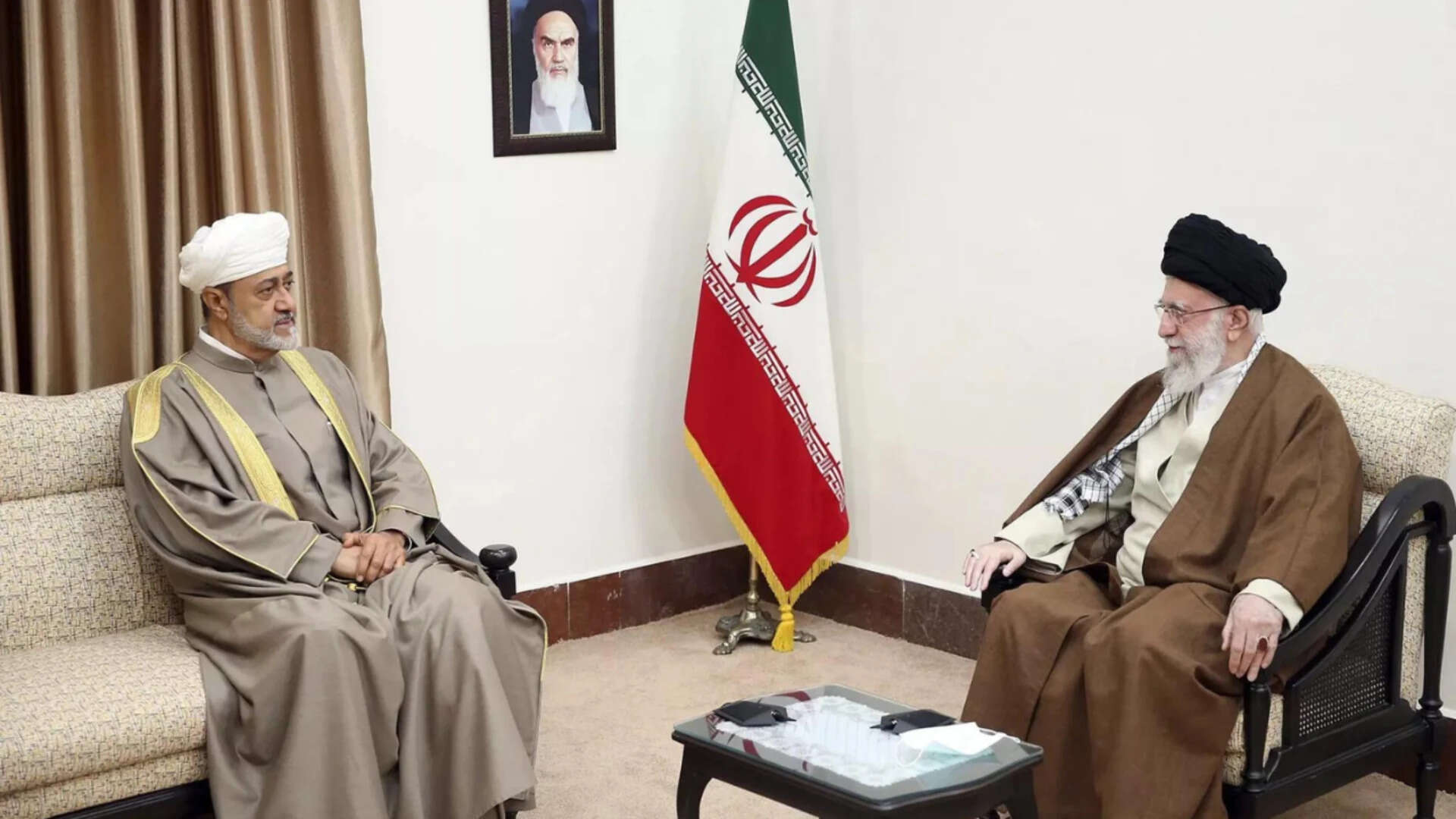
The air in Muscat doesn’t carry the electric, jagged tension of its neighbors. While the skylines of Dubai and Doha scream toward the heavens with glass and steel, Oman’s capital stays low, white-washed, and remarkably quiet. On a humid evening at the Mutrah Corniche, you can hear the gentle slap of the Arabian Sea against the stone harbor. It is a deceptive silence.
In the spring of 2024, when the sky over the Middle East turned into a shooting gallery of ballistic missiles and humming suicide drones, that silence became the most valuable currency in the world.
The headlines were a relentless drumbeat of escalation. Israel strikes an Iranian consulate in Damascus. Iran retaliates with a swarm of hundreds of projectiles. The United States moves carrier groups into position. Throughout the Gulf, the question wasn’t if the fires would spread, but who would be burned first. Saudi Arabia, the UAE, and Jordan found themselves in the impossible geometry of a regional war—intercepting missiles, closing airspaces, and bracing for the wrath of a Tehran that viewed any cooperation with the West as a betrayal.
Yet, Oman remained untouched. Unthreatened. Unbothered.
To understand why, you have to look past the white-domed mosques and into the DNA of a nation that decided, decades ago, that being a friend to everyone is the only way to survive being a neighbor to anyone.
The Architect of the Middle Way
Consider a hypothetical diplomat named Omar. He sits in a nondescript office in the Ministry of Foreign Affairs, not far from the Sultan’s palace. On his desk are two secure phones. One connects to Washington D.C. The other connects to Tehran.
In most world capitals, these phones would be mutually exclusive. In Muscat, they are the left and right hands of the same body.
This isn't a result of luck. It is the legacy of the late Sultan Qaboos bin Said, who took a fractured, tribal land and turned it into the "Switzerland of the Middle East." He understood a fundamental truth about the geography of the Gulf: if you live on the edge of a volcano, you don't throw stones at it. You learn the rhythm of the magma.
Oman controls the southern lip of the Strait of Hormuz. It is the world’s most important chokepoint. Nearly a fifth of the world's total oil consumption passes through this narrow ribbon of water. If Oman chose to be a belligerent, it could collapse the global economy by Tuesday. Instead, it chooses to be a ghost.
The Art of the Invisible Hand
When Iran launched its massive drone and missile barrage toward Israel, the regional tension was thick enough to choke on. Countries like Jordan were forced to make split-second kinetic decisions, shooting down Iranian projectiles to protect their own sovereignty. Saudi Arabia and the UAE navigated a minefield of intelligence sharing with the U.S. while trying to avoid the "collaborator" label from Tehran.
Oman did something different. It stayed out of the way.
This wasn't cowardice. It was the ultimate expression of "Ibadism," the dominant school of Islam in Oman. It emphasizes a middle ground, a rejection of extremism, and a profound focus on peaceful coexistence. While other nations pick sides in the ancient schism between Sunni and Shia powers, Oman sits comfortably in a third space.
Iran looks at Oman and sees a partner it can trust when the rest of the world shuts the door. The United States looks at Oman and sees the only reliable mailbox for delivering messages to the Ayatollahs.
When you are the person holding the door open for both sides, neither side wants to break the door.
The Cost of Neutrality
Being the "quiet one" isn't free. There is a psychological weight to this role.
Imagine the pressure on the current Sultan, Haitham bin Tariq. He inherited a masterpiece of balance, but the world has become significantly more polarized since he took the throne. When the U.S. and U.K. began striking Houthi targets in Yemen—Oman’s immediate neighbor to the south—the pressure was immense.
The Houthis are backed by Iran. The U.S. is Oman’s oldest security partner.
A lesser leader would have flinched. They would have offered up an airbase for the strikes or, conversely, issued a blistering condemnation of the West to appease the regional street. Oman did neither. It expressed "concern" over the escalation, but kept the border gates moving and the back-channels humming.
They know that once you take a side, you lose your superpower. That superpower is the ability to say "come, sit, talk."
The Anatomy of a Non-Target
Why didn't Iran target Oman when it lashed out at the "proxies" of the West?
First, there is the matter of the "Omani Backchannel." For years, Muscat has been the secret site of the most sensitive negotiations in modern history. It was here that the preliminary talks for the 2015 Nuclear Deal began. It is here that prisoner swaps are orchestrated. When a Westerner is detained in Evin Prison, the flight that brings them home almost always has an Omani tail fin.
If Iran were to target Oman, they would be burning their own lifeboat.
Second, Oman has mastered the art of "non-threatening defense." They spend a significant portion of their GDP on a highly capable military, but they use it for patrolling and stability, never for projection. They host U.S. facilities, yes, but they do so under a veil of discretion that allows Iran to look the other way.
It is a masterpiece of cognitive dissonance. Everyone knows what is happening, but because Oman doesn't brag about it, no one is forced to react to it.
The Human Stakes of the Strait
Step away from the high-level geopolitics for a moment. Think about a fisherman in the Musandam Peninsula. This is an Omani exclave that sits at the very tip of the Arabian Peninsula, separated from the rest of the country by the UAE.
From his small dhow, he can see the giant Iranian tankers lurking in the distance. He can see the grey hulls of Western destroyers on the horizon. For him, the "sparing" of Oman isn't a political theory. It’s the difference between a day's work and a watery grave.
He lives in the most dangerous neighborhood on Earth, yet he doesn't carry a gun. He carries a net.
The world often views the Middle East as a monolithic powder keg, a place where violence is the only language. Oman is the living refutation of that tired trope. It is a reminder that even in a region defined by ancient grievances and modern missiles, there is a place for the diplomat, the merchant, and the neighbor.
A Lesson in the Shadows
As the dust settled after the April exchanges, the world looked at the charred remains of drones and the craters of interceptors. Analysts mapped out the new "red lines" of 21st-century warfare.
But in Muscat, the sun rose over the Al Hajar Mountains just as it always does. The incense burners in the souq began to drift their thick, sweet smoke into the narrow alleys. The phones in the Ministry of Foreign Affairs didn't stop ringing.
Oman wasn't spared because it was lucky. It wasn't spared because it was irrelevant.
It was spared because it has made itself indispensable. In a world that is increasingly obsessed with drawing lines in the sand, Oman has realized that the most powerful place to stand is right on the line itself, holding out a hand to both sides.
The tragedy of the modern age is that we find this neutrality so shocking. We have become so accustomed to the roar of the engines and the heat of the fire that the sound of a quiet conversation feels like a miracle.
But as long as Muscat stays quiet, there is still a chance that the rest of the world might one day learn how to whisper.
Would you like me to dive deeper into the specific historical treaties that established Oman’s unique diplomatic status?