The morning in Spandau started with the mundane clinking of coffee spoons and the rhythmic hiss of the S-Bahn pulling into the station. It was a Tuesday. Tuesdays in this corner of Berlin are usually predictable, governed by the quiet efficiency of people heading to offices and the smell of fresh Brotchen wafting from corner bakeries. But by 10:00 AM, the air changed. The mundane evaporated, replaced by the sharp, metallic scent of adrenaline and the distant, rising wail of sirens that seemed to converge from every direction at once.
A bank is supposed to be a temple of stability. You walk in, the air is conditioned, the carpet muffles your footsteps, and the glass partitions suggest a world where everything is accounted for. People don’t expect their lives to pivot on a Tuesday morning while waiting to deposit a check or ask about a loan. Yet, inside the walls of the Postbank branch on Brunsbütteler Damm, the clock stopped.
The first reports were jagged. Fragments of information leaked out like water through a cracked dam. A man. A weapon. People trapped inside. In the language of police dispatches, it was a "hostage situation." In the language of the human heart, it was a nightmare.
The Perimeter of Uncertainty
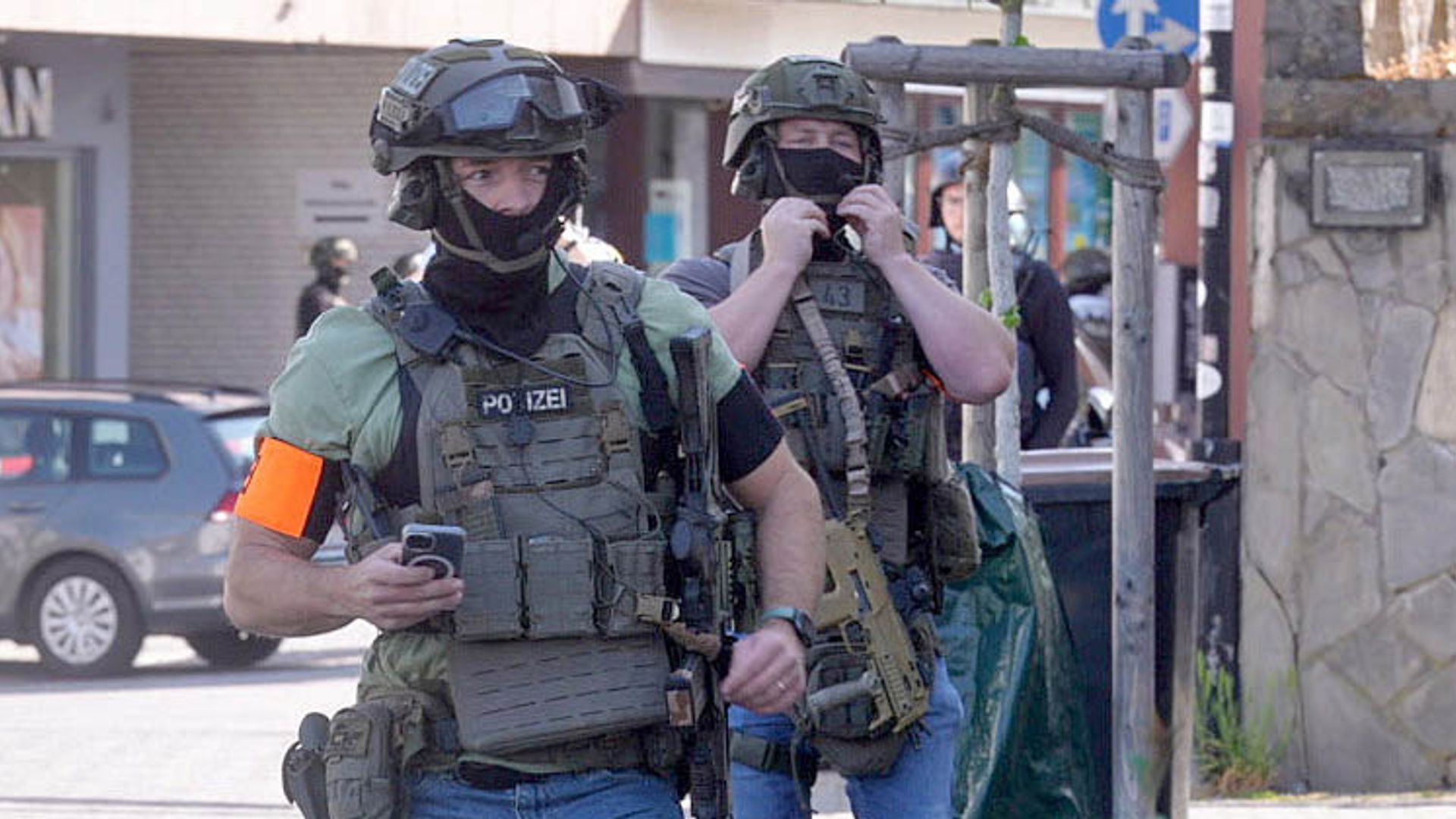
Outside, the world was being sliced into zones of safety and danger. Red and white plastic tape fluttered in the breeze, a flimsy barrier between the life we know and the chaos we fear. Behind that tape, the SEK—Germany’s elite special response units—began to move with the terrifying precision of a machine. They don't run; they flow. They carry weight that would crush a normal person, yet they move silently, their eyes fixed on the geometry of the building, looking for the one angle that offers a solution.
Consider the person standing just outside that perimeter. Perhaps it is a woman holding a grocery bag, her phone pressed to her ear, ringing a number that no one is picking up. She knows her husband went to the bank twenty minutes ago. Every second the call goes to voicemail, the weight of the world increases. This is the invisible stake of a crisis. We focus on the gunman and the gold, but the real story is the agonizing stretch of time where a family doesn't know if their dinner table will be full tonight.
The police cordoned off the area with a clinical coldness. It has to be cold. Emotion is a liability when you are calculating ballistic trajectories and negotiation tactics. They pushed the crowds back, redirected the buses, and turned a busy commercial artery into a ghost town. The silence that followed was heavy. It wasn't the peaceful silence of a park; it was the suffocating silence of a held breath.
The Architecture of a Crisis
Inside the bank, the atmosphere would have been unrecognizable. Imagine the shift in lighting. Usually, bank lights are bright, designed to make everything transparent and honest. Under siege, those same lights become harsh, exposing every tremor of a hand, every flicker of fear in a hostage's eye.
We often think of bank robberies through the lens of cinema—high-octane music, snappy dialogue, and a clear set of demands. The reality is far grittier and more pathetic. Most of these events are born of desperation, not genius. They are the result of a life that has frayed at the edges until the individual feels they have no choice but to reach for a weapon and a captive audience.
The "hostage" is a category, but the people inside are individuals. There is the teller who was thinking about her vacation. There is the retiree who just wanted to check his balance. Suddenly, they are characters in a story they never auditioned for. They are forced to manage the volatile emotions of a stranger who holds the power of life and death. It is a psychological marathon. You have to stay calm enough to not provoke the captor, but alert enough to survive.
The Negotiator's Shadow
Somewhere in the command center, a negotiator is talking. This is perhaps the most delicate job in the world. It is the art of building a bridge out of nothing but words.
The negotiator doesn’t judge. They don’t lecture. They listen. They look for the "hook"—the one thing the gunman still cares about. Is it a mother? A debt? A sense of being wronged by the system? They have to find a way to let the air out of the room, slowly, so the tension doesn't lead to a bang.
But the SEK is always there, the shadow behind the voice. While the negotiator offers a way out, the special forces prepare for the alternative. They are the steel fist inside the velvet glove. They map the ventilation shafts. They use thermal imaging to see through the walls, turning the building into a transparent cage. They know where every person is sitting. They know the rhythm of the gunman’s breathing.
The wait is the weapon. The police use time to wear down the perpetrator. Every hour that passes without violence is a victory for the authorities, but for those inside, every hour is an eternity. They are trapped in a liminal space where the rules of the outside world—law, gravity, time—no longer seem to apply.
The Shattered Routine
When the resolution finally comes, it is often sudden. A flash, a roar, or a quiet surrender. In this case, the tension eventually snapped. The police moved in. The suspect was neutralized. The hostages were led out into the blinding light of the Berlin afternoon.
They walked out with their hands up, or draped in shock blankets, their faces pale and unreadable. They are "safe" now, according to the news reports. But safety is a relative term. You don't just walk away from a morning like that. The sound of a door slamming or a sudden shout on the street will, for a long time, send their hearts back to that carpeted room on Brunsbütteler Damm.
The news cycle moves on. The yellow tape is rolled up. The buses start running again. By the next morning, the Postbank will be just another building, perhaps with a "Closed for Maintenance" sign on the door. People will walk past it on their way to work, clutching their coffee, unaware of the ghosts left behind in the lobby.
We like to believe we are secure in our routines. We trust the institutions, the police, and the social contract that says we can go about our business without being caught in a crossfire. But events like this serve as a jagged reminder of how thin that veil truly is. It only takes one person, one desperate moment, and one Tuesday morning to turn a neighborhood into a battlefield.
The true cost isn't measured in the money that stayed in the vault or the hours of lost productivity. It’s measured in the way a survivor looks at a bank entrance from now on. It’s the way a wife grips her husband’s hand a little tighter when he says he’s just running an errand. The sirens eventually fade, but the ringing in the ears of those who were there stays forever.
The city of Berlin breathed a collective sigh of relief as the sun began to set over Spandau, but for a handful of people, the world will never look quite the same again.
The lights in the bank stayed on long into the night, casting long, lonely shadows across the empty street.