The asphalt on Manchester Boulevard has a way of holding onto the heat long after the sun dips below the horizon. It is a thick, radiating warmth that sticks to the soles of your shoes and fills the air with the smell of scorched rubber and exhaust. For most people driving through Inglewood, this is just the sensory backdrop of a commute. But for a family waiting for a phone call that will never come, that stretch of road has become a graveyard of unanswered questions.
A routine traffic stop. We hear the phrase so often it has lost its teeth. It suggests something orderly, a minor friction in the gears of a Tuesday afternoon. A blinker forgotten. A registration tag expired by a month. A brief exchange of plastic and paper. Then, the sound of a heavy door slamming shut and the world moving on.
But something went wrong in the gap between the siren and the precinct. A man is dead. He didn't die in a shootout. He didn't die in a high-speed chase that ended in a crumpled heap of steel. He died after the handcuffs were clicked into place, in that liminal space where a citizen is supposed to be most protected by the state. Now, his name is a rallying cry, and the silence from the dashboard is louder than any siren.
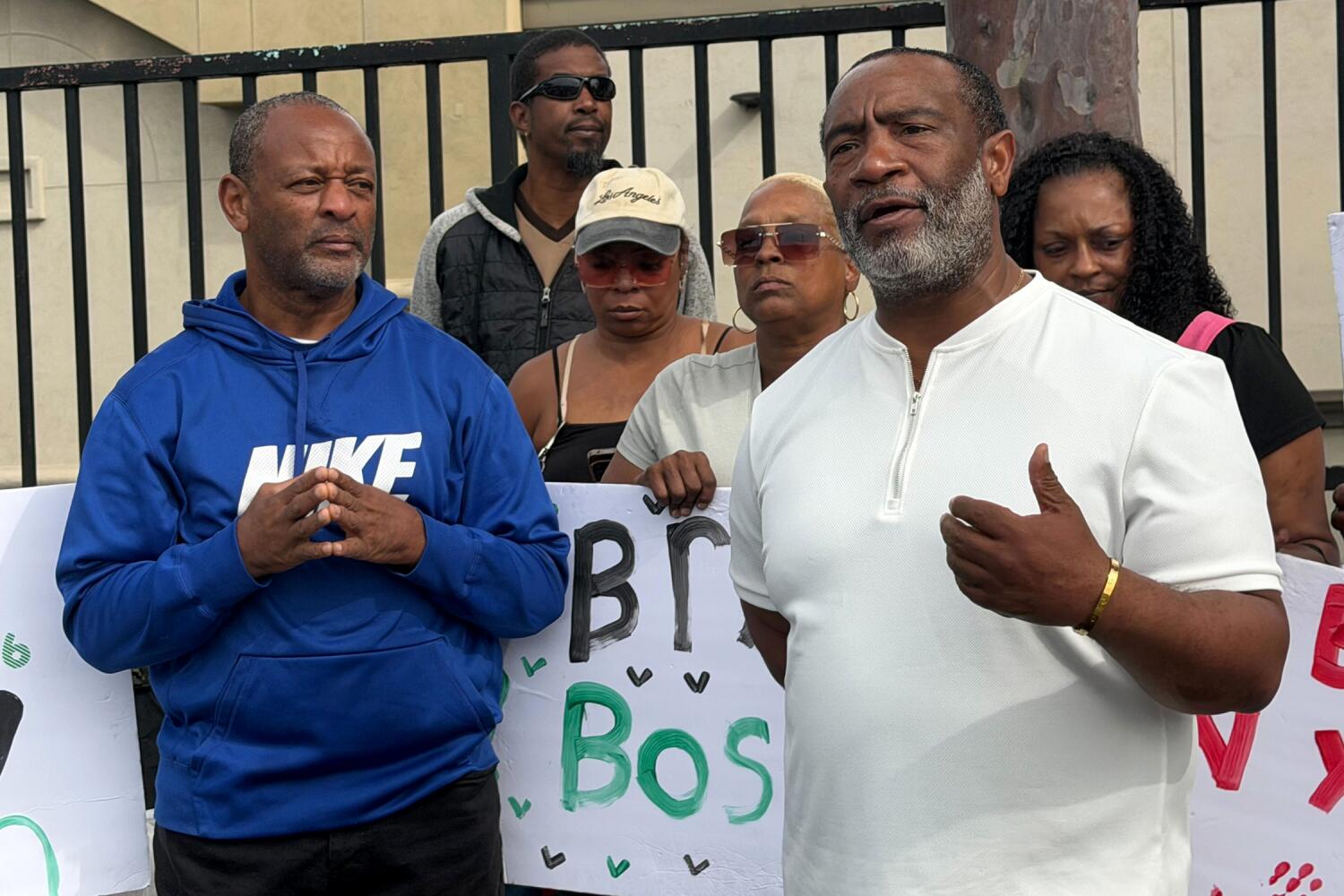
The city of Inglewood finds itself caught in a recurring nightmare, a fever dream where the facts are as blurry as a thumbprint on a lens. When the community gathered on the steps of the police department this week, they weren't just mourning a life. They were mourning the absence of a witness.
The Ghost in the Machine
Consider the technology we carry in our pockets. We record our meals. We record our children’s first steps. We record the mundane beauty of a sunset through a cracked windshield. We live in the most documented era in human history, yet when the stakes reach their absolute peak—when the power of the state meets the fragility of the human body—the screen often goes black.
In the case of this unexplained death, the outcry isn't just about the tragedy itself. It is about the void where the evidence should be. Inglewood remains one of the few major jurisdictions in the region that has not fully integrated a comprehensive body-worn camera program. It feels like an architectural flaw in the house of justice.
Without a digital witness, we are left with two competing ghosts. There is the official report, typed in a sterile office, using passive language like "a struggle ensued" or "the suspect became unresponsive." Then there is the searing, jagged grief of a mother who knows her son didn't leave the house planning to die on a sidewalk. These two stories rub against each other like tectonic plates. The resulting friction creates the kind of heat that burns cities down.
Trust is a fragile currency. It isn't built on speeches or community outreach barbecues. It is built on the certainty that if the worst happens, the truth will be accessible. When a police department operates without cameras, they aren't just saving money on equipment. They are betting the public’s trust on a "trust us" system that has been bankrupt for decades.
The Weight of the Unseen
Imagine standing on a street corner, your hands zip-tied behind your back. You are breathing in the dust and the exhaust. You are scared. You are looking for a lens. You are looking for that small, blinking red light that says, I see you. You exist. This moment is being written into a record that cannot be erased by a handshake or a shared silence in a locker room.
For the officers involved, that lens is a protection, too. It is the shield against false accusations, the objective arbiter that proves they followed their training under impossible pressure. So why is the light still dark in Inglewood?
The arguments against the cameras usually fall into the buckets of "cost" and "privacy." But those arguments ring hollow when compared to the cost of a wrongful death lawsuit or the privacy of a man who is no longer here to claim it. A body camera costs a few hundred dollars. A life is worth everything. The math is so simple it hurts.
We often think of justice as a scale, but in the modern age, it is more like a projector. If you don't have the film, you can't show the truth. You just have a room full of people sitting in the dark, arguing about what they think they saw in the shadows.
The Anatomy of a Stop
Every traffic stop is a high-stakes negotiation. The officer approaches the vehicle with a hand near their holster, heart rate elevated, scanning for the glint of metal or the sudden movement of a shoulder. The driver sits with their heart hammering against their ribs, wondering if a reach for the glovebox will be their last act. It is a moment of profound, mutual vulnerability.
When that negotiation fails, we need to know why. Was it a medical emergency? Was it excessive force? Was it a freak accident of biology and adrenaline?
In Inglewood, the family is demanding an independent autopsy. They are asking for the names of the officers. They are asking for the one thing that no one can give them back: the truth of those final minutes. They are forced to piece together a mosaic of trauma from the scraps of information leaked through official channels. It is a second victimization, a slow-motion interrogation of a grieving family.
The lack of footage creates a vacuum. And in a vacuum, rumors grow like mold. Suspicion becomes the default setting. The community looks at the badge not as a symbol of safety, but as a mask.
The Cost of the Status Quo
The protests in Inglewood aren't just about one man. They are about a systemic refusal to move into the light. When the neighboring cities adopted body cameras, the numbers told a clear story: use-of-force incidents dropped. Complaints against officers dropped. The air in those cities became just a little bit easier to breathe because the accountability was baked into the uniform.
Inglewood’s hesitation is more than a budgetary delay. It is a statement of priorities. It says that the convenience of the old way is more important than the transparency of the new way. It suggests that the city is willing to pay the price of unrest and litigation rather than the price of a camera lens.
But the price is being paid by people who never asked to be part of the experiment. It’s paid by the children who have to learn how to interact with the police as if they are entering a minefield. It’s paid by the veteran officers who want to do their jobs well but are stained by the shadows cast by their departments’ policies.
Justice shouldn't depend on who has the better lawyer or who can shout the loudest at a city council meeting. It should depend on the facts. And in 2026, the facts are digital.
Beyond the Static
The sun will come up over Manchester Boulevard tomorrow. The cars will zip past the spot where the struggle happened. The asphalt will heat up again. But the air in Inglewood has changed. It is heavy with the realization that as long as the cameras are off, the truth is a luxury that not everyone can afford.
The family of the deceased sits in a living room filled with flowers that are starting to wilt. They look at photos of a man who was vibrant, complicated, and alive. They don't want a settlement. They don't want a polite letter of condolence. They want to see what happened. They want the footage that doesn't exist.
We are left with the static. The grainy, gray noise of a system that refuses to look at itself in the mirror. Until the red light blinks on, the only thing we can be sure of is the silence.
And silence is the loudest thing in the world when you’re waiting for the truth.