The air at seven thousand feet does not let you forget where you are. It is thin, sharp, and tastes faintly of dust and pine. In the Jemez Mountains of New Mexico, the landscape looks ancient and indifferent, a sprawling expanse of red rock canyons and mesa tops that seem to swallow sound entirely. But if you drive up the winding mountain road from Santa Fe, past the guard stations and the security fences, you enter a place where human ingenuity spends billions of dollars trying to master the invisible.
Los Alamos National Laboratory. For another view, consider: this related article.
To the outside world, it is a acronym on a map, a historic relic of the Manhattan Project, or a fortress of modern supercomputing and nuclear physics. To the people who work there, it is simply "the Lab." It is a community of brilliant minds tucked away in isolation, solving problems that most citizens will never understand, let alone hear about.
When a scientist or a technician walks through those gates, they disappear into a culture of absolute discretion. Badges are checked. Compartmentalized data is locked away. Secrets are a daily currency. But what happens when the system designed to keep the world’s most volatile secrets safe loses track of one of its own? Similar insight on this trend has been shared by The New York Times.
The silence shifts. It ceases to be the quiet of deep scientific focus and becomes something heavy, frantic, and terrifying.
The Search on the Mesa
The transition from a normal workday to a crisis is often deceptively quiet.
A car remains in a parking lot long after the high-altitude sun has dipped below the horizon. A phone rings in an empty hallway, vibrating against a desk, unanswered. A family member waits by a window thirty miles away, watching the headlights sweep across the road, hoping each one is the car they are waiting for.
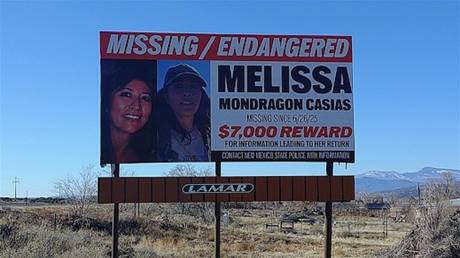
When word first spread through the canyons that a Los Alamos worker had gone missing, it did not trigger a loud, public alarm. That is not how things happen in a place built on confidentiality. Instead, it began with a ripple of unease. Colleagues exchanged glances over coffee. Internal security teams quietly checked access logs, cross-referencing badge swipes to determine exactly when the employee had last been seen inside the secure perimeter.
Imagine the sheer scale of the task. The laboratory complex covers forty square miles of rugged terrain, cut through by deep arroyos and dense forest. It is a labyrinth of technical areas, firing sites, and high-security zones. Finding a single person who has vanished into this landscape is not a matter of looking around the block. It is a logistical nightmare.
Local search and rescue teams were quietly mobilized. For those volunteers, the mission carries a psychological weight that standard wilderness rescues lack. When you look for a lost hiker in a national park, you are battling nature. When you look for someone connected to a nuclear facility, your mind inevitably wanders into the plotlines of a cold war thriller. The air feels thicker. Every shadow looks like something it is not.
For days, the search continued under the immense pressure of the unknown. The local community in the town of Los Alamos—a place with one of the highest concentrations of PhDs per capita in the world—held its collective breath. In a small town where everyone is connected to the Lab by one or two degrees of separation, a missing person is not a headline. It is a neighbor. It is the person who sits next to you at the local cooperative market or whose kids play soccer with yours.
Then, the search ended.
The body was found. The frantic energy of the rescue effort collapsed instantly into the cold, heavy reality of a recovery.
The Reality of the Risk
The public reaction to news like this follows a predictable, almost mechanical script. People want immediate answers to massive questions. Was there a security breach? Was classified data compromised? Was this the work of an outside adversary?
These questions are natural. We have been conditioned by decades of cinema and political rhetoric to view nuclear laboratories as targets for international espionage and cinematic villainy. We want the explanation to match the scale of the institution's global importance.
But the reality of working in big science is often far more human, and far more fragile, than the public realizes.
Consider the environment of a national laboratory. The stakes are perpetually high. The individuals who fill these roles are subjected to intense scrutiny, rigorous psychological evaluations, and the constant, grinding pressure of working with materials and concepts that carry existential weight. They live with a unique kind of isolation. You cannot come home from a day of working on nuclear stockpile stewardship and vent to your spouse over dinner about the frustrating setback you experienced in Technical Area 55. You cannot blog about your workplace stress. You carry it alone, or you share it only with a select group of peers who are bound by the same non-disclosure agreements.
This creates a psychological pressure cooker. The walls are thick, the security fences are high, and the internal expectations are immense.
When a tragedy occurs within this ecosystem, the instinct of the surrounding apparatus is to protect the institution. Press releases are drafted with surgical precision. Spokespeople use neutral, sanitized language. Phrases like "no foul play is suspected" or "the incident is under investigation" are deployed to calm the markets of public anxiety.
But behind those sanitized phrases lies a human family that has been shattered. There is a desk that will need to be cleared out by security personnel before the personal items can be handed back to a grieving spouse. There are coworkers who must return to their labs the next morning, passing the empty parking space, pretending that the rhythm of science can simply absorb the shock of a sudden death.
The Invisible Stakes
We live in an era that worships data and infrastructure. We look at Los Alamos and see the supercomputers, the particle accelerators, and the massive concrete structures engineered to withstand explosions. We convince ourselves that the power of our national security lies in these physical assets.
It does not.
The true infrastructure of any advanced nation is its human capital. It is the fragile, brilliant, complicated minds of the people who choose to spend their lives working in the shadows. When we lose one of them, under any circumstances, a piece of that collective intelligence is gone forever.
The investigation into the worker's death will eventually conclude. The official reports will be filed away in secure cabinets. The news cycle will move on to the next crisis, the next political debate, the next corporate merger. The public will forget the name of the individual who was found in the New Mexico dirt.
But for those who live in the shadow of the mesas, the memory will linger. It will live on in the quiet conversations at the local diner, in the heightened awareness of the security guards at the gates, and in the profound understanding that even the most secure facilities on Earth cannot protect human beings from the fundamental vulnerability of existence.
The high desert keeps its secrets well. The wind continues to blow through the canyons, erasing footprints, smoothing over the dirt, indifferent to the brilliant minds that walk among the pines or the sudden, tragic silence that occasionally claims them.


