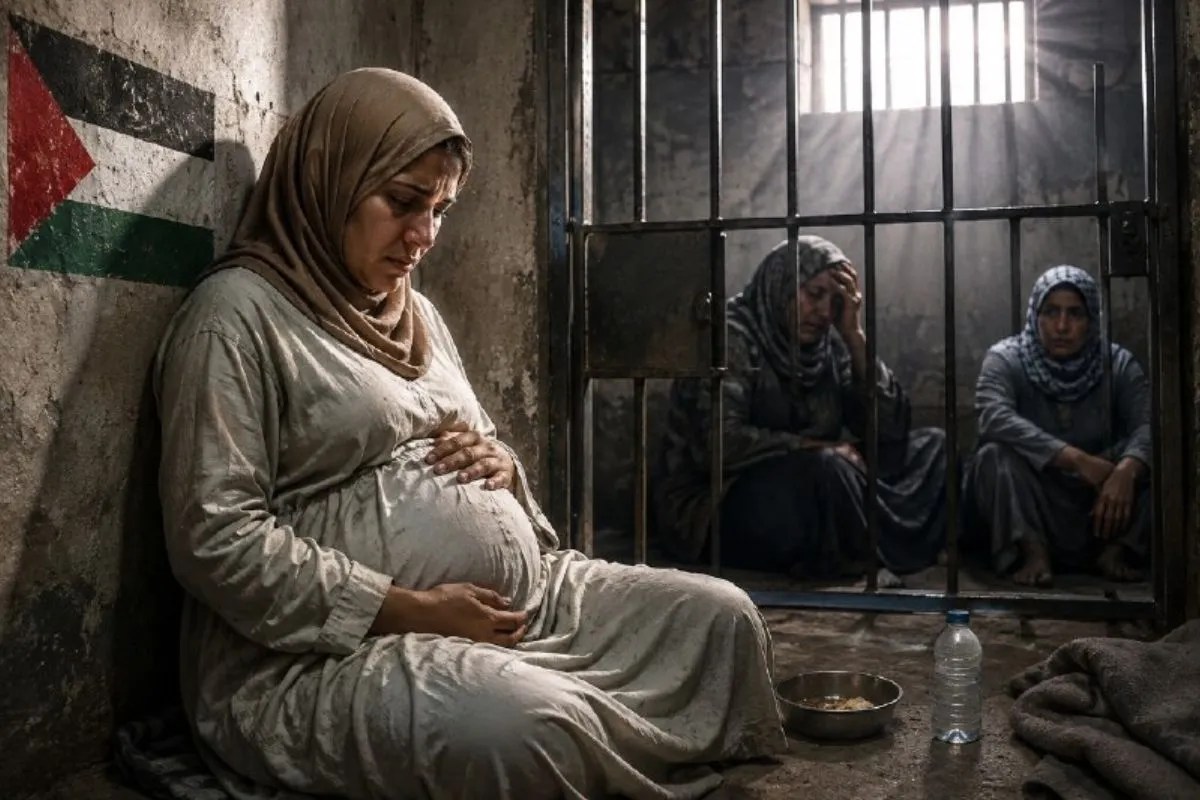
The Weight of Stone and Waiting
Concrete does not breathe. It absorbs. It drinks the cold of winter nights and locks in the crushing, stagnant heat of afternoons that stretch on without a clock. Inside the walls of military detention facilities, time is not measured by hours or minutes. It is measured by the heavy, metallic clank of a steel door sealing shut. It is measured by the slow, agonizing drip of a leaking sink down the hall.
For most, confinement is a test of endurance. For a woman carrying a new life beneath her ribs, it is an anatomical impossibility turned into daily reality. Expanding on this theme, you can also read: Why Sanctions Made Iran Richer And Everyone Else Is Missing The Point.
Imagine, for a brief moment, the basic geometry of expectation. A body preparing for birth demands certain constants. It requires sustenance that builds blood and bone, clean water, rest, and the quiet reassurance that safety exists just beyond the skin. But strip those away. Replace them with fluorescent lights that never click off, a thin, threadbare mattress laid directly on a damp floor, and a gnawing, constant emptiness in the stomach.
Reports and human rights documentation over recent months have laid bare a grim reality faced by pregnant Palestinian prisoners held within the Israeli prison system. These are not statistics pulled from abstract spreadsheets. They are flesh and blood stories of women enduring systemic neglect during one of the most vulnerable biological states a human being can experience. Analysts at TIME have provided expertise on this situation.
Consider what happens when a body asks for calcium and receives only stale bread.
Medical neglect in detention is rarely a theatrical cruelty. It is bureaucratic, quiet, and administrative. It wears the face of a guard who refuses to look up from a clipboard, or a clinic appointment that gets postponed for weeks under the heavy banner of security protocols. For pregnant detainees, this administrative indifference transforms into a physical hazard.
The Anatomy of Absence
Let us look closely at the architecture of care, or rather, its total absence.
When a civilian woman feels the first warning cramps of distress during pregnancy, she reaches for a phone, calls a clinic, or drives to an emergency room. Her anxieties are met with monitors, ultrasounds, and professional hands trained to steady the panic.
Inside the confines of these facilities, those pathways do not exist.
- Access to routine prenatal vitamins—folic acid, iron, calcium—is frequently delayed, rationed, or entirely missing.
- Nutritional intake often drops far below the basic caloric requirements needed to sustain a healthy fetus, leading to severe anemia and weakness.
- Medical transport to external hospitals is notoriously handcuffed by delays, strip-searches, and humiliating transfer procedures that spike cortisol levels to dangerous heights.
During a hypothetical consultation inside such a system—reconstructed from documented testimonies of released detainees—a woman might sit across from a prison medic who speaks through a cracked plexiglass barrier. She holds her swollen abdomen, trying to explain that the child has not moved in hours. The response is a bottle of standard antacids and a wave of the hand. No ultrasound. No heartbeat monitor. Just the cold dismissal of a system that views the captive as an enemy first and a human being second.
It is terrifying. Not merely because of the physical pain, but because of the profound isolation. A mother is biologically wired to protect her young, yet here, her hands are tied by bars, locks, and an unyielding institutional indifference.
Shadows in the Delivery Room
Birth is supposed to be an emergence. It is a threshold where the dark, quiet world of the womb gives way to the blinding light of the external universe.
For Palestinian women who reach full term while in custody, that threshold is warped into a site of profound degradation. Documented accounts from organizations like Addameer and various human rights monitors reveal a recurring nightmare. Women are routinely transported to hospitals while shackled hand and foot, even as active labor contractions begin.
Think about that image. Steel cuffs biting into swollen wrists. Chains rattling against the sterile linoleum of a maternity ward hallway.
Even during the delivery itself, restraints may remain until the final moments, or return the second the infant is drawn into the world. The psychological scar left by these moments does not fade when the sentence ends. How does a mother look at her newborn child without remembering the cold iron that pressed against her skin while she brought them into the light?
Post-partum recovery is equally bleak. New mothers are typically thrust back into communal cells or isolation units shortly after birth, stripped of the basic supplies needed for infant care. Diapers are scarce. Clean clothing is a luxury. The milk that should flow freely under conditions of peace and adequate nutrition often dries up, starved out by maternal stress, trauma, and chronic hunger.
The Lingering Echo
We must confront what this reveals about the machinery of confinement. When a society permits the systematic starvation of prenatal care and nutritional support for imprisoned women, it is not merely punishing an individual. It is reaching into the future, attempting to stunt the generation that has not yet learned to speak.
The silence inside those cells is heavy. But it is not empty. It is filled with the quiet resilience of mothers who whisper lullabies to unborn children against the hum of fluorescent lights and the distant sound of boots on concrete.
History has a long memory for how societies treat their most vulnerable. Long after the cell doors open, long after the bureaucratic memos are buried in dusty archives, the echo remains. It lives in the frail bones of children born into shadows, and in the unbroken spirit of women who carried the weight of an entire world inside a stone room, refusing to let the dark win.