Dawn in Sichuan rarely arrives with dramatic color. Most mornings, a heavy, graphite-colored mist settles over the flat agricultural stretches outside Chengdu, blurring the boundary between the earth and the heavy troposphere.
Then a sound tears through the damp air. It is not the familiar, metallic shriek of a standard afterburner. It is a deep, concussive pressure wave that rattles the loose tiles on farmhouse roofs before the machine itself even materializes overhead. Meanwhile, you can find similar events here: The Final Threshold Waiting for Sheikh Hasina.
For a group of satellite-eyed aerospace watchers tracking the horizon from behind cheap telephoto lenses, this particular morning brought a familiar pulse of adrenaline. Another shape had lifted off the runway.
It was the fifth. To understand the complete picture, check out the recent report by The Washington Post.
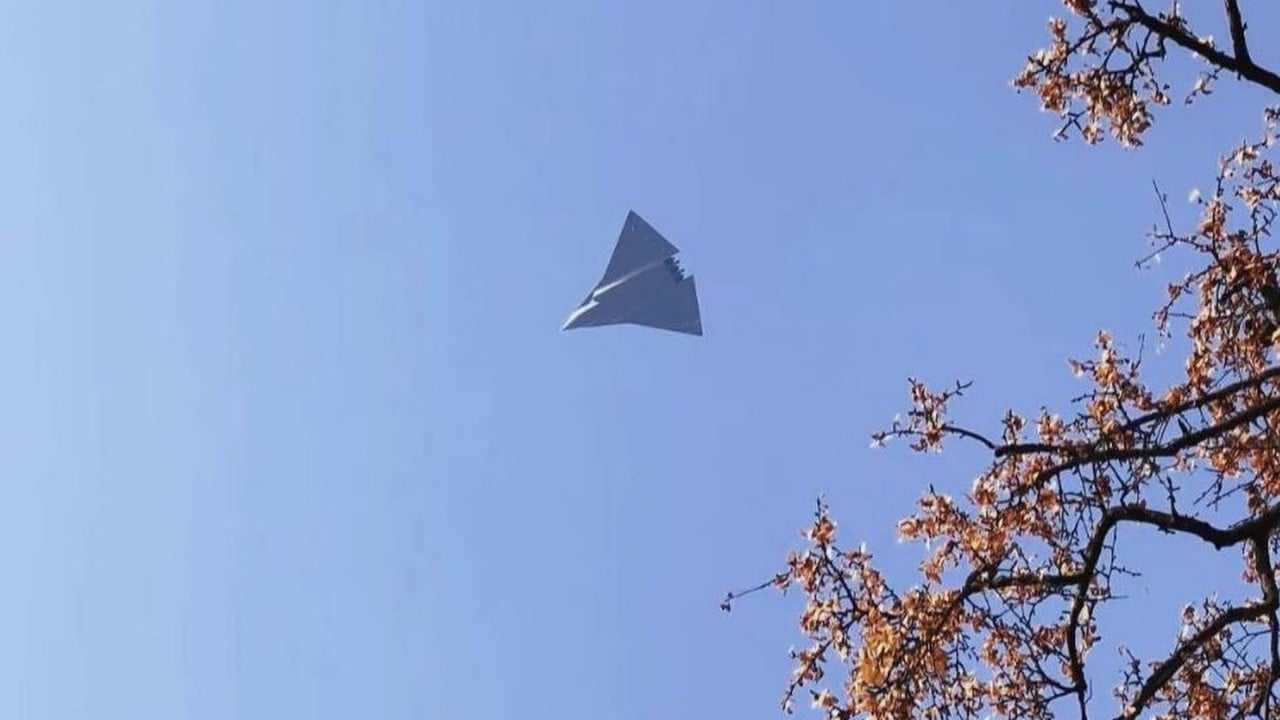
To the casual observer scrolling past a grainy photograph online, it looks like a black paper dart dropped against a gray sky. But within the tight, obsessive circles of global defense analysts, the emergence of a fifth distinct prototype of China's alleged sixth-generation Chengdu J-36 fighter is less a routine sighting and more a tectonic tremor.
Air power is no longer just about speed or G-force. It is about iteration speed. It is about how fast a nation can make mistakes, throw out the blueprints, weld a new skin onto a carbon-composite skeleton, and put it back in the air.
Consider what happens next: while rival programs across the Pacific navigate the bureaucratic gridlock of multi-year development cycles and delayed rollouts, the engineers at Chengdu appear to be operating on a compressed, relentless loop of trial and error. Each spotted airframe—from the initial 2024 revelation to the newly surfaced modifications on this latest variant—carries subtle, telling shifts in its geometry.
Engineers talk about stealth not as a cloak, but as an ongoing negotiation with physics. The J-36—with its massive, voluminous diamond-delta wing configuration, its complete absence of vertical tail stabilizers, and its unusual trijet internal layout—represents a radical departure from conventional aerial dogfighting dogma. It is built to carry heavy fuel loads across vast maritime distances, doubling as an airborne command node that coordinates autonomous drone swarms rather than just a solitary gunfighter.
Look closely at the evolution across the flight line. The early airframes experimented with recessed engine troughs designed to swallow thermal signatures. Subsequent iterations traded those features for alternative intake configurations and nozzle adjustments, weighing the eternal engineering trade-off between rear-aspect thermal masking and raw maneuverability.
Now, the fifth machine hints at further adjustments to its exhaust paths and aerodynamic control surfaces. It is a visual record of a design being hammered into viability in real time.
There is a profound psychological weight to watching this unfold from a distance. For decades, military aviation dominance was defined by an American-led rhythm of technological surprise followed by slow, methodical refinement. Today, that monopoly on pace has fractured. The timeline has shrunk.
When a nation fields five distinct physical iterations of an ultra-complex, tailless heavy stealth platform in less than two years, it signals an industrial capacity that treats advanced prototypes not as crown jewels to be protected in underground hangars, but as expendable chalkboards.
The sky overhead is quiet again. The mist rolls back in, swallowing the runway lights of Chengdu. Yet the shape of tomorrow’s global order has already been cast in carbon fiber, test-flown in secret, and left lingering in the hazy atmosphere of an uncertain decade.