The floor of an operations room at Thames House never truly goes dark. Screens pulse with the steady, quiet heartbeat of metadata, while analysts hunch over coffee-stained desks, tracing threads that stretch across continents. For years, the rhythm of domestic security in the United Kingdom followed a predictable cadence. It was a game of intercepting chatter, monitoring extremist cells, and neutralizing lone actors before their plans could take root.
Intelligence, at its core, used to be about guarding the front gate.
Then, the locks changed.
Ken McCallum, the Director General of MI5, stepped behind a lectern to deliver an assessment that shattered the quiet assumptions of British defense. He didn't speak in the cautious, euphemistic muffle typical of intelligence briefings. He laid bare a stark, aggressive transformation. The state actors who view Britain as an adversary have stopped waiting at the perimeter. They have brought the theater of conflict directly onto British soil, training their crosshairs on a terrifyingly specific target: UK military sites and the personnel who serve within them.
Imagine for a moment what it takes to be a young logistics officer stationed at a routine barracks in southern England. You wake up before dawn, pull on a uniform bearing a flag you swore to protect, and walk out to your car. To you, the threat environment is something that happens elsewhere—in the dry heat of the Middle East, across contested borders in Eastern Europe, or in the cyber ether where servers hum in dark warehouses.
You do not expect the threat to live in the burner phone of a local courier idling three streets down from your quarters, hired for a few hundred pounds in cryptocurrency by an intelligence officer sitting thousands of miles away.
This is the new architecture of hostility. It is cheap. It is deniable. And it is relentlessly active.
State-sponsored espionage has evolved past the trench-coated spy exchanging microfilm under a dim lamppost in a London fog. That imagery belongs in a museum. Today's espionage looks like gig work. Adversarial intelligence agencies—principally driven by actors like Iran, alongside persistent campaigns from Russia—have outsourced their dirty work. They recruit proxies, desperate locals, criminal elements, and ideologues through encrypted messaging apps. They offer quick cash for simple tasks: photograph the security gate, note the shift changes of the guards, log the license plates of vehicles entering a sensitive perimeter.
Piece by piece, the puzzle is assembled.
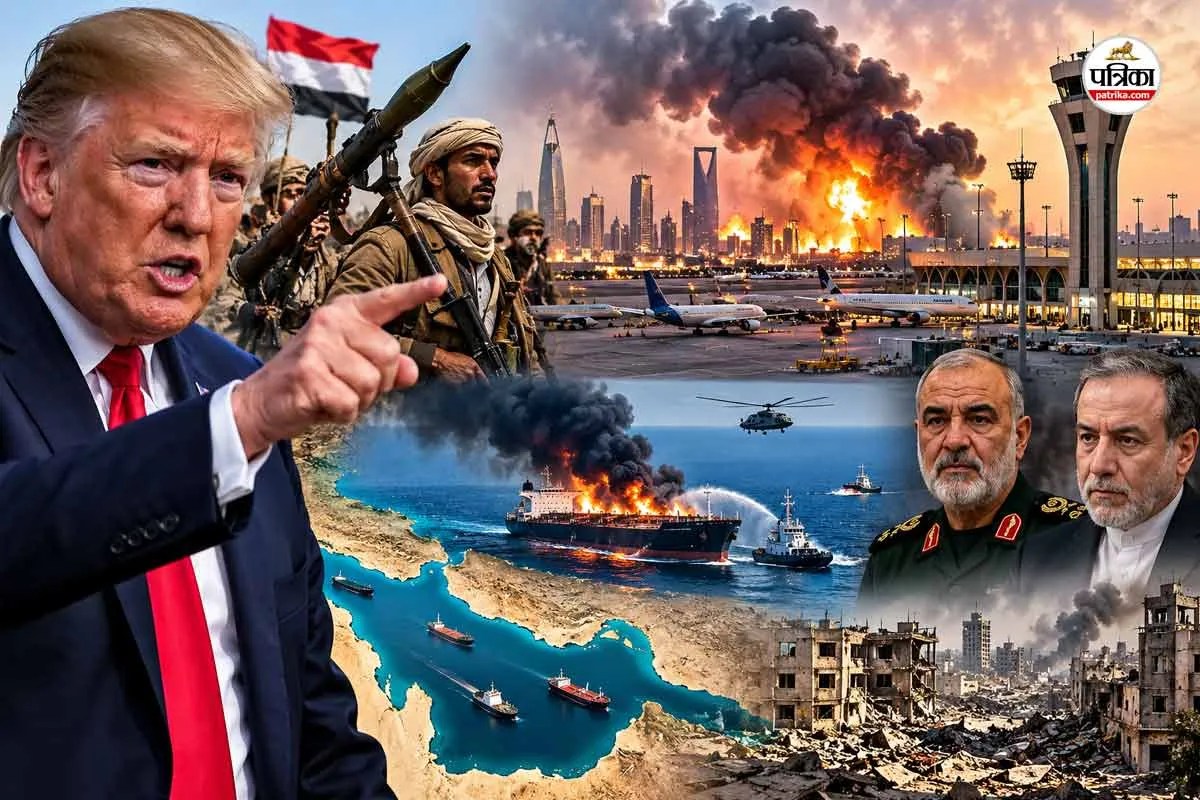
MI5 has revealed that the volume of state-threat investigations has surged by nearly fifty percent over recent years. Within that rising tide, the proportion of plots originating from Iran has grown exponentially. Tehran’s apparatus is no longer content with regional proxy wars or distant cyberattacks. Following severe geopolitical friction, economic strangulation, and direct kinetic exchanges in the Middle East, the calculus in Tehran shifted.
The retaliation would not stay overseas. It would come home.
Consider the sheer scale of the vulnerability. The British military footprint is vast, dispersed, and historically open by design. Barracks, training grounds, recruitment centers, and logistical depots are woven into the fabric of ordinary towns and cities. A soldier walks out of a base in uniform to buy a sandwich at a local bakery. A contractor drives a delivery truck through a gate where the guards recognize them by face rather than rigorous digital verification.
These are not Fort Knox. They are working communities. And that openness, once a point of pride representing a military deeply integrated with the civilian population it serves, has become a sprawling attack surface.
The mechanisms of these plots often begin with reconnaissance that looks indistinguishable from casual curiosity. A casual observer leaning against a brick wall outside a naval facility. A drone hovering briefly over a restricted runway before darting away. The intelligence services catch dozens of these plots before they mature into kinetic action, but the sheer velocity of the attempts means the margin for error is razor-thin.
Security agencies are playing a perpetual game of high-stakes chess where the opponent is willing to sacrifice countless disposable pawns to test the strength of the king.
When McCallum warned that British soil was being used as a staging ground for assassinations, kidnappings, and sabotage against dissidents and military targets alike, he was describing a paradigm shift in threat perception. The boundary between foreign policy and domestic policing has dissolved entirely. What happens in a boardroom in Tehran or a command bunker in Moscow now has an immediate, localized echo in the sleepy shires and suburban garrison towns of Britain.
We must ask ourselves what this means for the everyday texture of freedom in an open society.
Security is a jealous master. To protect military sites from outsourced saboteurs and state-sponsored assassins, the natural instinct is to build walls, deepen moats, restrict movement, and shroud operations in heavier secrecy. Yet, every inch of security gained often comes at the direct expense of civil openness. When soldiers must look over their shoulders not just in hostile zones abroad, but on the commute to their local base, the psychological contract between the armed forces and the public begins to fray.
Yet, complacency is no longer an option. The intelligence community has adapted with ferocious speed, forging unprecedented alliances between local police, counter-terrorism units, and international partners to choke off these proxy networks before they strike. They are tracking the money, mapping the digital footprints, and intercepting the couriers before the reconnaissance turns into tragedy.
The shadows have moved closer, stretching across the Channel and into our neighborhoods. But understanding that the dark is there is the first step toward holding the line against it. The quiet professionals in Thames House and across the nation's defense apparatus are watching the digital ether and the physical streets with unblinking vigilance.
The threat has arrived. But so has the response.