In the quiet, marble-floored corridors of Islamabad, the air usually carries the scent of heavy rain or jasmine. But this week, it carries the weight of a secret. Somewhere behind closed doors, away from the prying eyes of the global press, men in dark suits are reportedly whispering about a deal that could shift the tectonic plates of the Middle East.
Iran and the United States are talking. Again.
This isn't a grand summit with flags and handshakes. It’s a ghost negotiation, a tentative reach across a chasm that has widened over decades of mistrust. Yet, as these diplomats lean over maps and draft agreements in the neutral territory of Pakistan, a familiar voice is echoing from Tehran, threatening to pull the rug out before the first signature can even dry.
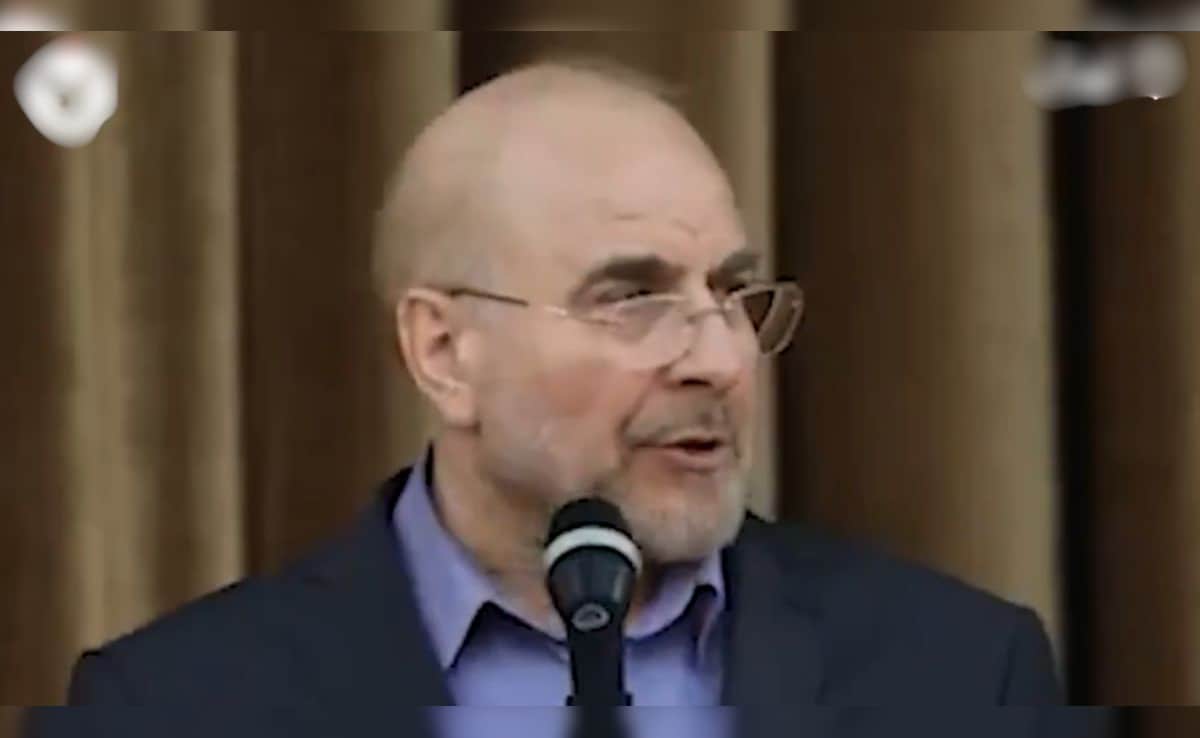
Mohammad Baqer Ghalibaf is not a man of whispers. The Speaker of Iran’s Parliament, a former Revolutionary Guard commander and a pilot, prefers the roar of an engine or the blunt force of a decree. While the pragmatists in the Iranian foreign ministry look toward Islamabad with a flicker of hope—hoping to ease the crushing weight of sanctions that have turned the simple act of buying medicine or bread into a daily struggle for millions—Ghalibaf has planted his boots firmly in the soil of defiance.
The Pilot at the Controls
To understand why this matters, you have to look past the political titles. Ghalibaf views the world through a cockpit’s windshield: there is the mission, there is the enemy, and there is no room for a mid-air change of heart. He represents a faction of the Iranian elite that views negotiation not as a bridge, but as a trap.
In his recent rhetoric, the Speaker hasn't just criticized the potential for new talks; he has effectively laid out a "hard line" that makes any compromise look like a betrayal. He talks of "strategic patience" and "neutralizing sanctions" rather than removing them through diplomacy. It is a philosophy of endurance over engagement.
Imagine an Iranian father sitting in a cramped apartment in Tehran. His daughter needs an inhaler. Because of the "maximum pressure" campaign and the subsequent economic isolation, that inhaler costs three times what it did last year. To this father, the talks in Islamabad are a lifeline. To Ghalibaf, they are a moment of vulnerability that the "Great Satan" will exploit.
This is the central tension of the Iranian soul in 2026. It is a tug-of-war between the desperate need for a normal life and a deeply ingrained revolutionary pride that views every American smile as a hidden dagger.
The Islamabad Gambit
Pakistan has often played the role of the silent middleman. It is a geography of convenience, a place where rivals can meet without the glare of the European or American spotlight. The reports of these "Looming" negotiations suggest a realization on both sides that the status quo is a slow-motion wreck.
For the United States, a stable Middle East is increasingly elusive. With conflicts simmering from Gaza to the Red Sea, the Biden administration—or any American leadership—recognizes that Iran is the common denominator. If you can lower the temperature in Tehran, you might just save the region from a boiling point.
But the ghost of the 2015 nuclear deal haunts every room. Iranians remember the withdrawal under the Trump administration as a foundational trauma. They gave up their leverage, they stopped their centrifuges, and in return, they got a crippled economy and a broken promise.
Ghalibaf uses this trauma like a shield. He argues that the West cannot be trusted, and therefore, the only way to win is to stop playing their game. He pushes for a "Resistance Economy," a bleak vision where Iran turns inward, forging its own path regardless of the cost to the individual citizen.
The Invisible Stakes
We often talk about geopolitics as if it were a game of chess played with wooden pieces. It isn't. The pieces are people.
When Ghalibaf stands at the podium and demands a harder line, he isn't just speaking to the Americans. He is speaking to the "Basij," the hardline youth, and the military apparatus that sustains his power. He is reminding the Iranian President that the Parliament holds the purse strings and the legislative veto.
The real tragedy of the hardline stance is that it treats human suffering as a necessary fuel for national sovereignty. There is a specific kind of exhaustion that settles over a country that has been "resisting" for forty years. It is a gray, dull ache. It’s the sound of a shuttering shop in the Grand Bazaar because the owner can no longer afford to import fabric. It’s the sight of the brightest young minds in Tehran studying German or English, not to expand their horizons, but to escape their home.
The Islamabad talks represent a fragile attempt to stop that brain drain, to reopen the shops, and to bring the inhalers back to the pharmacies.
A Language of Dead Ends
The rhetoric coming out of the Iranian Parliament recently has been focused on "The Strategic Action Plan." It’s a clinical name for a policy that demands immediate, total sanction removal before Iran moves an inch. In the world of high-stakes diplomacy, this is the equivalent of a "pre-nup" so aggressive that the wedding never happens.
Ghalibaf’s insistence on this plan is a signal. He is telling the negotiators in Pakistan that even if they find a middle ground, he will burn the bridge behind them.
But why now?
Power in Iran is rarely a monolith. It is a shifting sea of currents. With leadership transitions always on the horizon, Ghalibaf is positioning himself as the guardian of the flame. By taking a line so hard it’s brittle, he ensures that no moderate can claim a victory that doesn't first pass through his hands.
Meanwhile, the Americans are operating under their own constraints. They are dealing with a skeptical Congress and an electorate that has grown weary of "forever problems" in the Middle East. They need a win that looks like security, not a handout.
The Pakistan Connection
Why meet in Pakistan? The choice of venue is a message in itself. It’s an acknowledgment that the "Western" route—Geneva, Vienna, New York—has failed. By moving the conversation to the East, Iran is signaling its shift toward a multipolar world. It’s an attempt to negotiate on "Asian" terms, perhaps involving the silent blessing of China or the logistical support of the Pakistani intelligence services.
It is a grittier, more grounded form of diplomacy. There are no grand hotels with baroque moldings. There are safe houses and nondescript government buildings. It is a setting that reflects the desperate, unglamorous reality of the situation.
But even the most secluded safe house in Islamabad cannot keep out the noise from Tehran. Every time Ghalibaf speaks, the American negotiators look at their Iranian counterparts and ask a simple, devastating question: "Can you actually deliver on what you’re promising, or will your own Speaker kill the deal tomorrow?"
The Cost of the Hard Line
If the talks fail, the consequence isn't just a headline in a newspaper. It is the continuation of a shadow war. It is more drones over the desert, more cyberattacks on power grids, and more families separated by an invisible wall of sanctions.
There is a metaphor often used in Iranian poetry about the "Simurgh," a mythical bird. To see the Simurgh, thirty birds must fly together, enduring a grueling journey. In the end, they realize they are the Simurgh. Peace, in this context, requires a similar collective movement. But as long as leaders like Ghalibaf insist on flying in the opposite direction, the bird remains a myth.
The tragedy of the hard line is that it is incredibly effective at preventing mistakes, but it is equally effective at preventing progress. It is a suit of armor so heavy the soldier can no longer walk.
As the sun sets over the Margalla Hills in Islamabad, the men in the secret rooms eventually pack their briefcases. They leave through back doors, disappearing into the humid night. They carry with them the drafts of a better future, scribbled on pieces of paper that might never be seen by the public.
Back in Tehran, the Speaker prepares his next address. He will talk of strength. He will talk of the unbreakable will of the people. He will use words that sound like granite.
But granite doesn't breathe. And a nation, unlike a political ideology, eventually needs to draw a breath.
The lights in the Tehran bazaar flicker. An old man closes his wooden stall, the hinges creaking from a lack of oil that he can no longer afford. He doesn't know about the secret meetings in Pakistan. He only knows that the wind is turning cold, and the promises of the powerful have never once put a coat on his back.