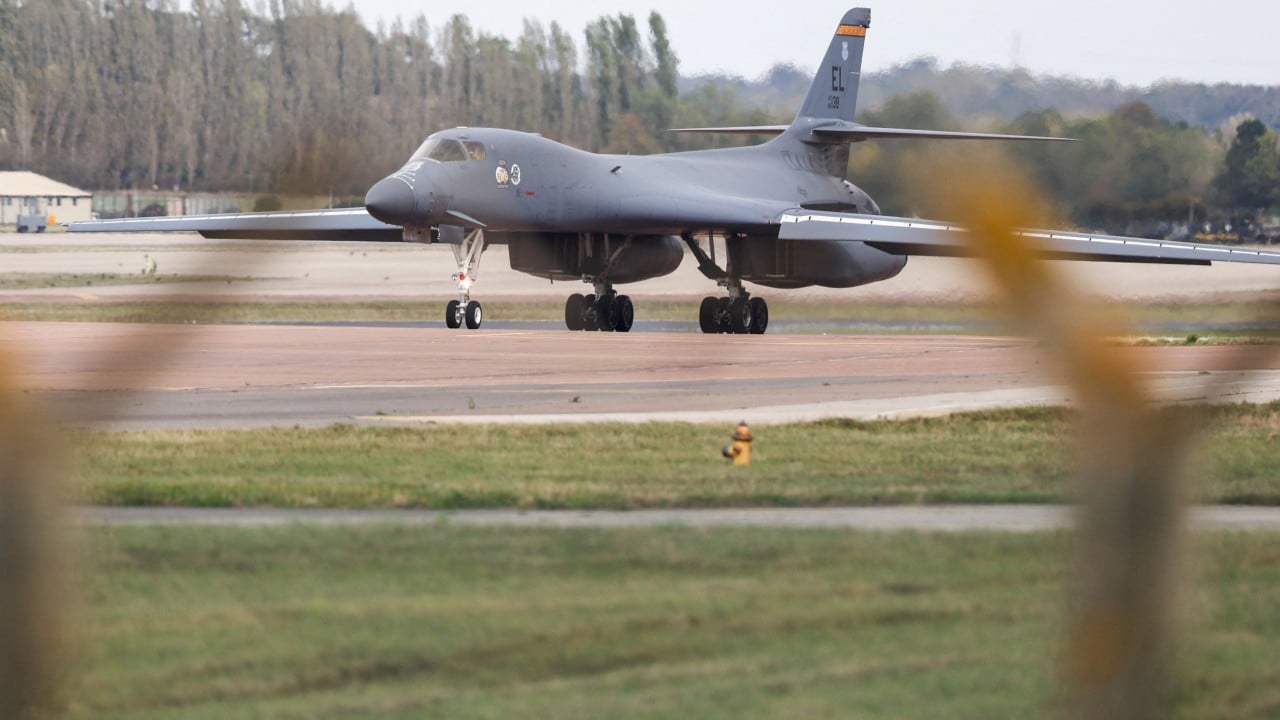
The headlines read like a procedural crime drama. UK police haul in a seventh suspect over a security breach at a United States-operated airbase. The public breathes a collective sigh of relief, assuming the dragnet is working, the perimeter is secure, and the state's monopoly on physical security remains intact.
It is a comforting narrative. It is also entirely detached from reality.
Every time authorities slap handcuffs on another low-level actor in these sprawling international security incidents, the media treats it as a victory. Let us stop pretending that catching the seventh guy in a distributed security failure means anything. If you are still celebrating headcounts after an infiltration at a critical military installation, you are looking at the scoreboard while the stadium burns down.
The lazy consensus in modern defense reporting is that perimeter security is a math problem of addition. Add more fences, add more patrols, add more suspects to the arrest ledger, and safety goes up. That linear equation died twenty years ago. When an airbase housing foreign strategic assets suffers a multi-layered security breach involving multiple individuals, arresting a string of accomplices does not demonstrate competence. It demonstrates that the initial assumption of defense was utterly hollow.
Let us look at the mechanics of modern base vulnerability. Strategic installations like RAF Mildenhall are not isolated bunkers from the Cold War era. They are complex logistical nodes embedded within civilian supply chains, contractor networks, and open European infrastructure. When multiple people manage to breach, surveil, or compromise these sites, the failure is structural. It lives in the friction between host-nation policing and foreign military jurisdiction, in the outsourcing of baseline facility maintenance to the lowest bidder, and in the archaic reliance on physical guards who cannot scale against asynchronous threats.
I have spent years advising private security apparatuses and watching multi-million-dollar defense budgets vanish into concrete barriers and badge readers that fail basic red-team exercises. We spend billions on the hardware of deterrence while starving the software of intelligence.
Consider a scenario where an adversary does not need to bypass your gate because they have already mapped your organizational blind spots through third-party logistics providers. In that world, arresting seven people downstream is like bailing out the Titanic with a teaspoon while the hull is split wide open. You are punishing the symptoms and ignoring the pathology.
The mainstream commentary keeps asking how these suspects gained access and whether local authorities response times were optimal. These are the wrong questions. They accept the premise that a perimeter fence can still act as a hard boundary in an era of electronic reconnaissance, insider threat proliferation, and asymmetric probing.
The real question we should be asking is why we continue to maintain massive, centralized airbases that act as single points of catastrophic failure in densely populated allied territories.
The contrarian truth that defense bureaucrats refuse to admit is that physical security theater is a jobs program, not a protective strategy. It exists to reassure politicians and the public that someone is at the wheel. Meanwhile, the actual threat landscape has shifted entirely to the gray zone between cyber espionage, human intelligence gathering, and supply chain compromise.
If you want to fix modern military base security, stop obsessing over how many suspects are in a holding cell. Start dismantling the bureaucratic silos that prevent real-time threat intelligence sharing between local constabularies and national security agencies. Accept that perimeter defense is dead, and transition to a Zero Trust physical architecture where no zone is inherently trusted just because someone managed to clear a background check three years ago.
Until we stop treating these arrests as vindication and start treating them as an indictment of our entire security philosophy, expect more headlines about the eighth, ninth, and tenth suspect.
The gates are wide open. Handcuffs are just props.