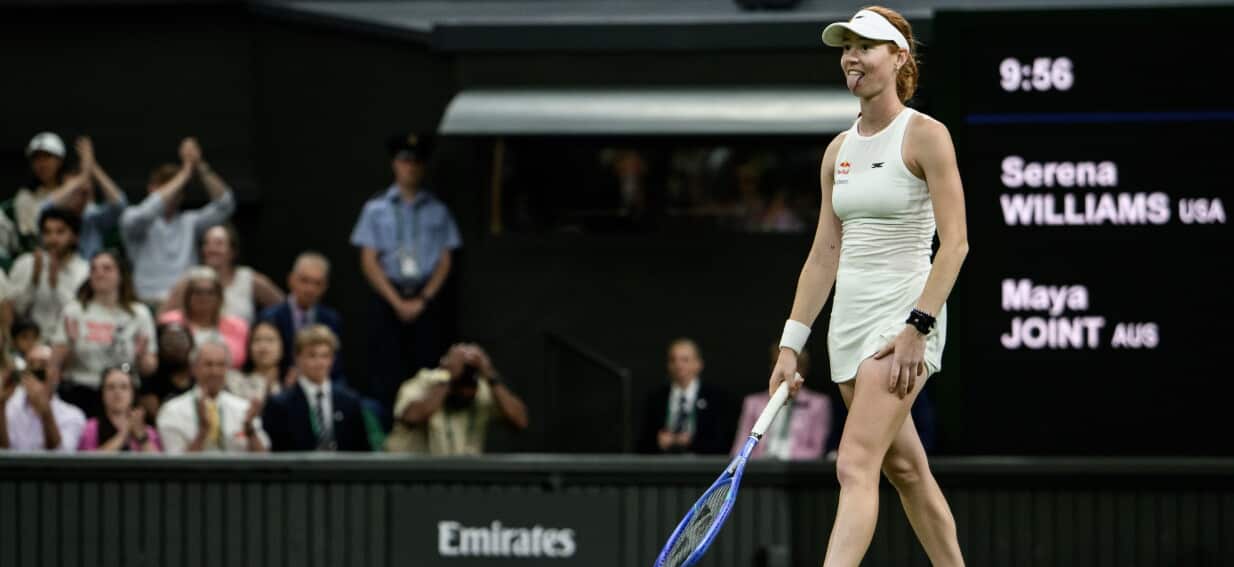
Serena Williams didn't need to step back onto Centre Court. With 23 Grand Slam singles titles and enough historic milestones to choke a sports encyclopedia, her legacy was completely secure. Yet, there she was at 44 years old, standing under a closed roof, staring across the net at a player young enough to be her daughter.
Her first-round match at Wimbledon against 20-year-old Australian Maya Joint ended in a 6-3, 6-7(6), 6-3 defeat. It was an erratic, emotional, and intensely physical baseline battle that lasted over two hours. To anyone tracking just the win-loss column, it looked like a rusty former champion hitting the inevitable wall of time. But looking closely at the actual match reveals something far more fascinating about why tennis legends refuse to fade quietly.
The Generation Gap on Centre Court
The match was a bizarre statistical anomaly. The age difference between Williams and Joint was more than 24 years, making it the second-largest age gap in a women's singles match at Wimbledon during the Open Era. When Williams won her first few major titles, Joint wasn't even a thought.
The physical reality of that gap became obvious early on. Williams entered the tournament after a four-year singles hiatus, having accepted a late wild card. While her ball-striking still carried that signature, thunderous depth, her foot speed was noticeably compromised. Joint, currently ranked 87th in the world, stayed disciplined. The young Australian didn't let the crushing weight of the legendary Williams aura break her, even though she later admitted staying awake until 2 a.m. the night before just thinking about the match.
Joint exploited the lack of mobility. She dragged Williams into long, grinding baseline rallies. Williams showed incredible flashes of her old self, including a blistering 121 mph ace that left the crowd gasping. She fought off a break point at 3-4 in the opening set with a massive roar, but a subsequent double fault and a netted backhand handed Joint the first set in 35 minutes.
A Second Set Miracolo
The match looked ready to slip away completely when Joint rushed to a 3-1 lead in the second set. The arena grew quiet. But true champions possess a gear that defies physical logic. Williams began putting more depth on her groundstrokes, forcing Joint into unforced errors.
The real drama arrived in the second-set tie-break. Joint earned a match point at 6-5. One swing of the racket would have ended the comeback right there. Williams didn't blink. She came up with a massive serve to erase the threat, pushed forward, and watched Joint sail a ball long to grab the set. The 15,000 fans inside Centre Court erupted. For a brief moment, it felt like 2015 all over again.
Williams even carried that momentum into the final set, breaking Joint immediately to take a 2-1 lead. But fitness and match sharpness are things you can't fake on grass. Williams faded physically. Joint kept her nerve, winning four games in a row and ultimately closing out the biggest win of her life on her third match point.
Playing for a Different Kind of Audience
Many wondered why Williams chose to put herself through this. Tennis is a brutal sport when you lack match fitness. The tour is deeper and faster than it has ever been.
The answer lay in the player box. Her daughters, eight-year-old Olympia and two-year-old Adira, were sitting right next to her sister, Venus. Williams openly stated that this comeback wasn't about adding another trophy to her overflowing mantle. It was about letting her children witness what their mother did for a living at the highest level.
That shift in motivation changes how we judge the performance. Williams didn't look like a player desperate to reclaim a world number one ranking. She looked like an elite athlete embracing the pure joy and pain of competition one last time.
What Happens Next at SW19
If you think this loss means Williams is packing her bags and heading back across the Atlantic, think again. The singles run is over, but her Wimbledon journey isn't. She is sticking around southwest London to play doubles alongside Venus.
The Williams sisters are six-time doubles champions at the All England Club. Their chemistry on court is legendary, and the reduced physical demands of doubles play should suit Serena's current level perfectly. It gives fans at least one more opportunity to see the most dominant duo in tennis history share the grass.
Keep an eye on the doubles draw when play resumes. Watch how Serena moves at the net compared to her singles baseline movement. The lack of lateral court coverage that doomed her against Joint won't be nearly as crippling when she only has to protect half the court. Expect a deep run.