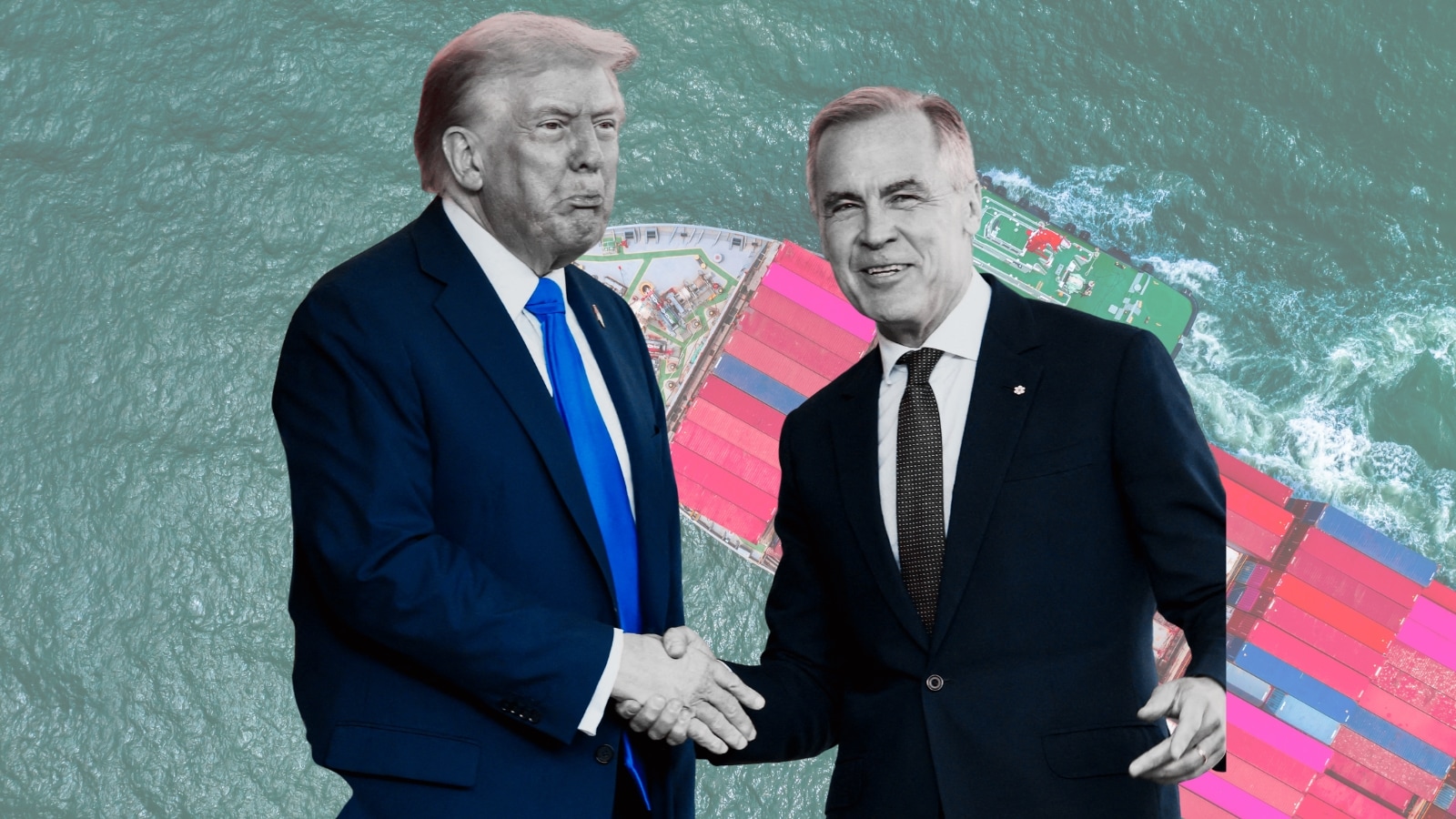
The mainstream financial press is salivating over a "breakthrough" in Seoul. They see high-level bureaucrats from the US and China sitting across a mahogany table in South Korea and they call it progress. They want you to believe this is the diplomatic appetizer before a grand Trump-Xi reconciliation in Beijing.
They are wrong. They are fundamentally misreading the tectonic shifts in global trade.
These talks aren't a bridge to a deal. They are a post-mortem of the old world order. If you’re waiting for a "return to normalcy" or a "thaw in relations," you aren't paying attention to the math. We aren't looking at a trade war anymore; we are looking at the permanent fracturing of the global supply chain. The Seoul meetings are nothing more than theater designed to calm nervous markets before the inevitable collision in Beijing.
The Myth of the Grand Bargain
The "lazy consensus" dictates that trade wars are transactional. You buy more of our soybeans, we lower the tariffs on your EVs, and everyone goes home happy. This logic is twenty years out of date.
In the current climate, trade is no longer about comparative advantage or consumer price indices. It is about national security and technological dominance. When the US Treasury and Commerce departments talk to their Chinese counterparts in Seoul, they aren't haggling over the price of steel. They are drawing battle lines around semiconductors, AI infrastructure, and battery chemistry.
I have watched analysts for a decade predict "The Big Deal" that never arrives. Why? Because the structural imbalances between the US and China are now baked into their respective domestic survival strategies. China cannot abandon its state-subsidized industrial complex without risking internal collapse. The US cannot allow China to dominate the 21st-century tech stack without conceding its status as the global hegemon.
Why Seoul is a Distraction
Focusing on the Seoul trade talks as a "win" is like praising the decor on the Titanic. South Korea is a fascinating choice for a venue because it highlights the exact impossibility of the situation. Seoul is the ground zero of the "Great Decoupling."
South Korean firms like Samsung and SK Hynix are being squeezed between US export controls and Chinese market retaliation. By meeting there, the US and China are essentially signaling to the rest of the world that they are fighting over who gets to dictate the terms of Korean industry.
The media focuses on the "constructive dialogue." The reality is a zero-sum game. Every concession the US demands regarding intellectual property is viewed by Beijing as an act of economic sabotage. Every Chinese demand for the removal of "Entity List" restrictions is viewed by Washington as an invitation to corporate espionage.
The Trump Xi Beijing Summit is a Trap
The narrative suggests that the Beijing summit will be the moment the two leaders "shake hands and fix it."
Nonsense.
If Donald Trump goes to Beijing, he isn't going there to sign a peace treaty. He is going there to demand a surrender. His previous administration proved that he views tariffs not as a temporary lever, but as a permanent tool of industrial policy.
Xi Jinping, conversely, cannot afford to look weak on home soil. The Chinese Communist Party has pivoted its entire propaganda machine toward "Self-Reliance." For Xi to grant the kind of concessions that would satisfy a Trump-led trade delegation would be a political suicide mission.
What we are actually seeing is a "Decoupling by Design."
- Supply Chain Balkanization: Companies aren't waiting for the summit. They are moving to Vietnam, Mexico, and India.
- Capital Flight: Investors are pricing in a permanent "China Risk" premium that no amount of diplomatic photo-ops can erase.
- Dual Tech-Ecosystems: We are moving toward a world with two internets, two GPS systems, and two distinct standards for 6G.
The Semiconductor Delusion
"People Also Ask" if a trade deal will stabilize the chip market.
The honest, brutal answer is no. The US-China chip war is the new Cold War, and it is irreversible. The CHIPS Act in the US and China’s massive "Big Fund" are multi-billion dollar bets that the other side will eventually fail.
$450 billion. That is the estimated amount China is pouring into domestic semiconductor self-sufficiency over the next decade. Do you really think they will trade that away for a few years of lower tariffs on consumer electronics?
The US, meanwhile, has realized that whoever controls the 3nm and 2nm nodes controls the future of warfare. Trade talks in Seoul won't change the fact that the US is actively trying to freeze China’s tech development at the 2018 level. You don't "negotiate" with someone who is trying to put you in a coma.
The Corporate Cost of False Hope
I’ve seen C-suite executives blow millions of dollars in "wait and see" strategies, hoping these summits will restore the status quo. It is a fatal mistake.
The companies winning right now are the ones acting as if the US and China will never have a free-trade relationship again. They are the ones aggressively diversifying their manufacturing bases and regionalizing their sales. If your business model relies on "thawing relations," you are essentially gambling your shareholders' money on a miracle.
The Reality of the "Seoul Confirmation"
The confirmation of these talks is a tactical move to prevent a total market meltdown. It’s "volatility management," not "problem-solving."
The US wants to ensure that China doesn't dump its remaining Treasury holdings too quickly. China wants to ensure that the US doesn't escalate to a full financial blockade before they’ve finished building their domestic alternatives.
This isn't a dialogue; it's a mutual assessment of the other side's weapons.
Stop Asking if the Trade War Will End
The premise of the question is flawed. "Ending" implies a return to the 1990s era of globalization. That era is dead and buried.
The real question you should be asking is: "How do I survive the bifurcated global economy?"
The "unconventional advice" that actually works? Stop reading the joint statements issued after these meetings. They are written by mid-level staffers to say absolutely nothing. Instead, look at the capital expenditure (CapEx) reports of the major tech firms. Look at where the cargo ships are actually going.
The ships aren't waiting for a Beijing handshake. Neither should you.
The era of the "Grand Bargain" was an anomaly, a brief period where geopolitical rivals pretended to be partners for the sake of profit. That pretense is over. The Seoul talks are the closing credits of that movie, and the Beijing summit will be the opening scene of the next conflict.
Build your bunkers. The trade war isn't over; it's just getting started.