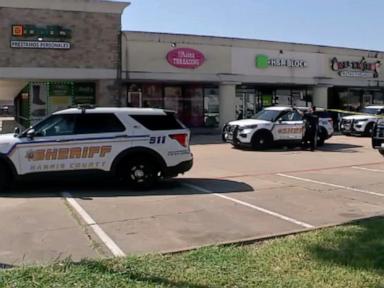
The Texas morning did not arrive with a whisper. It slammed down with the heavy, unyielding weight of an anvil, baking the dry dirt of the shoulder and turning the interstate ribbon into a shimmering mirage. Cars hummed past at eighty miles per hour. Metal blurred into metal. Nobody slowed down. Nobody looked twice at the unmarked vehicle idling near the exit ramp, its engine ticking in the oppressive heat.
Then came the flash. You might also find this related article useful: The Economics of Asymmetric Truces A Breakdown of the Energy Ceasefire Paradox.
Not a camera flash, but the sudden, violent geometry of a pursuit. Sirens tore open the heavy air, slicing through the drone of semi-trucks. Orders shouted across asphalt. Feet pounding against gravel. And within seconds, the abstract machinery of federal enforcement collided with the fragile, bleeding reality of human bone and steel.
According to authorities, an Immigration and Customs Enforcement agent struck a man with a vehicle during a pursuit in Texas. As reported in detailed articles by NBC News, the effects are notable.
Those two dry sentences—scraped raw by press releases and sanitized by official acronyms—are all that most people will ever see. A headline swallowed by the next news cycle. A footnote in a scrolling feed. But beneath that bureaucratic veneer lies a terrifying collision of momentum, fear, and split-second authority.
Let us step closer. Let us look at what happens when the invisible machinery of the state suddenly becomes a physical wall of rubber and horsepower.
The Anatomy of a Chase
Pursuits are rarely planned. They erupt.
Picture the geometry of the highway. A target is spotted. Adrenaline spikes. In that exact microsecond, the human brain stops processing nuance and surrenders to pure, tunnel-visioned reaction. The agent behind the wheel is no longer just a person; they are the operator of a two-ton kinetic weapon. Every pound-foot of torque is an extension of policy, urgency, and the desperate need to close the distance.
On the other side is the fleeing individual.
We do not know his name yet, nor the exact sequence of errors, fears, or misunderstandings that sent him sprinting across lanes that morning. But we know the physics. We know that when a human body faces a multi-ton vehicle, the contest is already over before it begins.
When authorities state that an agent "struck a man," they are using the polite, passive language of institutional protection. They are masking the sound of shattering glass. They are hiding the sickening thud of flesh meeting a steel bumper. They are burying the terrifying moment when weight and velocity override breath and heartbeat.
It is easy to sit behind a screen and debate protocols. It is clean to argue about jurisdiction, rules of engagement, and the legal thresholds for vehicular intervention. But theory vanishes the moment rubber burns against the highway.
The Weight of the Uniform and the Dust
I have stood on those Texas shoulders. I know the grit that gets kicked up by passing eighteen-wheelers, the kind that sticks to the sweat on your neck and makes you cough. I know the blinding glare of a midday sun that turns every windshield into a blinding sheet of silver.
In environments like that, sensory overload is absolute.
Federal agents are told to maintain control. They are trained in tactical driving, positional awareness, and risk assessment. Yet, training is a fragile coat of paint. When panic enters the cabin—when the suspect bolts, when the radio squawks frantic coordinates—that paint chips away instantly. What remains is raw instinct.
And instinct is dangerous.
When a vehicle becomes a tool for apprehension, the line between law enforcement and lethal hazard blurs into nonexistence. The Department of Homeland Security and local police departments maintain strict operational guidelines regarding pursuits, precisely because the car itself is often more lethal than any firearm holstered at the hip. A bullet can be targeted. A vehicle is an indiscriminate wall of mass.
Yet, operations continue. Pursuits happen in the shadows of bustling cities and along dusty rural routes, rarely captured in full context, usually judged only by the wreckage left in their wake.
The Aftermath on the Pavement
Silence follows impact.
That is the part television dramas always get wrong. They keep the music pulsing, the engines roaring. But in real life, the second after metal hits flesh is dead, heavy silence. The dust settles slowly. The sirens whine down to a dying whimper.
First responders arrive. Blue lights paint the asphalt in rhythmic pulses of red and blue.
A man lies on the ground. The abstract debate over immigration enforcement, border security, and federal authority suddenly collapses into a single, agonizing question of triage. Is he breathing? Has his pulse flatlined?
This is where the human cost of systemic friction becomes undeniable. Whether the target of the pursuit was running from deportation, a warrant, or simply out of sheer, blinding terror, the result on the pavement is the same. Blood does not care about administrative codes. Fractured ribs do not check credentials.
Authorities will launch investigations. Internal reviews will be filed. Dashcam footage will be scrutinized frame by frame by men and women in comfortable offices miles away from the heat and the dust. They will measure distances in feet and seconds. They will debate whether the maneuver was justified under section four, paragraph B.
None of that heals the asphalt.
None of that returns the breath to the lungs of the man who thought running was his only option, or calms the trembling hands of the agent who pressed the gas pedal down just a little bit further than intended.
We live in an era obsessed with the spectacle of enforcement. We treat policing and border operations like a spectator sport, cheering for the takedown or screaming over the abuse of power, treating every incident as proof of our preexisting biases. We want heroes and villains. We want simple narratives with clean resolutions.
The Texas highway offers no such comfort.
It leaves us standing in the blistering heat, watching the dust settle over skid marks that spell out a tragedy in black rubber. It forces us to confront the terrifying reality that the machinery of our laws is operated by fallible, terrified, adrenaline-soaked humans—on both sides of the windshield.
The tow truck arrives. The wreckage is cleared. The interstate reopens to traffic, and eighty-mile-per-hour life resumes as if nothing ever happened. But somewhere in a hospital room, a life has fractured into pieces, forever altered by the exact second the steel met the asphalt.


