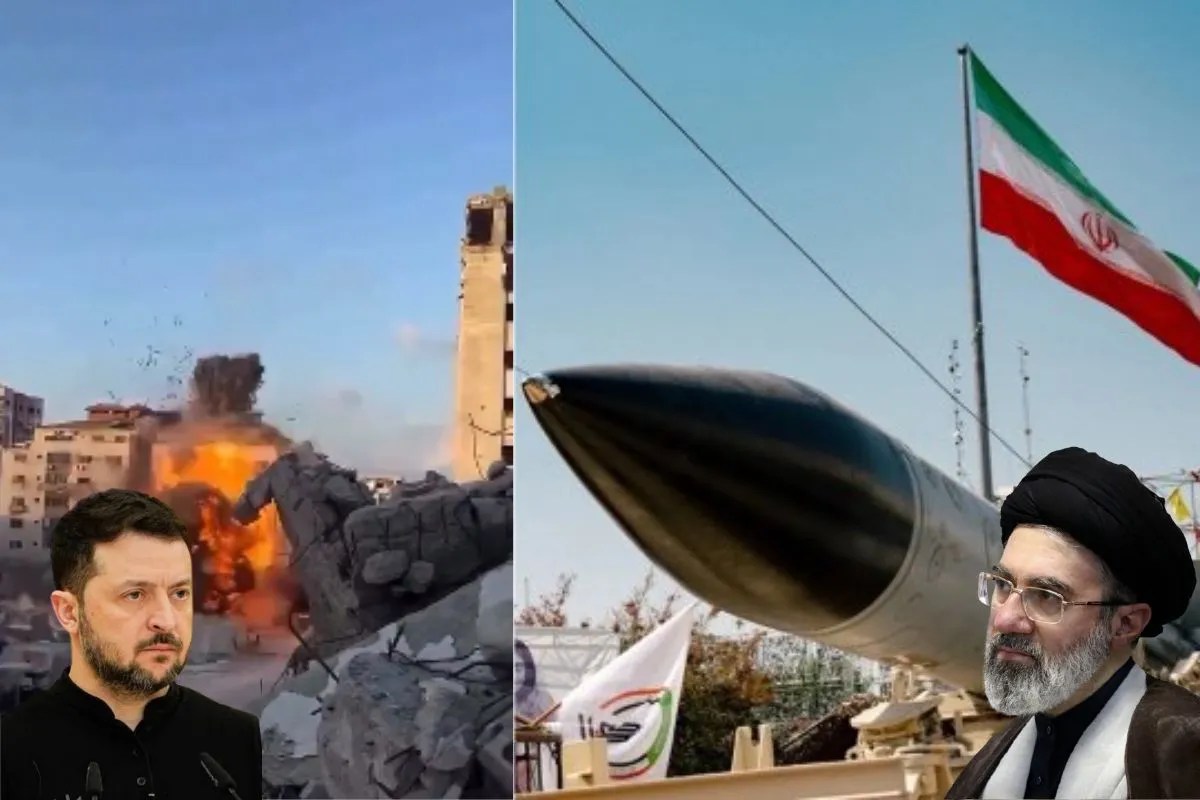
The screen in the subterranean bunker did not blink. It glowed with a sickly, emerald luminance, casting long, fractured shadows across the concrete walls. Coordinates were locked. Trajectories calculated down to the microscopic drift of high-altitude winds. Somewhere in the arid expanses of western Iran, massive hydraulic lifts had already groaned into motion, tilting heavy-duty transporter erector launchers toward the western horizon.
Target: Kyiv. Or perhaps a staging hub further west, a logistics artery pulsing with vital supplies. Expanding on this theme, you can also read: Institutionalizing the Chokepoint The Economics and Legal Architecture of the Iran-Oman Hormuz Protocol.
The distance was roughly two thousand kilometers. A ballistic projectile fired from those coordinates would cover that expanse in less than fifteen minutes. Fifteen minutes. Not even enough time to finish a cold cup of tea or walk to the bottom of a fallout shelter stairs.
And then, the sequence froze. Experts at BBC News have shared their thoughts on this matter.
Not because of a sudden diplomatic breakthrough in Geneva. Not because a sudden stroke of altruism gripped the high command. The finger hovering over the terminal simply stopped. The authorization code remained unentered.
To understand why that finger paused, we have to step away from the glowing maps and look at the invisible architecture of fear that governs our century.
The Anatomy of a Phantom Strike
We live in an age that treats war like a video game. We talk about payloads, interception rates, and kinetic energy as if they were abstract statistics on a spreadsheet. But war is profoundly, horribly human. It smells of damp earth, diesel exhaust, and cold sweat.
Hours before the targeting computers went live, intelligence analysts in three different capitals were staring at their own screens, watching the digital chatter spike. (Note: This reconstruction is based on reported intelligence assessments of mobilized missile batteries and subsequent de-escalation corridors). They saw the telemetry. They saw the fueling protocols initiate.
Imagine sitting in a cramped command post, the hum of cooling fans filling the silence, knowing that a single keystroke four thousand miles away could transform a sleepy European suburb into a crater of ash. You aren't thinking about geopolitics. You are thinking about your mother living three blocks from the municipal water plant. You are wondering if humanity has finally run out of runway.
Why did the operation halt at the precipice?
The calculus of modern conflict is brutal, governed less by morality and more by the mathematics of unbearable consequences. A direct ballistic strike from Iranian soil against European-supported territory would cross a threshold from proxy skirmish to open, unmitigated regional conflagration. It would invite a kinetic response so devastating that the survival of key infrastructure networks would immediately hang in the balance.
The leaders in Tehran knew this. The digital dials showed the green light, but the internal alarms were screaming red.
The Quiet Physics of Deterrence
Deterrence is an invisible wall. You only know it is working when nothing happens.
For months, the Western intelligence apparatus had been quietly repositioning naval assets, recalibrating air defense batteries, and sending unblinking surveillance drones into the upper stratosphere. Every move was broadcast deliberately. It was a high-stakes game of poker played with nuclear-capable arsenals.
When the ballistic missile systems were locked onto their targets, the opposing side did not panic. They responded with silence. A heavy, suffocating silence filled with back-channel warnings, direct diplomatic phone lines ringing in empty offices, and the quiet movement of counter-battery units.
Think of it like walking on thin ice. You hear the first ominous crack beneath your boots. You don't jump. You don't sprint. You freeze. You shift your weight backward, millimeters at a time, testing the structural integrity of the reality beneath you.
The halted operation was not a gesture of peace. It was a collective gasp.
What Happens When the Smoke Doesn't Clear
We often obsess over the explosions that happen. We analyze the shrapnel, count the casualties, and debate the tactical victories on evening news broadcasts. We rarely talk about the disasters that never occurred.
The missiles stayed in their silos. The transport vehicles rolled backward into reinforced concrete garages. The crews stood down, their flight suits smelling of sweat and hydraulic fluid, walking back out into the harsh desert sun with a strange, hollow look in their eyes.
They had looked into the abyss, and the abyss had blinked first.
But relief is a fragile emotion. It does not cure the disease; it merely buys another week of uncertainty. The launch codes remain saved in the memory banks. The launch ramps can be elevated again within the span of a single afternoon. The geopolitical fault lines have not shifted an inch toward safety. They have simply grown deeper, colder, and more rigid.
As the sun sets over the steppes of Eastern Europe and casts long shadows across the Persian plateau, the world continues to spin on its precarious axis. The sirens did not wail today. The bunkers remained empty of fleeing citizens.
Yet, somewhere in the quiet hum of a server farm, the coordinates remain saved in a temporary folder, waiting for the next time the temperature rises, and the second hand begins to tick backward once more.