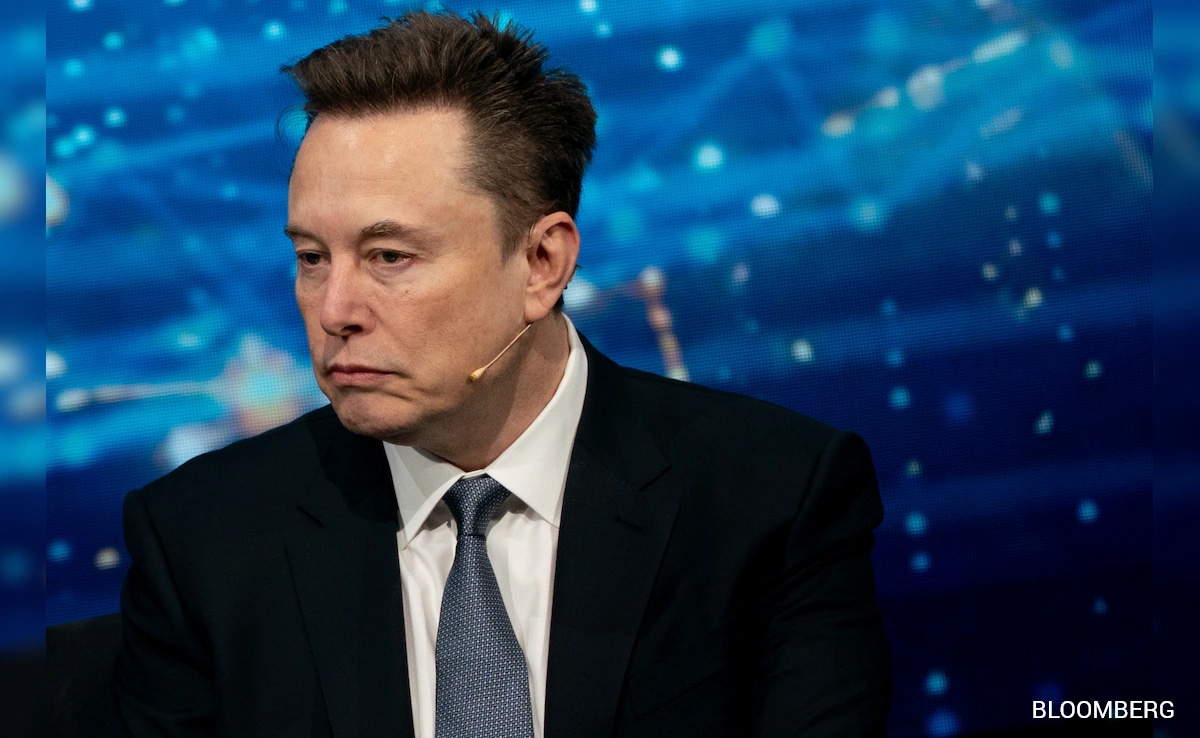
The financial press is obsessed with a trial that doesn't matter. They are staring at the wreckage of a 2022 tweet while the entire structure of market communication has already shifted beneath their feet. The lazy consensus suggests that Elon Musk’s "funding secured" era or his pre-purchase Twitter antics represent a breakdown of regulatory order. They call it a "trial over tweets."
They’re wrong. This isn't a trial about 280 characters. It’s a funeral for the idea that a centralized agency can gatekeep information in a decentralized attention economy.
If you think the legal battle over whether Musk "lied" to shareholders is the main event, you’re missing the tectonic shift. The reality is that the SEC is trying to apply 1934 Securities Exchange Act logic to a 2026 consciousness. They are bringing a musket to a drone fight.
The Myth of the Rational Shareholder
The foundational argument against Musk is built on a lie: the "Rational Shareholder" myth. Regulators and class-action lawyers want you to believe that investors are fragile creatures who sit at mahogany desks, weighing every word of a CEO against audited financial statements before clicking "buy."
I have spent fifteen years watching how capital actually moves. It doesn't move on "facts." It moves on narrative velocity.
When Musk tweeted about taking Tesla private or teased his Twitter acquisition, he wasn't just providing data points. He was signal-jamming. In a world of infinite noise, the only way to maintain a premium valuation is to become the noise. The traditionalists call this "market manipulation." In the actual trenches of modern finance, we call it "liquidity provision via brand dominance."
The "victims" in these lawsuits—the institutional investors claiming they were misled—are often the same ones using high-frequency trading algorithms to front-run the very volatility they claim to despise. They aren't hurt by the tweets. They are annoyed that they couldn't program their bots fast enough to catch the alpha Musk created by bypassing their gated information loops.
Why "Funding Secured" Was a Stroke of Genius, Not a Crime
Let’s look at the "funding secured" debacle through a lens the courts refuse to use: the strategic bluff.
In private equity and M&A, the "intent to act" is often the only tool a principal has to force a stagnant board or a hesitant lender into position. By taking his negotiations to the public square, Musk didn't just bypass the SEC; he bypassed the "vampire squid" investment banks that usually take a $50 million cut just to facilitate the conversation.
- Traditional Path: Hire Goldman Sachs. Leak to the Wall Street Journal. Wait for the market to price in the rumor. Pay 3% in fees.
- The Musk Path: Tweet. Force the hand of the Saudi Sovereign Wealth Fund. Let the shorts burn themselves out.
The legal system views this as "misleading." A more sophisticated view sees it as a brutal, efficient reduction of transaction costs. Musk used his personal brand as the collateral. If the deal failed, he lost the most. That is the definition of "skin in the game," a concept Nassim Taleb championed but the SEC seems to find allergic.
The SEC’s Fatal Flaw: The Speed of Truth
The SEC operates on a timeline measured in fiscal quarters. The market operates on a timeline measured in milliseconds.
When a CEO tweets, the "truth" of that statement is often manifested by the market's reaction to it. It is a self-fulfilling prophecy. If Musk says he has funding, and the stock price jumps, his ability to actually secure that funding increases proportionally to the new valuation. The tweet creates the reality it describes.
This creates a "reflexivity" loop, a concept George Soros used to break the Bank of England, but one that regulators still treat as some sort of dark magic. By the time a trial reaches a courtroom two years later, the "damage" has already been absorbed, hedged, and traded away ten thousand times over.
The Institutional Double Standard
Why is the media so eager to see Musk in a courtroom? Because he exposed the irrelevance of the financial press.
Before the Twitter purchase, the "financial industrial complex" relied on a specific hierarchy:
- CEO whispers to IR firm.
- IR firm whispers to Bloomberg/Reuters.
- Retail investors buy the top.
Musk cut out the middleman. The vitriol directed at him isn't about protecting grandma’s 401(k). It’s about the loss of status for the gatekeepers. When Jamie Dimon or David Solomon makes a vague, market-moving statement about "economic hurricanes" on a closed-door earnings call, it’s called "leadership." When Musk does it in public, it’s a "security violation."
The double standard is so thick you could carve it. We allow "forward-looking statements" in SEC filings that are essentially works of fiction—projections of 20% growth in markets that are shrinking—because they follow the format of legality. Musk’s sin wasn't lying; it was failing to use the correct font.
The True Cost of "Protecting" Investors
Every time the SEC drags a high-profile founder through a trial for "unconventional communication," they aren't protecting you. They are raising the "innovation tax."
I’ve seen dozens of brilliant founders refuse to take their companies public specifically because of the "Musk Treatment." They see the millions of dollars in legal fees, the discovery processes that turn private frustrations into public scandals, and the general hostility toward anyone who doesn't speak in "corporate-ese."
The result? The best companies stay private longer. Retail investors—the very people the SEC claims to champion—are locked out of the highest growth phases of the next generation of companies. You get to buy Stripe or SpaceX only after the VCs have already extracted 100x returns.
The SEC is effectively turning the public markets into a retirement home for dying conglomerates while the real "funding secured" happens behind the closed doors of Silicon Valley country clubs.
Stop Asking if He Lied and Start Asking Why You Care
The "People Also Ask" section of Google is filled with queries like "Did Elon Musk break the law?" or "How much will the fine be?"
These are the wrong questions. The right question is: "Why are we using a legal framework designed for paper tickers to govern a digital-first economy?"
If you lost money shorting Tesla because of a tweet, you didn't lose money because of a lie. You lost money because you bet against a cultural phenomenon using a 20th-century playbook. You ignored the fact that in 2026, attention is the only hard currency.
Musk’s tweets aren't "information" in the traditional sense. They are "volatility events." If you aren't equipped to trade volatility, stay out of the arena. Don't ask the government to turn the arena into a padded room just because you got bruised.
The Future of the "CEO as Sovereign"
We are entering the era of the Sovereign CEO. This trial is the last stand of the old guard trying to reassert control over the narrative. They will likely fail. Even if they win a technical verdict or extract a fine, the precedent is already set.
The next generation of founders—the ones currently building in AI, biotech, and energy—are watching. They aren't learning to be more careful with their tweets. They are learning that the legal system is just another variable to be optimized, another cost of doing business, and another platform for performance.
The trial isn't about justice. It’s about the friction between a legacy power structure and a man who realized that if you own the platform, you make the rules.
The SEC is fighting for a world that no longer exists. They want a world of "material non-public information" and "quiet periods." Musk lives in a world of constant, deafening transparency. It’s chaotic, it’s messy, and it’s occasionally "false" in the literal sense, but it is infinitely more honest than the polished, lawyer-vetted lies that come out of every other Fortune 500 boardroom.
Accept the volatility or get out of the way. The era of the predictable, muzzled executive is over.
Stop looking for "truth" in a courtroom. The only truth that matters is the price on the screen at the closing bell. Everything else is just theatre.
Would you like me to analyze the specific "reflexivity" mechanics in the Tesla-Twitter acquisition period to show how the stock price served as a psychological weapon against the Twitter board?