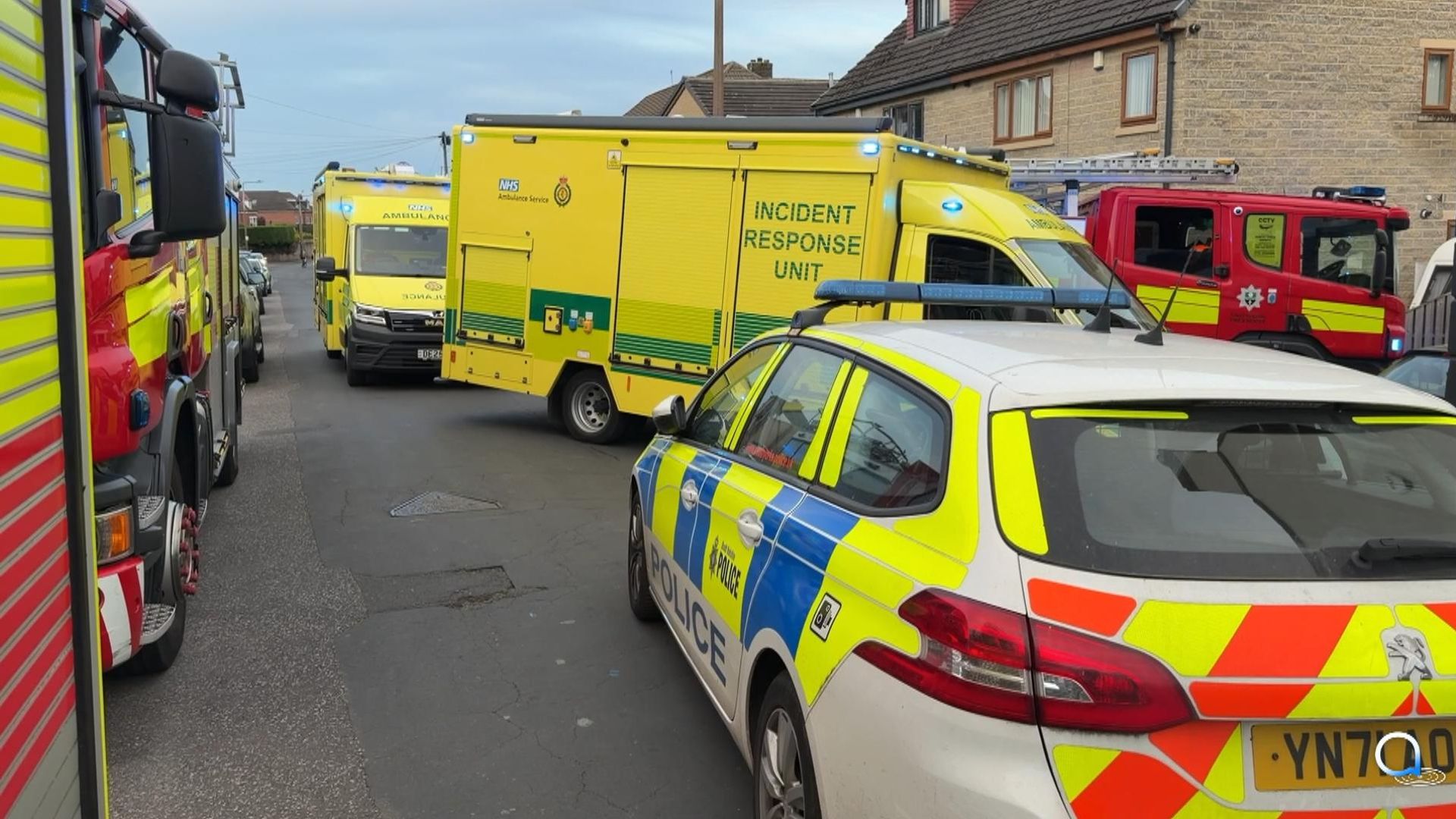
The siren sounds. The helicopters hover. Divers break the surface of murky river water while thousands of people refresh their social media feeds, offering thoughts and prayers for a missing eleven-year-old. The media follows a predictable script: the timeline of the disappearance, the "heroic" scale of the mobilization, and the heartbreak of the community.
It is a tragedy. But the way we respond to it is a systemic failure of logic. In related developments, take a look at: The Geometry of Indo Pacific Deterrence Quantifying Indias Strategic Asymmetry with Singapore and New Zealand.
We pour millions into the optics of the search while ignoring the brutal physics of the water. We treat these incidents as unpredictable "accidents" when they are, in fact, the mathematical certainty of a society that has traded physical literacy for a false sense of technological security. If we actually cared about saving these children, we would stop obsessing over the search and start dismantled the culture of safety theater that allows them to get into the water in the first place.
The Myth of the "Tragic Accident"
Stop calling these events accidents. An accident implies an unavoidable quirk of fate. When an eleven-year-old enters a high-flow river system without an understanding of thermal shock or hydraulic pressure, it isn't an accident. It is a predictable outcome of a massive gap in survival education. The Guardian has analyzed this important subject in great detail.
The "lazy consensus" in modern reporting focuses on the bravery of the search teams. While their grit is undeniable, the focus is misplaced. By the time the first diver hits the water, the window for a "rescue" has often already slammed shut, replaced by the grim reality of a "recovery." We celebrate the scale of the search because it makes us feel like we are doing something. It satisfies the public's need for a narrative arc.
The reality? Most river systems are lethal within minutes due to cold water shock, not just the inability to swim.
- Thermal Shock: The body’s involuntary gasp reflex when hitting water below 15°C (60°F) leads to immediate water ingestion.
- Physical Incapacitation: Within ten minutes, blood flow leaves the limbs to protect the core. You cannot swim if your arms don't work.
- The Entrapment Factor: Rivers aren't swimming pools. Submerged debris and "strainers" (fallen trees) create inescapable traps that no amount of "strong swimming" can overcome.
Stop Teaching Swimming and Start Teaching Survival
We tell parents to get their kids "swimming lessons." Most of these lessons happen in heated, 28°C blue boxes with clear sightlines and no current. This gives children—and their parents—a lethal level of overconfidence.
A child who can do ten laps of a leisure center pool is essentially a novice when faced with a tidal river or a rain-swollen creek. The industry keeps selling the "lap" as the metric of safety. It’s a lie.
True water competency isn't about a graceful breaststroke. It’s about:
- Cold Water Entry: Learning to manage the panic of the initial shock.
- Floating to Live: Understanding that fighting the current is a death sentence.
- Hazard Identification: Recognizing a "low-head dam" or a "recirculation zone" from the bank.
I have seen local councils spend six figures on "Danger: Deep Water" signs that kids treat as a challenge, while simultaneously cutting funding for rugged, outdoor water safety programs. We are bubble-wrapping the world while leaving the kids inside the bubbles completely defenseless when the plastic pops.
The Search and Rescue Industrial Complex
There is an uncomfortable truth about large-scale searches for missing children in waterways: they are often more about public relations than probability.
Search and Rescue (SAR) coordinators know the statistics. They know the flow rate of the river. They know exactly where the physics of the water likely deposited a body. Yet, they are pressured by political leaders and grieving families to deploy "all available resources."
This creates a spectacle. It feeds the 24-hour news cycle. It allows a community to feel a sense of collective action. But it also creates a dangerous precedent where we value the appearance of effort over the efficacy of prevention.
Imagine a scenario where we took 50% of the budget spent on a single, massive, three-day underwater search operation and funneled it into mandatory, rigorous river-safety simulations for every middle-schooler in the district. The "search" wouldn't need to happen because the child would have known to stay out of the water or, if they fell in, how to survive the first sixty seconds.
The Danger of "Awareness" Campaigns
We are drowning in "awareness." Every time a boy goes missing in a river, the internet explodes with infographics about water safety. These are useless.
Awareness is passive. It doesn't change behavior in the heat of a moment fueled by peer pressure or a dare. We need friction, not awareness.
- Environmental Design: Why are riverbanks in high-risk areas designed with steep, slippery concrete slopes that make self-rescue impossible?
- Peer-Led Accountability: We teach kids about the dangers of drugs and "stranger danger," both of which are statistically less likely to kill them than a nearby body of water.
- Removing the Hero Narrative: We need to stop romanticizing the "jump in to save a friend" impulse. Without training, that impulse results in two victims instead of one.
The Brutal Logic of the River
A river does not care about your intentions. It does not care about the "outpouring of community support." It is a machine of kinetic energy.
When we focus the news coverage on the "search," we shift the responsibility away from the living and onto the rescuers. We make it seem like the "system" will be there to catch you if you fall. It won't.
The industry insider secret that no one wants to admit is that the water always wins once you're in it. The only winnable move is to never engage with the current on its own terms.
We need to stop looking for boys in rivers and start looking at why we’ve raised a generation that doesn't respect the water's power. We’ve traded real-world risk assessment for digital safety, and now we’re paying the price in the most expensive currency imaginable.
Stop the thoughts and prayers. Stop the "awareness" posts. Demand that your local government replaces the "all-out search" budget with a "survival-first" curriculum that actually scares kids enough to keep them on the bank.
If the truth makes you uncomfortable, good. Comfort is what gets kids killed.
Get out of the water.