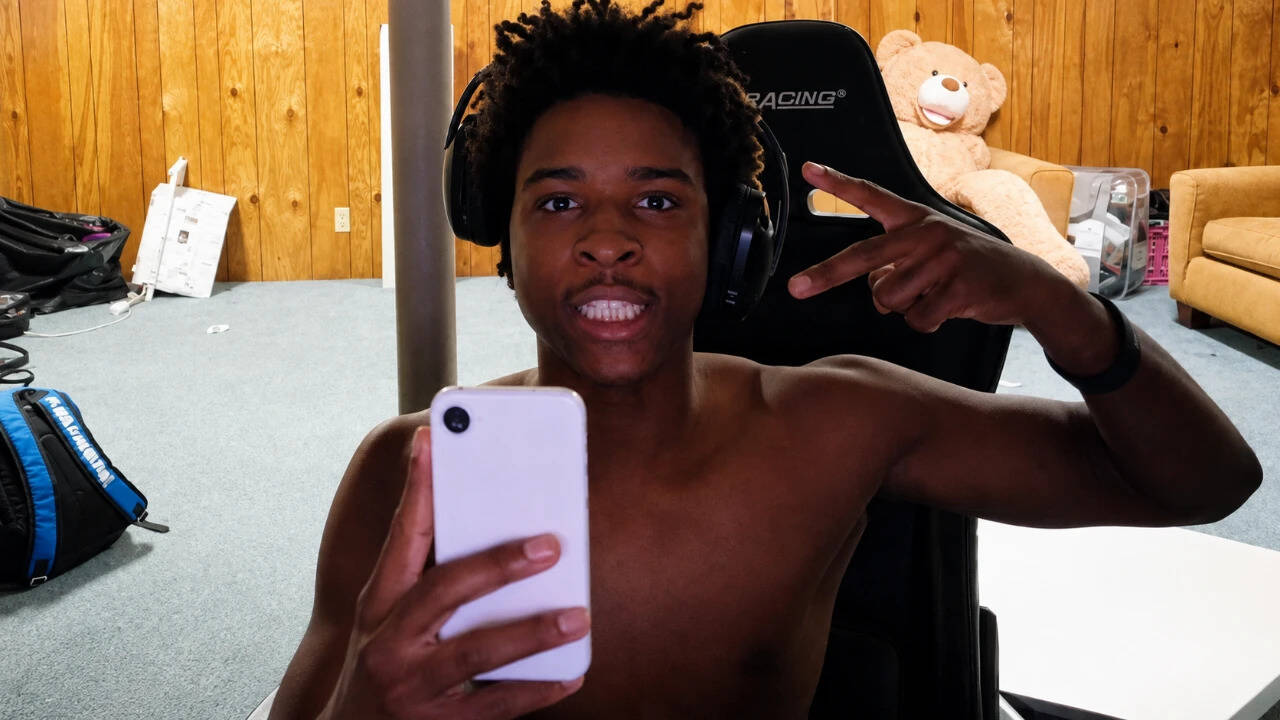
Static hums through a pair of cheap headphones. In millions of bedrooms across the globe, glowing rectangles cast pale blue light against bedroom walls, illuminating the faces of young people searching for a community they cannot find offline. For eighteen-year-old Camden, known online as Nitro Camden, that rectangle was supposed to be an escape. It was a window to a wider room, a place where an ordinary teenager could talk to an empty chair until the chair began to talk back with thousands of viewers.
Then the door swung open.
The transition from an anonymous kid typing in chat rooms to a live broadcaster pulling in fifteen thousand concurrent viewers happened swiftly, marked by a massive raid that flooded his channel with digital life. But celebration has a way of attracting notice from the shadows. In Camden's case, those shadows lived down the hall.
What followed on that live broadcast was not a glitch or a scripted bit designed for shock value. It was the public unraveling of a private prison. As thousands watched in real time, the stream captured an environment of psychological erosion, financial control, and physical confrontation. Mother and son collided in front of a digital audience that transitioned instantly from passive spectators to horrified witnesses. The voices were sharp. The humiliation was absolute. And when the broadcast finally cut, the teenager was standing on a sidewalk with a backpack and a phone, locked out of his own home.
Consider what happens next: the digital world does not look away.
Within hours, the clip spread across platforms with the terrifying velocity of wildfire. Major creators stepped forward, offering shelter, digital backing, and a chorus of validation that he was not crazy, that what he survived was real. Numbers spiked in ways that defy ordinary comprehension. One hundred thousand followers materialized within a single day. Then two hundred thousand. Subscriptions rolled in like a tidal wave. Dual partnerships on major streaming platforms arrived alongside an influx of financial support.
To an outsider scrolling through social feeds, it looked like a fairy tale ending. Streamer gets noticed, trauma goes viral, internet mobilizes, kid gets rich.
The narrative is false.
Financial stability does not erase the sound of a parent screaming that you ruined their life. It does not fill the void left by an education forcefully cut short or bank accounts drained by the very person tasked with protecting them. Behind the follower milestones lay the grim reality of legal maneuvers, police arriving at a door because a restraining order was being filed by a mother who refused to accept accountability.
The internet loves a redemption arc because it wraps a messy human tragedy into a neat package with a clear beginning, middle, and end. We want to believe that a sudden influx of subscribers can wash away the grease of domestic abuse. We want to see the follower count tick upward and pretend the scoreboard erases the injury.
Except the human heart does not keep score that way.
Camden’s story forces us to confront a darker truth about modern visibility. We live in an era where millions can watch a child experience trauma live on a Tuesday, click a button to send support, and then scroll away to the next piece of content by Wednesday afternoon. The audience moves on. The algorithm forgets. But the kid on the sidewalk still has to figure out how to rebuild a life when the foundation was built on quicksand.
The stream is back on. The room is quiet. The ring light reflects in eyes that have grown entirely too old, too fast.