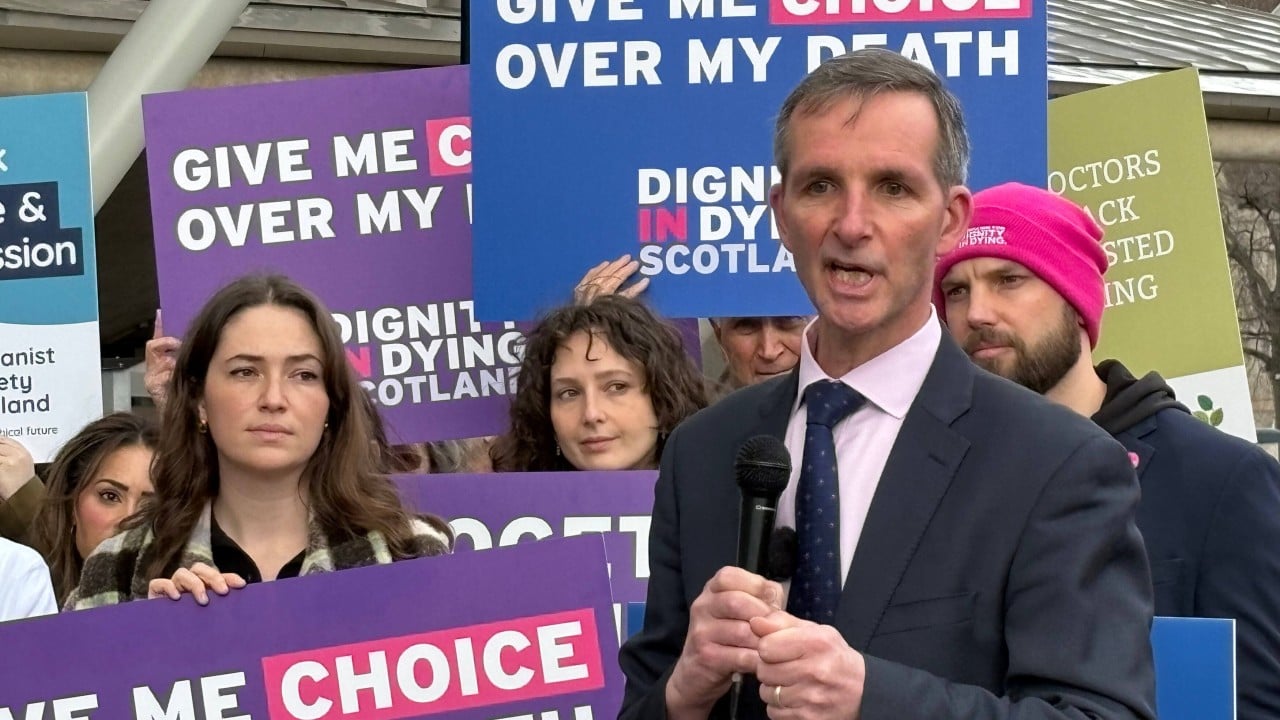
Holyrood has spoken, and the verdict is a freezing blast of reality for those who spent years campaigning for the right to choose the timing of their own death. The rejection of the latest Assisted Dying Bill in the Scottish Parliament isn't just a legislative hiccup. It is a fundamental collapse of a movement that thought public opinion polls would be enough to steamroll over deep-seated institutional resistance. While the public remains largely in favor of some form of medical assistance in dying, the politicians who actually hold the pens have decided that the risks to the "vulnerable" outweigh the autonomy of the individual.
This decision leaves Scotland in a grim state of limbo. On one hand, you have a medical establishment that is increasingly capable of extending life but often fails to maintain its quality. On the other, you have a legal framework that treats a final act of mercy as a potential crime. The bill was supposed to provide a "safe and compassionate" route for terminally ill adults. Instead, it hit a wall of opposition from religious groups, disability advocates, and a significant portion of the medical profession who argued that "safeguards" are nothing more than a legal fiction.
The Illusion of Safeguards
The primary reason this bill died on the floor was a lack of trust. Proponents argued that the criteria were strict—two doctors had to sign off, the patient had to be terminally ill, and the decision had to be entirely voluntary. But for many lawmakers, these hurdles looked less like protection and more like a checklist for a slippery slope.
Critics pointed to Canada. In the world of international policy, the Canadian MAiD (Medical Assistance in Dying) program has become the ultimate cautionary tale. What started as a provision for those with "reasonably foreseeable" deaths has expanded to include those with chronic illnesses and, potentially, mental health issues. Scottish MSPs (Members of the Scottish Parliament) watched that trajectory and recoiled. They feared that by opening the door even a crack, they were inviting a future where "the right to die" becomes a "duty to die" for those who feel they are a burden on the NHS or their families.
The argument wasn't just about ethics; it was about the practicalities of a fractured healthcare system. When palliative care is underfunded and social care is in a state of permanent crisis, offering death as a "choice" feels cynical to those on the front lines. If a patient chooses to end their life because they can't get a bed in a hospice or because their pain management is inadequate, that isn't autonomy. It's a failure of the state.
The Palliative Care Deficit
While the debate raged about the right to die, a much quieter crisis has been unfolding in Scotland’s palliative care wards. We have reached a point where the quality of your death depends entirely on your postcode. Some regions have world-class hospice facilities, while others leave patients to wither in understaffed hospital bays.
Lawmakers who opposed the bill frequently cited the need to improve palliative care as the "real" solution. This is a convenient political shield. It allows politicians to sound compassionate while avoiding the difficult, expensive work of actually fixing the system. If the Scottish Government is serious about making assisted dying unnecessary, it needs to pour hundreds of millions of pounds into end-of-life care. Currently, that money isn't there.
We are seeing a massive disconnect between legislative intent and fiscal reality. You cannot tell a person in agony that they must wait for better palliative care when that care is years away from being fully funded. This is the brutal truth of the Scottish rejection: it forces patients to endure the very suffering the bill was designed to prevent, based on the promise of a "gold standard" of care that currently exists mostly on paper.
The Medical Rebellion
The British Medical Association (BMA) and the Royal College of Nursing have historically been the most significant roadblocks to these changes. While the BMA moved to a position of "neutrality" recently, the individual rank-and-file doctors remain deeply divided.
The core of the medical argument is the Hippocratic tradition. For many physicians, the act of prescribing a lethal dose of medication is a fundamental betrayal of their role as a healer. They argue that it fundamentally alters the doctor-patient relationship. If you know your doctor has the power to end your life, does that change how you view their advice? Does it change how they prioritize your treatment?
The "conscientious objection" clause in the bill was meant to protect doctors who didn't want to participate. However, in a practical sense, it would have created a two-tier medical system. You would have had "willing" doctors and "unwilling" doctors, leading to a situation where patients might have to shop around for a physician who would help them die. In a centralized system like the NHS, this creates logistical nightmares that the bill's authors never fully addressed.
The Political Calculus of the SNP
Politics in Scotland is never just about the policy; it’s about the party. The Scottish National Party (SNP) is currently a house divided. With leadership changes and internal friction, the party is hesitant to take on massive social upheavals that might alienate core voting blocs—particularly older, more conservative voters in rural areas.
While some high-profile SNP members supported the bill, the leadership's lukewarm response signaled to the backbenches that this wasn't a fight worth dying for. There was a sense that with independence and the economy already stretching the government thin, opening a fresh front in the culture wars was a strategic mistake.
This wasn't just a vote of conscience; it was a vote of convenience. By letting the bill fail, the government avoids a protracted legal battle with the UK Supreme Court, which has shown a penchant for striking down Scottish legislation that it deems to exceed Holyrood’s powers. The memory of the Gender Recognition Reform (GRR) debacle looms large. Nobody in Edinburgh wanted another constitutional standoff over a social issue, especially one as emotionally charged as this.
The Human Cost of Inaction
Behind every statistic and legislative debate is a person trapped in a body that has become a cage. We have reached a point where the law is out of step with the reality of modern medicine. We are incredibly good at keeping people alive, but we are often terrible at letting them go.
Consider the "Dignitas flight." Every year, a small number of Scots who can afford the five-figure price tag fly to Switzerland to end their lives. This creates a shameful inequality. If you are wealthy, you have the right to a peaceful, controlled death. If you are poor, you are forced to take your chances with the Scottish legal system or resort to more violent, private methods that leave families traumatized and at risk of prosecution.
The police and prosecutors in Scotland have generally shown little appetite for charging grieving relatives who help a loved one travel to Switzerland. This "nod and a wink" approach to the law is cowardly. It allows the state to maintain a moral high ground while outsourcing the actual act of assisted dying to another country. It is a classic British compromise—messy, hypocritical, and fundamentally unfair.
The Organized Opposition
The campaign against the bill was a masterclass in lobbying. A coalition of religious leaders and disability rights groups, such as "Better Way," successfully framed the debate not as a matter of individual freedom, but as a threat to societal safety.
They used the language of "vulnerability" to great effect. By focusing on the elderly and the disabled, they tapped into a deep-seated fear that a "cost-effective" death would eventually be pushed onto those who are seen as a "drain" on society. This narrative proved far more powerful than the stories of individual suffering presented by the pro-assisted dying camp.
The opposition also benefited from a lack of clarity in the bill’s language. Terms like "terminal illness" are notoriously difficult to define in a legal sense. Does it mean six months to live? A year? Is a condition like motor neurone disease "terminal" from the moment of diagnosis? The ambiguity allowed critics to paint a picture of a law that could be applied to almost anyone with a long-term condition.
The Global Context
Scotland is not an island in this debate. Across the world, the tide is moving toward some form of assisted dying. From several US states to Australia, New Zealand, and much of Western Europe, the "right to die" is becoming an established legal principle.
Scotland’s rejection makes it an outlier in the progressive world it claims to lead. It suggests that for all its talk of being a forward-looking, compassionate nation, Scotland remains deeply conservative when it comes to the ultimate questions of life and death. The "social democratic" paradise that the SNP likes to project has proven to be quite traditionalist when the pressure is on.
The failure of this bill will likely stop any similar efforts in the UK Parliament for the foreseeable future. If Scotland—with its separate legal system and more "progressive" reputation—couldn't pass this, the chances of Westminster doing so are virtually zero. This is a massive blow to national campaigns like Dignity in Dying, who saw Scotland as the first domino that would lead to a UK-wide change.
The Path Forward
The campaigners aren't going away. They will wait, they will rebrand, and they will try again. But next time, they cannot rely on the "compassion" argument alone. They need to address the hard, technical questions about medical ethics, the funding of palliative care, and the specific legal definitions that caused this bill to stumble.
They also need to face the fact that the medical profession is not yet on their side. Until there is a significant shift in the culture of the NHS and the BMA, any legislative effort will be seen as an imposition from the outside rather than an evolution of care.
The rejection of the bill is a victory for those who believe in the "sanctity of life" at all costs. But for the families who have watched their loved ones suffer through prolonged, agonizing deaths, it is a devastating betrayal. The status quo has been preserved, but the status quo is a horror story for those living it.
The Scottish Parliament has decided that the risk of a "bad" law is worse than the certainty of a "bad" death. It is a decision that will be felt in every hospice and every home where a terminal diagnosis has been delivered. The debate is over for now, but the suffering that fueled it remains.
Go to the Scottish Parliament's official website and read the transcripts of the debate to see exactly which MSPs voted against the bill and what their specific justifications were.