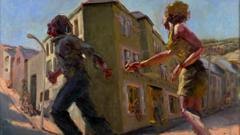
Scooby-Doo has been running around solving crimes for over half a century. We have seen him as a cartoon classic, a live-action CGI hybrid, a puppet, and a sleek modern animation. Yet, Hollywood constantly struggles to capture what actually makes the cowardly Great Dane work. The newly announced project, Scooby-Doo Origins, looks to change that by stripping away the bloated franchise lore and focusing strictly on the bond between a boy and his pup.
Fans have been burned before. Recent iterations tried to turn the franchise into a superhero universe or a cynical adult comedy that alienated the core audience. This new glimpse proves the creators are throwing out the modern playbook. They are going back to basics. It is about time.
Shaggy and Scooby Before the Mystery Machine
The first official look at the project establishes a specific tone immediately. It is not trying to be edgy. It is not trying to setup a massive cinematic universe. Instead, the focus stays squarely on a young, clumsy Great Dane pup meeting a scruffy kid named Norville Rogers.
Most reboots make the mistake of starting when the Mystery Incorporated gang is already established. They give you the iconic green van, the catchphrases, and the spooky mansions right from the first frame. This project takes a breath. It shows Scooby before he became the brave-but-terrified mascot we know. He is just a dog. He messes up. He trips over his own paws.
That grounded approach matters. The original 1969 Hanna-Barbera series, Scooby-Doo, Where Are You!, worked because the kids felt like real teenagers driving around the country, even if the villains were guys in rubber masks. By centering the story on the puppy years, the writers can build real emotional stakes before the first ghost ever shows up.
Throwing Out the Velma Playbook
Let us be completely honest about the state of the franchise. The recent adult-oriented spin-off series on Max split the fanbase entirely. It removed Scooby completely, changed the core dynamics of the characters, and relied heavily on mean-spirited meta-humor. It felt like a show that hated its own source material.
Scooby-Doo Origins looks like a direct response to that backlash. The production team seems to understand that you can modernize a property without destroying its soul. The animation style leans into warmth and soft textures rather than sharp, flash-animated angles.
- Character first: The bond between Shaggy and Scooby is the anchor of the entire franchise. If that does not work, the mysteries do not matter.
- Atmosphere over gags: Early concept art suggests a return to the moody, fog-drenched backgrounds that defined the classic era.
- Respecting the audience: Teenagers and nostalgic adults do not need characters talking down to them or breaking the fourth wall every five seconds.
The biggest trap for any legacy cartoon is trying to please everyone. When you try to make Scooby-Doo look like a high-octane action movie, you lose the charm. When you turn it into a gritty teen drama, it falls flat. This project seems content with being a beautifully animated story about friendship and early detective work.
The Evolution of a Great Dane
People forget that Scooby-Doo's design was an intentional subversion of the breed. Character designer Iwao Takamoto consulted with a Great Dane breeder back in the late 1960s to understand what made a prize-winning dog. Then, he purposefully drew Scooby with the exact opposite traits. He gave him a sloped spine, bowed legs, a double chin, and the wrong coloration.
He was designed to be imperfect. He was designed to look silly.
The new puppy design in the upcoming project honors that legacy. He is not a sleek, perfect cartoon animal. His ears are too big for his head. His paws are massive and uncoordinated. You can see the DNA of Takamoto's original sketches in the way the pup carries himself.
What This Means for the Mystery Inc Lore
A lot of reboots try to overwrite history. They change the origins to make things look more dramatic or dangerous. Rumors from the production circle suggest that this series will slowly introduce the rest of the gang—Fred, Daphne, and Velma—one by one rather than forcing them together in the pilot episode.
This slow-burn strategy gives the characters room to breathe. We get to see how Fred became obsessed with traps. We see Velma's skepticism develop. Most importantly, we see why this specific group of kids decided to stick together instead of joining different high school cliques.
If you want to track the updates on this project, keep an eye on official studio press releases rather than speculative fan forums. The animation industry moves slowly, and projects like this undergo massive shifts during storyboard phases. For now, the initial look promises a return to form that the franchise desperately needs. Look for the first full teaser trailer later this year to see if the animation holds up to the promise of the concept art.