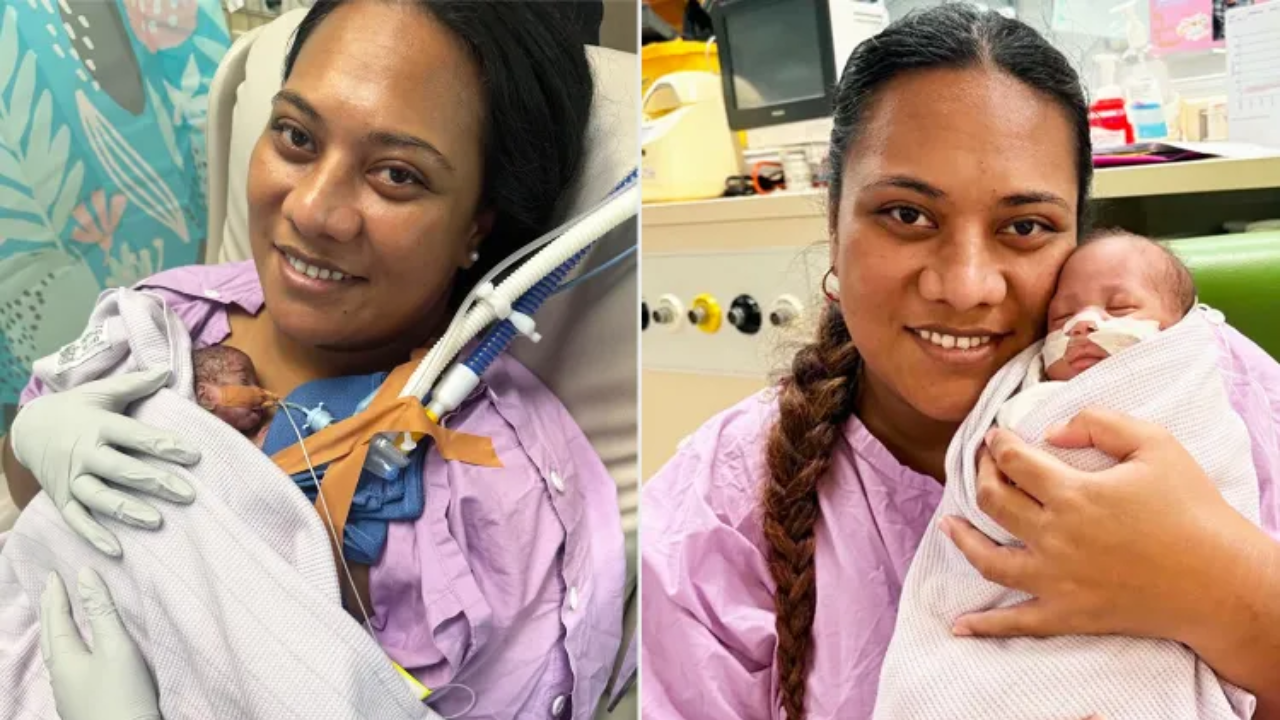
The hospital room was entirely too quiet at 3:15 in the morning.
I remember staring at the ceiling tiles, counting the faint, gray speckles because looking down meant confronting the heavy, unfamiliar geography of my lower abdomen. My daughter was sleeping in her clear plastic bassinet just inches away, breathing with a soft, ragged rhythm that should have filled me with uncomplicated joy. Instead, a hollow, echoing terror sat in my ribs. Twelve hours earlier, a team of masked strangers had sliced through seven layers of human tissue to pull a new life into the light. Now, those strangers were gone. For another view, check out: this related article.
The nurse had handed me a bottle of ibuprofen, whispered instructions about keeping the incision dry, and closed the door behind her.
Left to get on with it. Further reporting on the subject has been published by Medical News Today.
That phrase has haunted me ever since. It is the unspoken motto of modern postpartum care, a brutal expectation that after major abdominal surgery—because that is what a Cesarean section fundamentally is—a woman should simply morph into a functioning mother overnight. Recent data shows that C-section numbers have hit record highs, climbing steadily year after year. Yet the infrastructure surrounding the women undergoing these surgeries remains frozen in a time of institutional indifference. We are treating major surgical interventions like routine grocery trips, and the human cost is mounting in the shadows.
Consider what happens next for the typical mother discharged three days after major surgery.
She is sent home with a newborn who demands round-the-clock sustenance, meaning sleep is reduced to frantic, broken fragments of twenty minutes here and an hour there. But sleep deprivation is only the surface layer of the crisis. To pick up her baby, she must engage the exact core muscles that have just been aggressively sliced, separated, and stitched back together. Every single diaper change requires a careful, agonizing calculation of leverage and pain management.
Let us be entirely clear about the mechanics. A Cesarean is not an easy way out, a lazy alternative, or a cosmetic choice made on a whim. It is a life-saving medical procedure. It involves cutting through the skin, the subcutaneous fat, the fascia sheath, separating the rectus abdominis muscles, slicing into the peritoneum, and finally opening the uterus. Surgeons pull a baby through that breach, repair the layers with meticulous sutures, and hope the body knows how to rebuild itself while simultaneously producing milk, bleeding heavily from the placental site, and managing a hormonal crash of epic proportions.
Then, forty-eight hours later, she is told to walk around.
When I stood up for the first time post-surgery, my knees buckled. It felt as though my torso was splitting in two, held together only by sheer stubbornness and a tight mesh of surgical thread. I cried—not out of sadness, but from the sudden, overwhelming realization of how fragile I suddenly was, and how little anyone seemed to notice.
The medical system discharges patients with a printed pamphlet of bullet points. Watch for infection. Take your pain meds. Do not lift anything heavier than your baby.
Those instructions sound simple on paper. In practice, they are a cruel joke. A newborn car seat weighs roughly ten pounds empty. Add a growing infant, and you are immediately violating the lifting restrictions just to take your child to a pediatrician appointment. Who carries the car seat down the front steps? Who washes the endless mountain of pump parts when bending over the sink feels like being stabbed with a hot poker?
The answers usually involve frantic phone calls, exhausted partners who also have to return to work after two weeks of leave, or worse, absolute isolation.
We have normalized maternal abandonment.
In traditional societies, the forty-day confinement period was sacred. New mothers were surrounded by older women who took over cooking, cleaning, and infant soothing, allowing the mother to rest, heal, and bond. Today, the modern mother returns to an empty house within days. Her phone buzzes with group chats demanding pictures, while her body is leaking, aching, and desperately trying to knit itself back together.
The rising rate of C-sections is driven by a complex web of factors: older maternal ages, rising rates of induced labors that fail to progress, prior uterine scars, and defensive medicine in a litigious healthcare climate. But while obstetricians are getting exceptionally skilled at performing the surgery, the medical establishment washes its hands of the aftermath.
Postpartum checkups are routinely scheduled for six weeks post-surgery. Six weeks. In what other surgical specialty is a patient told to wait a month and a half to see their surgeon after a major abdominal procedure? If someone had an appendectomy or open-heart surgery, they would have a follow-up appointment within seven to ten days to check wound healing, assess pain levels, and screen for complications.
For the postpartum mother, the six-week checkup is often a rushed fifteen-minute appointment where the doctor glances briefly at the scar, asks if you are using birth control, and clears you for exercise and intercourse. The invisible wounds—the postpartum depression, the surgical trauma, the haunting flashbacks of monitors beeping in the operating room—are rarely touched.
We need to talk about the psychological toll of an unplanned or emergency C-section.
Many women enter the operating room expecting a calm, unmedicated birth, only to find themselves strapped to a cold metal table while bright fluorescent lights reflect off surgical steel. They feel the tugging, the pressure, the surreal sensation of someone rummaging through their internal organs while they are completely paralyzed from the chest down. When the baby finally cries, relief floods the room, but the trauma of the delivery lingers quietly in the background.
When these mothers experience grief or distress over their birth experience, they are frequently shut down with a toxic platitude: "At least you have a healthy baby."
Of course the baby is the priority. But mother and child are not mutually exclusive entities. You can be profoundly grateful for a healthy child while simultaneously mourning the violent disruption of your birth experience and the protracted agony of your physical recovery. Minimizing a mother's trauma does not heal her; it forces her to bury the pain where it can fester into postpartum anxiety, depression, and long-term pelvic floor dysfunction.
The physical ramifications of a C-section extend far beyond the initial weeks of wound care.
Adhesions—bands of scar tissue that form inside the body after surgery—can bind organs together, causing chronic pelvic pain years down the road. Nerves around the incision site can remain numb or hypersensitive for decades. Diastasis recti, the separation of the abdominal muscles, can become permanent if not properly rehabilitated with specialized physical therapy, which is rarely covered by standard insurance or even recommended by primary care physicians.
We are treating women like disposable vessels. Once the product is delivered, the packaging is discarded.
Change requires a complete overhaul of how we view postpartum care. We must stop treating the six-week mark as the finish line and start treating it as the bare minimum starting point for recovery. Every woman who undergoes a Cesarean section should be automatically referred to pelvic floor physical therapy. Every postpartum mother should receive mandatory mental health screenings at two weeks, four weeks, and eight weeks post-delivery, rather than waiting for her to break down in tears at a pediatrician's office.
More than anything, we need a cultural shift in empathy.
Next time you see a new mother walking slowly down the street, holding her lower belly with a grimace etched across her face, do not just smile and comment on the cute baby in the stroller. Understand the invisible war zone she has just survived. Understand that beneath her sweater is a jagged, healing reminder of the ultimate sacrifice the human body can make to bring new life into a complicated world.
She is not just getting on with it. She is holding herself together, piece by careful piece, in a world that forgot how to help her rebuild.
The hospital room grew lighter as dawn finally bled through the blinds, casting long, pale shadows across the floor, while somewhere down the hall, another operating room door swung open to begin the cycle all over again.