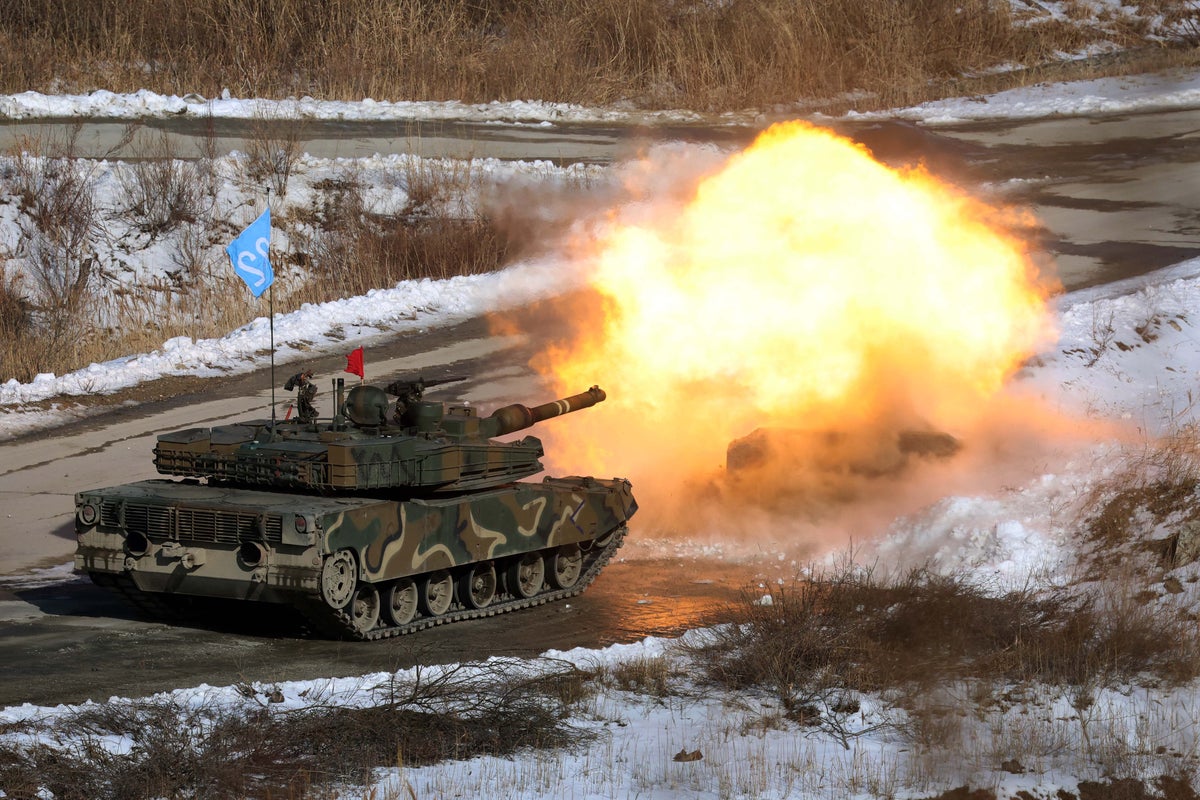
The foreign policy establishment treats military exercises on the Korean Peninsula like holy writ. Every spring and autumn, tens of thousands of troops mobilize, massive hardware rolls across provincial highways, and Washington pundits nod sagely about deterrence, readiness, and the ironclad alliance.
Then Donald Trump steps in, cuts the drills to preserve personal rapport with Kim Jong Un, and the entire beltway apparatus suffers a collective aneurysm.
The lazy consensus from mainstream commentary is predictable. Critics shriek that scaling back joint readiness leaves South Korea exposed, hollows out combat capability, and rewards a rogue dictatorship for empty charm offensive gestures. They treat every cancelled brigade-level maneuver as a surrender of strategic ground.
They are wrong. Not just slightly mistaken, but fundamentally misunderstanding the modern mechanics of deterrence and escalation.
Let us look at the reality behind the institutional panic. I have spent years analyzing force posture in Northeast Asia, and the truth is that the traditional schedule of massive, scripted exercises has long devolved into expensive theater that produces more friction than tactical edge.
The Myth of the Perpetual Mobilization
For decades, the standard playbook relied on massive force-on-force friction: Key Resolve, Ulchi Freedom Guardian, Foal Eagle. Billions of dollars burned in jet fuel, shipping costs, and wear-and-tear on aging platforms.
The conventional wisdom dictates that stopping these drills degrades fighting capacity. But combat readiness is not maintained by marching fifty thousand troops through simulated mud once a year while Pyongyang views the entire spectacle through binoculars as an existential invasion rehearsal.
Strategic deterrence on the peninsula does not hang by the thread of an amphibious landing drill in Pohang. It rests on hardened command structures, real-time intelligence feeds, prepositioned stocks, and the quiet, persistent presence of air and naval assets that operate invisibly every single day.
When Washington trims these massive set-piece maneuvers, it is not abandoning Seoul. It is removing the primary propellant of regional escalation. Every time massive armor rolls toward the DMZ, North Korea responds by testing tactical short-range ballistic missiles, revving up artillery batteries, and locking down its internal populace in a frenzy of paranoia.
By dialing down the volume of the drills, we starve the regime of its preferred propaganda fuel. We stop playing into their narrative of imminent imperialist invasion, while losing precisely zero actual strategic capability.
Real Deterrence is Quiet
The foreign policy blob loves noise because noise looks like action. If airplanes are flying and generals are holding press conferences, politicians can point to visible inputs and claim security is being manufactured.
True modern deterrence is decentralized, digitized, and largely invisible.
Imagine a scenario where a crisis erupts tomorrow. Do you think the commander on the ground relies on muscle memory from a scripted exercise script written in 1998? Of course not. Modern warfare requires distributed command, cyber resilience, and precision targeting, none of which require fifty thousand troops playing war games in the valleys of Gangwon Province.
When Trump tied the reduction of exercises to his personal relationship with Kim, conventional analysts labeled it amateur hour. They called it dangerous personalization of diplomacy.
They missed the masterclass in asymmetric de-escalation.
For decades, presidents treated North Korea as a monolithic evil that could only be managed through relentless pressure and cyclical crises. That approach produced exactly one result: a steady, uninterrupted expansion of Pyongyang's nuclear stockpile. The old guard wants to keep doing the same thing forever because failure within the bureaucracy is safe as long as everyone fails together.
Daring to alter the rhythm of deployments introduces risk, yes. Any diplomatic opening carries downside. But pretending that the status quo of endless escalation drills was working is a delusion born of institutional comfort.
The Strategic Dividend of Unpredictability
Critics whine that halting drills sends a confusing signal to our regional allies. Seoul gets nervous; Tokyo raises an eyebrow.
Good.
Allies should never take American security guarantees as a perpetual, autopilot motion machine. When Seoul and Washington are forced to negotiate the actual utility of each deployment rather than rubber-stamping historical routines, the alliance becomes sharper and more honest. South Korea boasts one of the most advanced economies and formidable conventional militaries on earth. Treating them like a fragile protectorate that collapses the moment a computer simulation is postponed is insulting to their capability.
We need fewer bureaucratic checkboxes and more strategic agility.
If pausing exercises opens a channel for talks, lowers the temperature during a tense winter, or forces Pyongyang to recalculate its paranoid assumptions, it is a net positive. If it fails, the drills can resume in a month. That is not appeasement. That is tactical flexibility.
The pundits will keep writing their worried op-eds about alliances fraying and readiness evaporating. Let them. They are defending a museum piece, not a strategy.
Stop mourning the loss of theatrical maneuvers. Real security is built in the quiet spaces where diplomacy actually gets room to breathe.