The Caribbean at midnight is not the postcard blue you see in travel brochures. It is a heavy, suffocating ink. Out there, three hundred miles from the nearest coastline, the air tastes of salt and diesel. The silence is so absolute it feels physical, right up until the moment the sky splits open.
A low-profile vessel, often called a "go-fast" boat, sits barely inches above the waterline. It is a sliver of fiberglass painted the color of a bruise. From a distance, even with night vision, it looks like a piece of driftwood or a trick of the waves. But it moves with a frantic, rhythmic thrum. Inside, men sit on stacks of wrapped bails, their boots resting on millions of dollars of white powder. They are ghosts in a machine, navigating by the stars and the desperate hope that the radar sweeping above them misses its mark.
This time, it didn't.
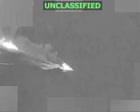
US Southern Command recently confirmed another successful interdiction in these transit zones. To the bureaucrats in D.C., it is a statistic—a line item in a budget report about "enhanced counter-narcotics operations." To the crew of the US Coast Guard cutter or the Navy destroyer that made the hit, it is a high-stakes game of chicken played in the dark.
The Anatomy of a Ghost Ship
The ships these smugglers use are marvels of desperate engineering. They aren't traditional boats; they are "self-propelled semi-submersibles." Imagine a coffin wrapped in a lawnmower engine. They are designed to be invisible, to leave no wake, and to be scuttled the moment a blue light flashes on the horizon.
Consider a hypothetical pilot we’ll call Mateo. He isn’t a kingpin. He isn’t the man in the silk suit you see in the movies. Mateo is a fisherman from a village where the nets have been coming up empty for a decade. A recruiter offered him more money for one "run" than he would see in ten years of honest labor. He is the human element in a supply chain that stretches from the jungles of the Andes to the suburban streets of Ohio.
When the US Navy P-8 Poseidon aircraft circles miles above, Mateo doesn't hear it. He only feels the sudden change in the wind. Then comes the roar. Not from the sea, but from the engines of a short-range interceptor boat launched from a nearby cutter.
The "strike" mentioned in official reports is rarely a literal explosion. It is a tactical intervention. It is a series of precise maneuvers—disabling fire aimed at the outboard engines, the blinding glare of a spotlight, and the shouted commands of boarding parties over the spray of the Atlantic.
The Invisible Stakes
Why does this matter to someone drinking coffee in a quiet kitchen thousands of miles away?
The math is brutal. Each of these boats can carry between two and six tons of cocaine. When the US Southern Command announces an interdiction, they aren't just stopping a boat; they are cutting the fuse on a thousand localized explosions. Every kilogram that makes it past the "Blue Border" represents a series of future tragedies: a broken window in a neighborhood struggling to stay afloat, a frantic 911 call in a public bathroom, a family court judge sighing as they sign another foster care order.
The ocean is the ultimate bottleneck. If the drugs reach the shore, they disappear into a thousand veins. They become impossible to track. But on the water, they are concentrated. They are vulnerable.
But the success of these strikes reveals a deeper, more unsettling truth. For every boat the US Southern Command intercepts, how many more are out there? The Caribbean and the Eastern Pacific are vast. The "success" of a strike is a testament to sophisticated intelligence-sharing and satellite surveillance, but it also highlights the sheer volume of the traffic. The smugglers are evolving. They are building better boats, using more sophisticated encryption, and finding new gaps in the net.
The Human Cost of the Catch
There is a specific kind of exhaustion that settles into the bones of the men and women tasked with these patrols. They spend months away from their families, staring at green radar screens, waiting for a blip that might not come. When they finally do make a "hit," the adrenaline is followed by a strange, hollow reality.
They pull the smugglers out of the water. They process the evidence. They watch as the "ghost ship" is often sunk—sent to the bottom of the sea because it is too dangerous to tow and too toxic to keep.
We often talk about "the war on drugs" as if it were a board game played with plastic pieces. It isn't. It is a collection of thousands of individual stories of desperation. There is the sailor who hasn't seen his daughter in six months because he’s chasing shadows off the coast of Colombia. There is the smuggler who took the job because he felt he had no other choice. And there is the end-user, the ghost at the other end of the line, waiting for a shipment that will now never arrive.
The US Southern Command's report says they struck another boat. It sounds clean. It sounds like a victory. But on the water, nothing is ever that simple.
The boat is gone, but the hunger that built it remains. The waves close over the spot where the hull once sat, erasing any sign that a million-dollar cargo ever existed. The ocean returns to its ink-black silence, vast and indifferent, waiting for the next sliver of fiberglass to try its luck against the dark.
One boat down. Ten thousand miles of horizon to go.