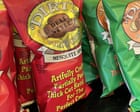
The headlines are predictable. They scream about "Salmonella concerns" and "mass recalls" like we’re facing a biological apocalypse in the snack aisle. Two major potato chip brands pull bags off the shelves, and suddenly, the public treats a bag of kettle-cooked chips like a live grenade. This reaction isn't just dramatic; it's analytically lazy.
Mainstream media loves a food recall because it feeds into a specific type of middle-class anxiety: the fear that the faceless corporation is poisoning your family. But if you actually look at the mechanics of food safety, the "danger" of these chips is statistically irrelevant compared to the biohazard currently sitting on your wooden cutting board at home.
The "lazy consensus" says that a recall is a sign of a failing food system. The reality? A recall is proof that the system is working exactly as it should. We are hyper-sensitized to risks that are microscopic while we ignore the massive hygiene failures in our own four walls.
The Mathematical Illiteracy of Food Panic
Let’s talk about the actual risk profile. Salmonella is a bacterium that thrives in moist, protein-rich environments. Think raw chicken, eggs, or sprouts. A potato chip is a dehydrated, salted, high-fat environment. For a pathogen, a potato chip is a desert. It is an incredibly hostile place for bacteria to survive, let alone multiply.
http://googleusercontent.com/image_content/179
When a brand issues a recall because a seasoning supplier found a trace of Salmonella in a facility, they aren't saying the chips will make you sick. They are saying there is a non-zero, one-in-a-million chance that a dormant cell survived the fryers and the salting process.
Compare this to your home kitchen. Data from the CDC and food safety researchers consistently show that a significant percentage of foodborne illnesses originate from private residences, not commercial processing plants. You’re worried about a bag of chips while you’re using the same sponge you’ve had for three weeks to "clean" a counter where you just prepped raw poultry.
The industry insider truth: You are safer eating a recalled chip than you are eating a "fresh" salad at a local potluck.
The Seasoning Scapegoat
Why does this happen to chips? It’s almost never the potato. It’s the dust.
In the snack world, the seasoning is the vulnerability. Most chip manufacturers don't make their own "Zesty Ranch" or "Habanero Heat" powders. They buy them from massive third-party flavor houses. These powders contain milk solids, whey, or dried spices—ingredients that are processed in facilities handling thousands of different components.
When a recall hits, it’s usually a "cascading recall." One supplier finds a positive swab on a drain in a corner of a factory in Ohio, and suddenly, forty different snack brands across North America have to pull their products. It’s a legal domino effect, not a mass poisoning.
The Cost of Perfection
We have reached a point of diminishing returns in food safety regulations. To move from 99.99% safety to 99.999% safety, the industry spends billions. Those costs are passed directly to you at the checkout counter.
We are paying a "panic tax" on every bag of snacks. We demand "zero risk," which is a biological impossibility. By forcing companies to recall products based on the mere possibility of contamination in a sub-ingredient’s raw material, we are incentivizing food waste on a gargantuan scale. Millions of pounds of perfectly edible food are landfilled every year because of a technicality that would never actually result in a single hospital visit.
Why We Fixate on the Wrong Threats
Humans are terrible at assessing risk. We fear shark attacks but ignore heart disease. We fear airplane crashes but text while driving. In the realm of health, we fear the "recalled chip" because it represents an external threat we can't control.
- The Illusion of Control: If you don't buy the brand, you feel safe.
- The Availability Heuristic: A news notification about Salmonella makes the threat feel "present," even if your statistical chance of contracting it from a dry snack is lower than being struck by lightning while wearing a tutu.
The Sanitation Paradox
I have spent years inside food manufacturing facilities. These places are cleaner than operating rooms. You wear hairnets, beard nets, smocks, and boot covers. You scrub your hands until they’re raw. You walk through chlorine footbaths.
Then, I go to a "farm-to-table" restaurant where the chef has a "cool" leather apron he hasn't washed in six months and a beard that hasn't seen a net since the 90s. The public cheers for the "authentic" experience of the restaurant while trembling at the "industrial" chip factory.
It is a total inversion of reality. The industrial process—with its stainless steel, high-heat kill steps, and rigorous batch testing—is the only reason we don't have 19th-century levels of dysentery.
Dismantling the Recall Rhetoric
If you want to actually stay healthy, stop reading the recall lists and start auditing your own habits.
- Throw away your sponge. It is a microbial breeding ground. Use a dishwasher or a brush that can be sanitized.
- Use a thermometer. Most people "eye" their meat. That’s how you get Salmonella, not from a bag of BBQ chips.
- Wash your produce. Everyone worries about the meat, but the bagged spinach and the unwashed cantaloupe are far more likely to take you out than a processed snack.
http://googleusercontent.com/image_content/236
The Business of Fear
For the competitor outlets reporting on this, the goal isn't your safety. It's your click. They use words like "Toxic" or "Outbreak" because they know it triggers a primal "avoidance" response.
The industry knows this too. A recall is often a PR move as much as a safety one. If a company doesn't recall, and one person gets a stomach ache and tweets about it, the brand is dead. If they do a "voluntary recall," they look like the "responsible" party. It’s a calculated insurance play. They would rather throw away $10 million in product than lose $100 million in brand equity.
Stop being a pawn in the corporate PR and media fear-cycle. The "Salmonella concerns" in your potato chips are a statistical ghost.
If you’ve got a bag of the recalled chips in your pantry, you don't need a hazmat suit. You don't even really need to panic. The company is just covering its legal backside because their seasoning supplier’s janitor found a suspicious spot on a floor joist three states away.
Eat the chips or don't. But don't pretend that avoiding them makes you a master of health. If you’re still drying your dishes with that damp towel hanging off your oven handle, you’ve already lost the war.
Stop looking for the monster in the pantry when it’s already living in your sink.