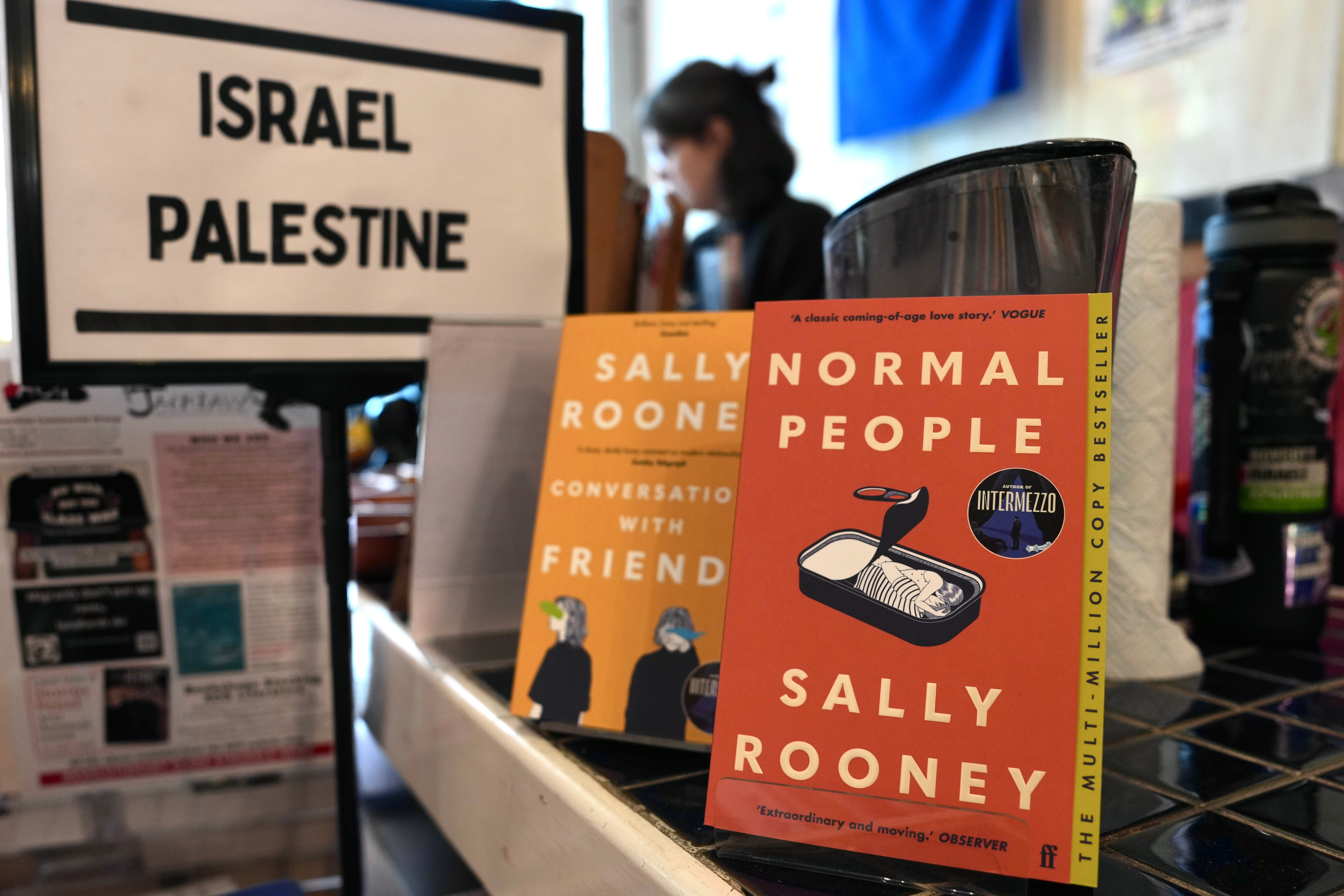
Counterterrorism proscription laws do not stop at activists in the street; they sever commercial supply chains, freeze royalty flows, and turn standard publishing contracts into potential criminal liability. When Irish novelist Sally Rooney announced in October 2026 that her publisher Faber would stop supplying her books in the United Kingdom over her public support for Palestine Action, surface-level headlines framed the story as a simple ban on a famous author. That framing misses how statutory compliance actually operates across publishing, retail, and cross-border jurisdictions.
To understand why a globally bestselling author's books are being pulled from U.K. supply channels, look at the underlying chain of events rather than the headline summary. In July 2025, following actions including a break-in at a Royal Air Force facility and prior damage to sites linked to defense contractor Elbit Systems, the U.K. government proscribed Palestine Action as a terrorist organization. After legal back-and-forth—a High Court ruling against the designation in February 2026 followed by a Court of Appeal decision in June 2026 restoring the ban—supporting or funding the group remained a criminal offense under U.K. law. Rooney, who had publicly stated in August 2025 that she intended to use proceeds from her work to support Palestine Action, had already curtailed U.K. appearances over arrest concerns before Faber halted U.K. supply in October 2026. Also making waves in related news: Qatar Calls For Israeli Withdrawal From Lebanon By The Numbers.
A superficial news report typically stops at three claims: Rooney supported a banned group, her royalties became legally blocked, and her books will no longer be sold in the U.K. That logic skips critical distinctions between publisher supply, authorial royalty payouts, physical retail stock, and territorial law. This analysis separates known facts from educated hypotheses, maps the legal and commercial mechanisms driving the withdrawal, and outlines what publishing executives, booksellers, and compliance teams face next.
Deconstructing the Standard Narrative and Missing Links
Standard news coverage treats "books no longer sold" as an instantaneous switch flipped across every bookstore and digital storefront in Britain. In operational reality, publishing is a multi-tier distribution system where halting wholesale supply is not the same as erasing existing physical inventory on day one. Further information on this are explored by The Guardian.
Known Facts Versus Educated Hypotheses
Separating confirmed public facts from analytical inference prevents overstating what the law automatically forbids:
- Confirmed fact: Palestine Action was proscribed as a terrorist organization in the U.K. in July 2025, and the Court of Appeal overturned a High Court challenge in June 2026, leaving the ban in force.
- Confirmed fact: Rooney publicly pledged in August 2025 to use proceeds from her work to support Palestine Action, and in October 2026 stated that Faber could no longer supply her work in the U.K. because fulfilling contracts or paying U.K. royalties risked serious criminal liability.
- Confirmed fact: E-books of Rooney's titles were removed from U.K. sale, while some physical copies remained on shop shelves immediately after the announcement.
- Educated hypothesis: Faber's decision reflects conservative legal risk management—avoiding prosecution or regulatory scrutiny over potential indirect funding or facilitation offenses—rather than a standalone court order specifically banning Rooney's novels by title.
- Educated hypothesis: Secondary-market and pre-existing physical stock will bleed down unevenly across independent shops and large chains depending on each retailer's legal counsel and risk appetite.
Cause-and-Effect Chains Standard Coverage Misses
A typical article lists political statements and business outcomes side by side without tracing the causal links between them. Four causal chains drive this dispute:
- Jurisdictional divergence creates compliance friction. Palestine Action is not proscribed in Ireland in the same manner as in the U.K., allowing Rooney to speak and pledge funds there without facing the identical domestic offense. Yet U.K. sales generate U.K.-nexus revenue and contractual performance inside Britain, pulling a cross-border commercial relationship into the U.K. counterterrorism regime.
- Royalty pledges alter counterparty risk. When an author explicitly links future book proceeds to a proscribed organization, a publisher cannot treat royalty disbursements as routine accounting. Compliance teams must evaluate whether paying royalties under a contract could be construed as enabling or funding proscribed activity.
- Supply halts hit digital channels faster than print. Central digital distribution feeds can be switched off rapidly across U.K. storefronts, whereas physical books already printed, warehoused, or purchased by independent booksellers sit outside immediate wholesale replenishment.
- Reputational and civil liberties debates amplify commercial friction. The withdrawal has drawn broad pushback from writers, actors, and public figures warning against overbroad counterterrorism enforcement, turning a commercial compliance halt into a high-visibility free-expression flashpoint.
The Three Pillars of Counterterrorism Compliance in Publishing
When a high-profile creator's political stance collides with a state proscription order, commercial entities evaluate exposure across three structural pillars: statutory liability, financial flow control, and operational supply governance.
1. Statutory Liability and Contract Performance
Counterterrorism statutes generally cast a wide net around financial support, fundraising, and actions that facilitate or encourage proscribed groups. For a publisher operating in the U.K., the core legal question is not whether a novel contains unlawful material—Rooney's fiction is literary work, not an operational manual—but whether commercial performance of a publishing and distribution arrangement exposes the company or its officers to criminal investigation.
In practice, corporate legal teams operate under asymmetric risk. If enforcement authorities challenge a royalty payment or distribution arrangement, the defense costs, executive exposure, and reputational damage to the publishing house are immediate and severe. Halting supply acts as a circuit breaker that stops ongoing contractual execution in the restricted jurisdiction while legal questions remain unresolved.
2. Financial Flow Control and Royalty Accounting
Publishing economics rely on advances, accounting periods, net receipts, and royalty statements. Once an author publicly states an intent to direct proceeds toward a proscribed group, standard royalty settlement becomes a compliance bottleneck.
Consider a simplified accounting mechanism: a U.K. publisher sells wholesale print and digital units to British retailers, records gross sales, deducts reserves and distribution costs, and calculates an author royalty balance. If paying that balance—or continuing to generate U.K. sales earmarked in public statements for a banned group—creates legal jeopardy under counterterrorism financing rules, freezing or halting U.K. supply removes the revenue engine tied to that jurisdiction.
3. Supply Chain Governance and Channel Asymmetry
Supply chains are not monolithic. A publisher controls primary wholesale supply and digital fulfillment into the domestic market, while independent booksellers operate as separate commercial entities with their own inventory and legal interpretations.
- Primary wholesale and digital feeds: Directly controlled by the publisher or distributor and easiest to suspend.
- Existing retail stock: Already paid for or held by booksellers; whether a shop sells remaining copies or pulls them depends on the retailer's own legal advice and commercial judgment.
- Cross-border and non-U.K. channels: Sales outside the U.K. remain governed by those respective jurisdictions and contracts, though global rights holders must still manage brand and compliance spillover.
The Cost Function of a Market Withdrawal
Withdrawing a top-selling author's catalog from a major English-language market like the U.K. alters the cost and revenue structure for every participant. Because exact proprietary figures for Faber's internal accounting or Rooney's specific U.K. royalty ledger are not public, the rigorous way to analyze the impact is through the cost and friction variables each party faces.
Publisher and Distributor Cost Function
For a publisher, pulling a commercially successful backlist and frontlist from the U.K. trades direct gross margin for lower legal and compliance risk. The trade-off involves:
- Lost contribution margin: Foregone wholesale revenue on print runs, reorders, and digital editions in the U.K. market.
- Legal and compliance overhead: Outside counsel fees, internal risk reviews, and potential regulatory inquiries tied to proscription rules.
- Catalog and inventory write-downs: Unsold U.K.-allocated stock or reprints that must be redirected, pulped, or held if domestic supply ceases.
Bookseller and Reader Friction
Independent and chain booksellers face a classic supply-shock problem when a high-demand title stops arriving from the primary supplier. Booksellers who order extra copies upon hearing of a supply cutoff may capture short-term demand spikes, but once existing stock is exhausted, restocking through normal wholesale channels stops.
For U.K. readers, the immediate effect is channel friction rather than instant disappearance of every physical book already in circulation. Digital availability contracts immediately when U.K. storefront feeds are turned off, while physical availability becomes sporadic and finite.
Legal and Political Escalation Risk
Proscription disputes rarely stay confined to contract law. Challenges in appellate courts and potential review by higher courts—such as ongoing legal battles over the proscription order itself—mean the legal ground beneath commercial compliance can shift. A publisher or retailer that sets policy assuming a ban is permanent faces reversal risk if a court alters the designation, just as one that assumes a ban will fall faces enforcement risk if it stays intact.
Operational Playbook for Publishers, Retailers, and Authors
When political speech, activist pledges, and counterterrorism statutes collide, ad-hoc reactions create confusion across commercial teams. A disciplined operational sequence reduces avoidable errors:
- Map the exact legal trigger. Distinguish between proscription of an organization, criminal offenses tied to funding or expressing support, and commercial obligations under existing publishing agreements. Never rely on media shorthand to define a compliance boundary.
- Audit revenue and royalty pathways. Trace where funds originate, where contracts are performed, and whether any public statement ties commercial proceeds to a restricted entity.
- Segment channels before executing a halt. Separate primary wholesale supply, digital storefronts, existing retail inventory, and non-U.K. territories so teams know exactly what stops on day one and what remains legacy stock.
- Align public statements with compliance facts. Ensure statements by authors, publishers, and retailers state clearly what action is being taken and why, without inventing legal mandates that do not exist.
- Build review triggers for court rulings. Tie compliance reviews to concrete judicial milestones—such as appellate or supreme court decisions—so policies can be re-evaluated systematically if the underlying proscription changes.
Limitations of Compliance and Commercial Workarounds
No compliance protocol eliminates every ambiguity in counterterrorism enforcement. Broadly worded statutory offenses can leave reasonable lawyers disagreeing on where lawful commentary ends and unlawful support begins, especially when high-profile arrests occur over protest slogans or public endorsements.
Likewise, commercial workarounds have sharp limits. Simply shifting distribution or relying on leftover physical copies on shelves does not resolve underlying statutory questions if authorities scrutinize financial flows or facilitation. Conversely, overly broad precautionary halts can trigger intense backlash from authors, readers, and cultural institutions who view commercial withdrawal as collateral censorship.
Strategic Play for Publishing and Cultural Leaders
Publishing houses and cultural institutions operating across borders should treat counterterrorism proscription regimes as a core commercial risk discipline—documenting legal opinions on every revenue stream tied to a proscribed group, separating digital supply cutoffs from physical stock rules in advance, and maintaining clear legal review checkpoints ahead of major appellate rulings so commercial decisions stay defensible regardless of how the courts rule.


