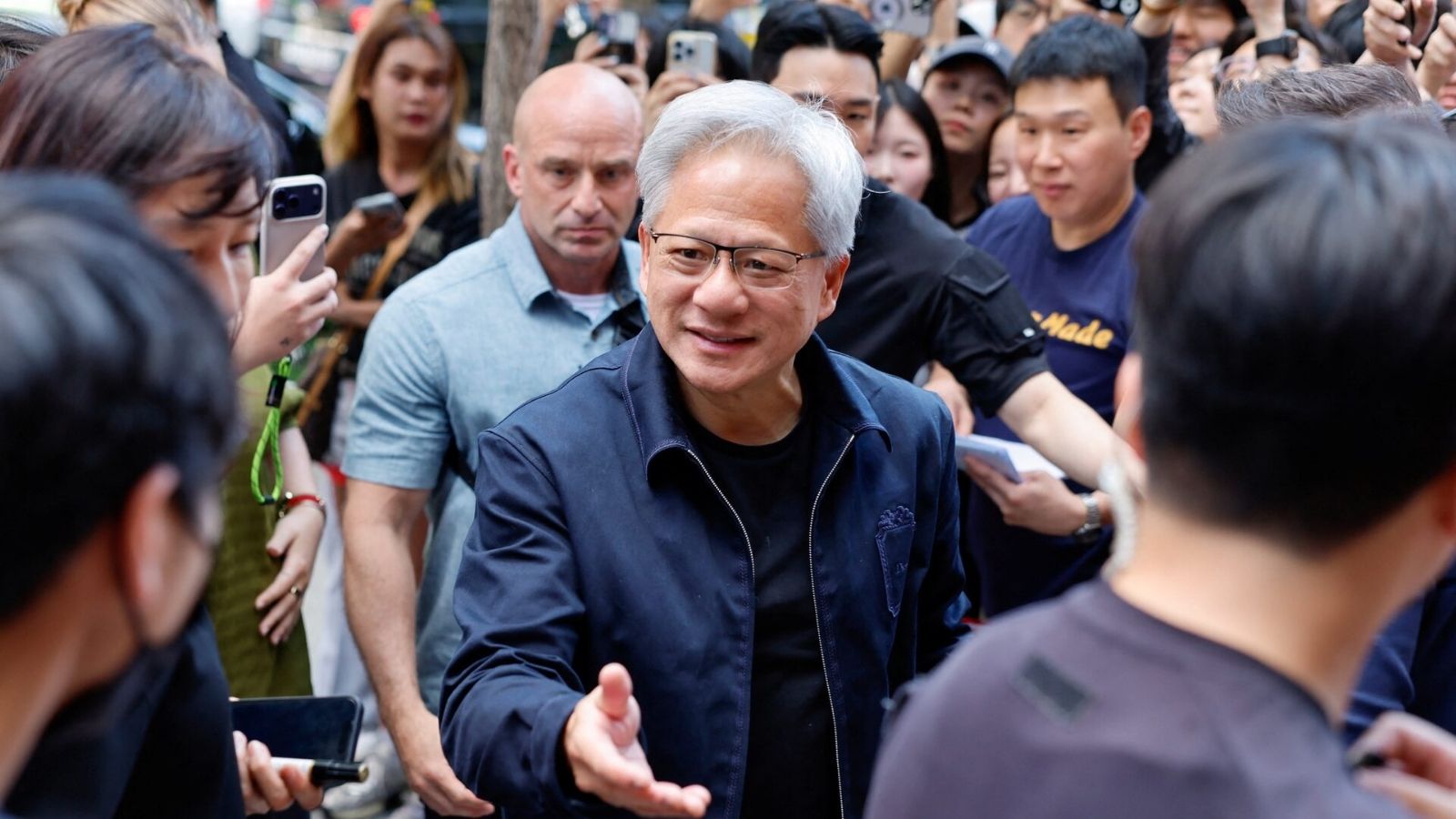
Jensen Huang has not resigned from Nvidia, nor has he issued a statement claiming he would be honored to return to the company he co-founded in 1993. Viral headlines suggesting the semiconductor chief stepped down and subsequently broke his silence are fabricated clickbait, often generated by automated content farms or satirical outlets capitalizing on market anxiety. Huang remains firmly in control as Chief Executive Officer and President of Nvidia, actively steering the company's artificial intelligence infrastructure dominance. Yet the sheer velocity with which these false resignation rumors spread reveals a deeper, far more unsettling truth about Wall Street's precarious dependence on a single executive.
The Anatomy of a Viral Tech Hoax
Falsehoods travel faster than earnings reports. When an obscure blog or social media account publishes a fabricated headline about a major tech executive stepping down, algorithmic feeds reward the resulting panic with massive engagement.
The specific phrasing—"Would be honoured to return"—follows a classic template used by engagement-farming networks. These operators take a real, recognizable figure, invent a dramatic career departure, and attach a humble, emotionally resonant quote to maximize shares across platforms like X, Facebook, and LinkedIn. Notice the British spelling of "honoured," a frequent telltale sign of offshore content mills targeting American financial audiences without basic editorial oversight. Because the URL attached to such claims frequently leads to dead links, scraper sites, or ad-heavy domains that vanish within days, casual readers rarely verify the primary source before reacting.
Financial markets, however, do not always wait for verification. High-frequency trading algorithms scrape news wires and social media sentiment in milliseconds, meaning a well-timed hoax can trigger momentary volatility before human analysts debunk the claim. We have seen this exact pattern play out repeatedly over the last decade, from fake press releases regarding Apple acquisitions to fabricated regulatory filings targeting pharmaceutical giants.
In Nvidia's case, the soil is unusually fertile for rumor-mongering. When a single company adds trillions of dollars in market capitalization within a few years, skeptics, short-sellers, and anxious retail investors constantly scan the horizon for the black swan event that could bring the valuation crashing down. A sudden leadership vacuum sits right at the top of that list.
Why the Market Panics Over One Leather Jacket
To understand why a fake resignation headline gains traction, you have to look at key person risk inside Santa Clara. Most mega-cap technology companies operate as sprawling bureaucracies where the departure of a chief executive, while significant, rarely threatens the foundational architecture of the business. Tim Cook succeeded Steve Jobs at Apple by perfecting a global supply chain. Satya Nadella took over Microsoft from Steve Ballmer and unlocked cloud growth that had been dormant for years.
Nvidia is built differently.
Huang is the longest-serving CEO in the semiconductor industry, having led the company uninterrupted for over three decades. Unlike peers who delegate technical roadmaps to divisional presidents, Huang maintains a remarkably flat organizational structure. Reports from inside the company indicate that dozens of executives report directly to him, bypassing the traditional layers of middle management that insulate most Fortune 500 leaders from daily engineering friction.
He does not merely approve budgets; he interrogates architectural decisions at the silicon level. If you remove Huang from Nvidia tomorrow, you do not just lose a charismatic keynote speaker. You remove the central nervous system connecting hardware engineering, software ecosystems, and hyperscaler customer relationships.
This concentration of authority creates an uncomfortable paradox for institutional investors. The very trait that allowed Nvidia to pivot from gaming graphics cards to data center dominance—Huang’s relentless, top-down conviction—is the exact vulnerability that makes the stock terrifying to hold if his health, succession plan, or commitment ever comes into question.
The Succession Vacuum Nobody Wants to Discuss
Boards of directors exist primarily to manage risk, and succession planning is their most solemn duty. Yet at Nvidia, the question of who follows Jensen Huang remains conspicuously opaque.
Publicly, the company maintains standard corporate governance disclosures stating that the board regularly reviews succession scenarios. Privately, industry analysts struggle to name an obvious heir apparent with the stature to command both Wall Street and Silicon Valley. Consider the internal landscape:
- Engineering Veterans: Executives like Jonah Alben, who oversees GPU engineering, or Dwight Diercks, who leads software engineering, possess immense technical credibility. However, neither has been positioned as a public-facing general manager capable of navigating geopolitical trade wars in Washington and Beijing.
- Operational Leaders: Chief Financial Officer Colette Kress commands deep respect among institutional shareholders for her disciplined capital allocation and clear communication during earnings calls, yet semiconductor giants rarely hand the top job to a finance chief during periods of intense architectural transition.
- The Cultural Hurdle: Whoever eventually steps into the role will inherit an organization molded entirely around one man's work ethic, communication style, and risk tolerance.
Consider a hypothetical scenario to see how fragile this dynamic truly is. Suppose Nvidia were to announce tomorrow that Huang was transitioning to an Executive Chairman role while elevating a senior vice president to CEO. Even if the transition were orderly, planned years in advance, and accompanied by glowing endorsements, the market would almost certainly re-rate the stock's valuation multiple downward overnight. Investors are not just buying CUDA software lock-in or Blackwell architecture; they are paying a premium for Huang’s ability to anticipate the next computing paradigm before competitors realize the current one is obsolete.
Regulatory Pressure and Burnout Realities
While the recent resignation rumor is entirely false, it taps into real-world pressures that would test any sixty-something executive running a multi-trillion-dollar enterprise. Huang has spent the past several years operating at a pace that defies conventional corporate endurance.
Beyond the grueling cadence of annual product launches—a strategic shift that compressed Nvidia's release cycle from two years to one—Huang has become an involuntary diplomat. Semiconductor manufacturing sits at the dead center of modern geopolitics. Every export control restriction drafted by the U.S. Department of Commerce forces Nvidia to redesign chips specifically for compliance, negotiate with furious customers, and defend its market share against domestic Chinese alternatives like Huawei.
At the same time, antitrust regulators in the United States, Europe, and Asia have intensified scrutiny over Nvidia’s dominance in AI accelerators and networking gear. Managing simultaneous regulatory inquiries while traveling continuously across Taiwan, Europe, the Middle East, and North America creates an exhausting operational burden.
Despite these headwinds, Huang has shown zero public inclination toward stepping back. In interviews and earnings calls, he routinely frames the current artificial intelligence buildout not as a peak, but as the opening innings of a multi-decade industrial revolution. Executives who believe they are building the foundational infrastructure of the next century rarely walk away voluntarily while the concrete is still wet.
How to Spot Fabricated Executive News
In an era where synthetic media and automated content farms routinely pollute financial search results, investors and readers need a strict verification protocol before acting on dramatic corporate headlines. Whenever a sensational claim surfaces about an executive departure, run it through four immediate filters:
- Check the SEC EDGAR Database: Under federal securities law, the resignation, retirement, or termination of a principal officer at a U.S. publicly traded company is a material event. Nvidia would be legally required to file a Form 8-K with the Securities and Exchange Commission within four business days, and almost always issues an immediate press release via its official investor relations portal prior to or simultaneous with the filing. If it is not on Nvidia's newsroom page or EDGAR, it did not happen.
- Audit the Source Domain: Legitimate scoops regarding Fortune 100 leadership changes break through established financial newsrooms with dedicated beat reporters—outlets like The Wall Street Journal, Bloomberg, Reuters, or The Financial Times. If a story originates on a domain you have never heard of, lacks a named reporter with a verifiable track record, or relies on vague phrasing like "sources say" without institutional backing, treat it as fabrication.
- Inspect Quote Mechanics: Real executives rarely speak like melodramatic soap opera characters. Phrases like "would be honoured to return" immediately after an alleged resignation make little logical or legal sense in corporate communications, where exit statements are heavily vetted by securities lawyers and public relations teams.
- Look at Options and Equity Volume: Institutional desks have direct lines to corporate investor relations teams and primary news terminals. If Nvidia’s stock price and options volume remain completely normal while a social media post claims the CEO just quit, the market has already priced the rumor at zero credibility.
The Real Threat to Nvidia Dominance
Focusing on phantom resignations distracts from the actual threats bearing down on Nvidia's empire. Huang does not need to step down for the company's growth rate to face a reckoning.
The most significant challenge comes from Nvidia's own largest customers. Microsoft, Alphabet, Amazon, and Meta account for a massive percentage of Nvidia's data center revenue, and every single one of them is pouring billions of dollars into custom internal silicon—such as Google’s TPUs and Amazon’s Trainium chips—specifically to reduce their dependence on Huang’s hardware margins. Meanwhile, AMD continues to chip away at inference workloads, and open-source software initiatives are working tirelessly to erode the CUDA moat that keeps developers tethered to Nvidia's ecosystem.
Add to that the unavoidable physics of the law of large numbers. Growing revenue by triple-digit percentages is mathematically sustainable when a business generates tens of billions of dollars; maintaining that trajectory once annual revenue crosses well into the hundreds of billions requires capital expenditures from customers that may eventually outpace their near-term software monetization.
Jensen Huang is still at the helm, still wearing his signature black leather jacket, and still pushing his engineering teams to outrun competitors who are desperate to catch up. The next time a viral headline claims he has walked away, ignore the noise and watch the SEC filings instead—because until an official Form 8-K hits the wire, the only thing resigning is basic journalistic standards on the open web.