Autumn smells like woodsmoke and old paper in Beijing. Outside the brick gates of the courtyards, vendors stack sweet potatoes on glowing coals, their carts hissing as the sugar caramelizes in the October air. Inside the vast halls of power, the air is treated, filtered, and heavy with an altogether different kind of heat.
Quiet. Absolute.
Every five years, the rhythm of a nation shifts. It does not happen with a shout. It happens behind frosted glass.
Consider a man named Li. Li is not a policymaker, nor is he a billionaire holding court in a glittering glass tower in Shenzhen. Li is a forty-two-year-old factory floor supervisor who spends ten hours a day watching robotic arms weld lithium-ion battery packs. He has calluses on his thumbs and a deep, permanent crease between his eyebrows. Li does not care about geopolitics in the abstract. He cares about the price of pork at the morning market, whether his daughter's school will get the new computer lab promised last spring, and whether his company will keep its export license next quarter.
Yet, on a Tuesday morning in October, Li's entire livelihood will tilt on its axis.
A political plenum is coming.
Words like plenum sound gray. They sound like dust motes dancing in a shaft of pale sunlight inside an empty government office. They sound like the kind of vocabulary that makes teenagers glaze over during the evening news broadcast. But translation changes everything. A plenum is simply a gathering. It is the moment when the architects of a state look up from their blueprints, measure the cracks in the foundation, and draw new lines in the dirt.
When the leadership announces that a key political meeting will convene in October, the world financial markets twitch. Currencies fluctuate. Corporate boards in Frankfurt, Tokyo, and New York scramble to decipher translated communiques, searching for hidden nouns and verbs that might signal a shift in subsidies, trade barriers, or green energy targets.
They are looking for the weather report before the storm hits.
To understand why an October meeting matters to a teenager studying for exams in London, a software engineer writing code in Austin, or a factory worker in Guangzhou, we have to look past the bureaucratic jargon. We have to look at gravity.
Gravity does not ask for your permission to pull you down. Economic policy operates the same way.
Picture a massive cargo ship moving through a narrow lock. The captain cannot spin the wheel abruptly without scraping the hull against concrete walls. Every adjustment must be calculated miles in advance. For a country of nearly a billion and a half people navigating a slowing economic engine, technological decoupling, and an aging population, the plenum is that steering mechanism.
When the date is set for October, the countdown begins. Ministries draft reports in fire-lit offices long after midnight. Economists run simulations on supercomputers, testing what happens if credit is loosened here or tightened there. Provincial governors pack their briefcases with local grievances and ambitious quotas, preparing to defend their turf in rooms where whispers carry more weight than shouts.
We forget that history is made of these mundane logistics. We think of history as battles and revolutions, sudden flashes of lightning that remake the world overnight. But most of history is actually administrative. It is written in draft resolutions, stamped with red wax, and implemented by thousands of local bureaucrats who just want to hit their targets so they can go home to dinner.
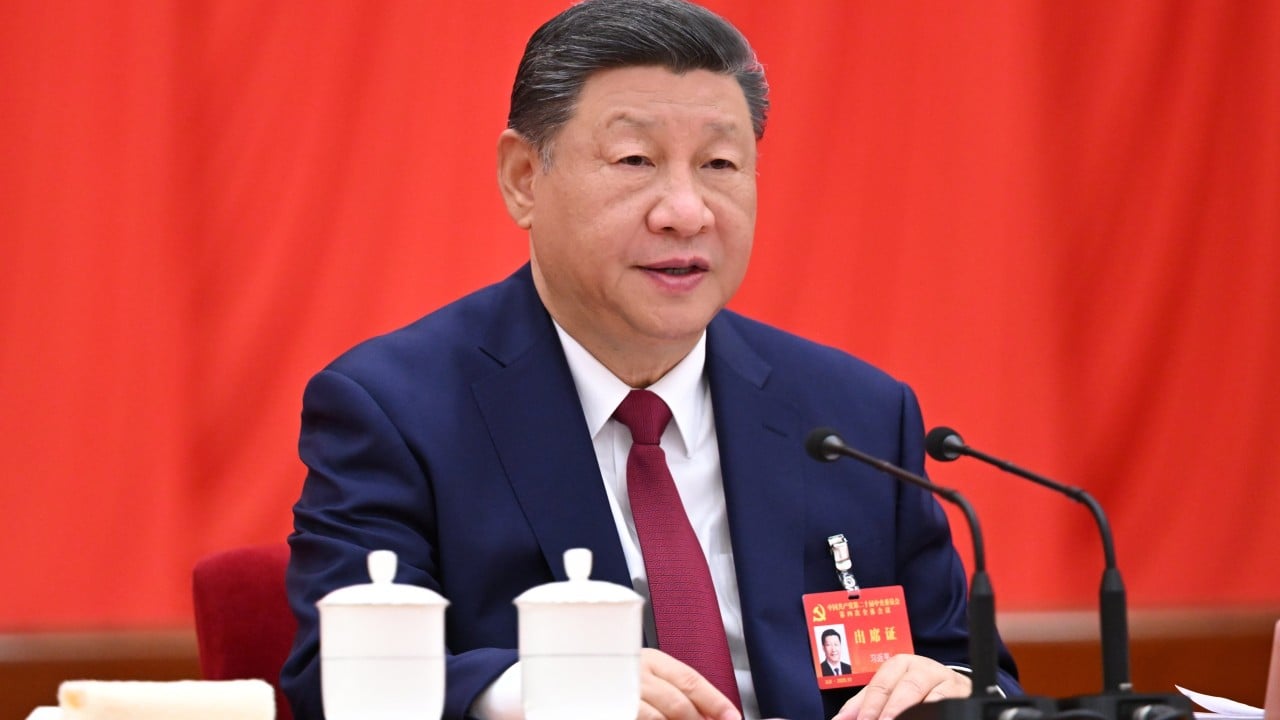
When October arrives, the heavy doors of the meeting hall will close. The cameras will flash once, twice, and then the press will be ushered out.
Inside, the debate will be fierce. It will not look like television drama. There will be no fistfights or soaring rhetorical flourishes. It will look like tired men and women pointing at spreadsheets, arguing over decimal points that represent millions of jobs, thousands of factories, and the fragile hopes of families trying to climb into the middle class.
Outside, the street vendors will keep roasting sweet potatoes. The smoke will rise into the crisp autumn wind, blurring the neon lights of the skyscrapers overhead. And Li will finish his shift, wipe the grease from his hands, and walk home through the darkening streets, unaware of the exact words being spoken behind closed doors, yet acutely aware that his life is about to change because of them.
The room is silent now. But the ink is already wet.