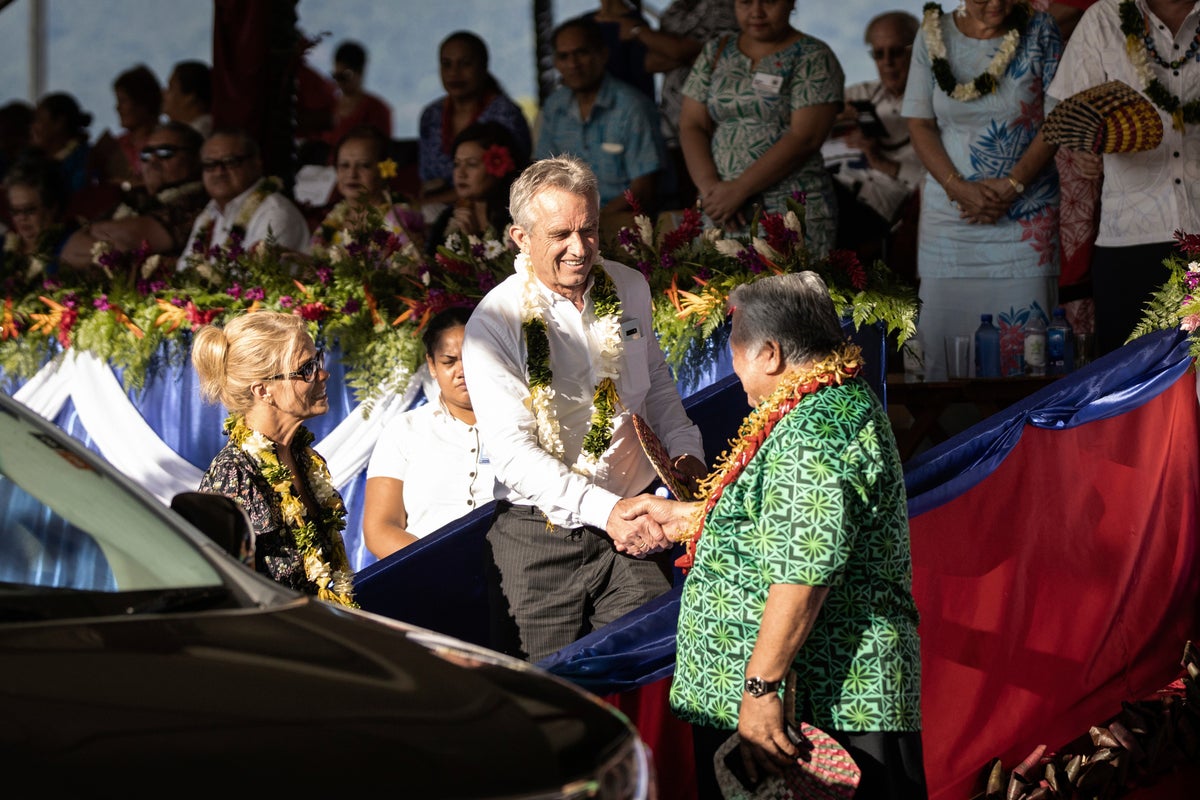
When public officials go through confirmation hearings, they expect tough questions. They do not expect a paper trail to completely dismantle their sworn statements. Yet, that is precisely what happened regarding Robert F. Kennedy Jr. and his controversial 2019 trip to Samoa.
During his Senate confirmation process to lead the Department of Health and Human Services, Kennedy insisted under questioning that his journey to the Pacific island nation had nothing to do with vaccines. Newly unearthed documents obtained via Freedom of Information Act lawsuits tell a dramatically different story. Also making headlines in related news: Strait of Hormuz Maritime Security Dynamics and Commercial Risk Vectors.
The Paper Trail That Contradicts Washington Testimony
The narrative centers on a trip taken months before a catastrophic measles outbreak swept across Samoa, killing 83 people, primarily young children. Critics and independent journalists have spent years trying to understand the exact nature of that visit.
Documents released by the State Department following legal action by the Associated Press and The Guardian show an entirely different motivation than what was presented to lawmakers. In a January 2019 letter sent directly to Samoan officials, Kennedy used variations of the word vaccine eight distinct times. Further insights regarding the matter are explored by NPR.
Rather than a casual drop-in or a simple celebration of independence, the correspondence reveals that Kennedy and his team at Children's Health Defense actively proposed studying the local measles, mumps, and rubella (MMR) vaccines. The letters show an explicit desire to investigate infant deaths that had occurred following improper vaccine preparation on the island.
What the Defense Claims Versus Reality
Defenders of the HHS secretary maintain that any suggestion of misleading Congress is false and defamatory. They argue that his intentions on the ground were misunderstood and that the visit did not involve malicious interference with local health policies.
However, internal communications from U.S. embassy staff and international health organizations at the time paint a glaringly contradictory picture. Officials on the ground privately noted that the visit was viewed locally as a platform to highlight skepticism regarding immunization safety.
Samoan health authorities had temporarily halted their MMR vaccination program after two tragic infant deaths caused by nurse error rather than vaccine manufacturing defects. During this suspension, vaccination rates dropped off a cliff. The timing of external anti-vaccine figures arriving during this vulnerable window remains a central point of contention and deep local resentment.
Why This Political Flashpoint Still Matters
This isn't just about old travel itineraries or semantics. It strikes at the heart of public trust in federal health leadership. When a cabinet official provides statements to lawmakers that are directly challenged by official state correspondence, accountability becomes the core issue.
Lawmakers who pressed Kennedy on these exact points during his hearings feel vindicated by the paper trail, while critics point to the tragic human cost of the subsequent epidemic as a stark reminder of the real-world impact of misinformation. As more records surface through ongoing public records requests, the gap between official political denials and documented reality continues to widen.