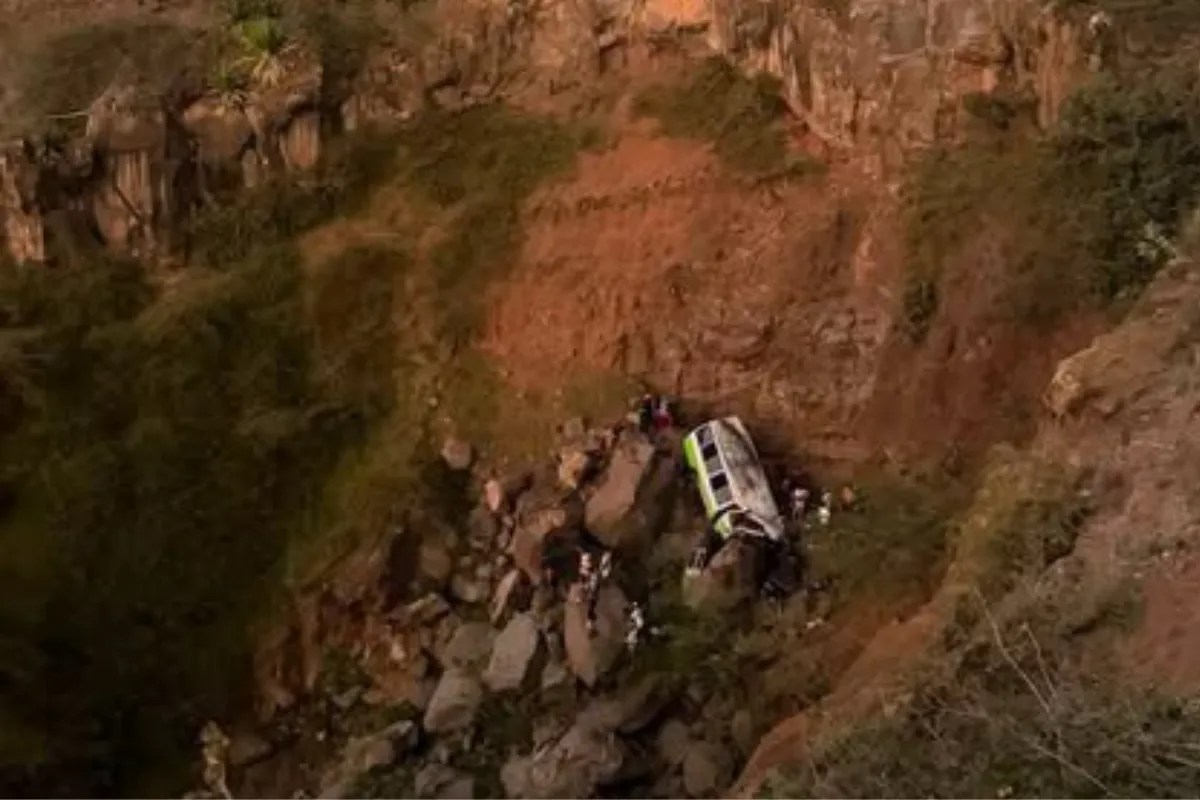
The morning air in Santiago, Cape Verde, usually tastes of salt and the heavy, sweet scent of roasting coffee beans. It is an island rhythm born of the Atlantic, a quiet certainty that the sun will climb over the volcanic ridges and find fishermen hauling nets, children chasing stray dogs down cobbled alleys, and buses coughing to life along winding mountain tracks. On one particular stretch of asphalt, however, that certainty snapped.
There are roads in this world built for speed, and then there are roads built as compromises with the earth. The route cutting through the interior highlands of Santiago belongs entirely to the second category. It clings to the contours of steep cliffs, a ribbon of gray pavement carved into volcanic stone where a single miscalculation by a driver means falling into an indifferent abyss.
Imagine, if you must through the cold lens of verified reports, a drop of thirty meters. A sheer plunge.
Now strip away the statistics and picture an ordinary vehicle. Let us call it a standard passenger bus, though to those inside, it was simply Tuesday morning. It was a vessel of routine. Inside sat twenty-five souls whose internal monologues were filled with ordinary anxieties. Someone was worrying about a delayed paycheck. Another was rehearsing a conversation with a cousin. A young woman was watching the jagged peaks drift past the window, listening to the hum of the engine and thinking of the market stall waiting for her at the end of the line.
Then came the shift in gravity.
The silence that follows a catastrophic drop is not peaceful; it is heavy, suffocating, and absolute.
When the bus slipped off that precipice and tumbled thirty meters into the ravine, it did not just break metal and shatter glass. It fractured the quiet social fabric of an entire island nation. Cape Verde is an archipelago of small communities where anonymity is nearly impossible. Everyone knows everyone. A loss of twenty-five lives in a single accident does not register as a distant tragedy scrolling across a screen. It hits like a physical blow to the chest of every household in the region.
Buses on these mountainous tracks carry the lifeblood of rural mobility. For many who cannot afford private cars, these winding mountain passes are the only bridges connecting isolated villages to medical centers, schools, and workplaces. The infrastructure demands perfection, yet human machinery is fragile. A mechanical failure, a slick patch of road, a momentary lapse in visibility—the margin for error is measured in centimeters.
And then the edge gives way.
Emergency responders arrived to a scene that defied easy comprehension. Twisted steel nestled among jagged rocks, dust still hanging suspended in the glare of the midday sun, and an eerie quiet broken only by the frantic shouts of rescue workers. In moments like this, the abstract policy debates over road maintenance, transport regulation, and infrastructure spending suddenly reveal their true, brutal cost. Bureaucracy is measured in paperwork. Neglect is measured in lives.
We live in an era obsessed with velocity and connection, constantly celebrating how easily we can traverse the globe. Yet we routinely overlook the terrifying vulnerability of our daily transit. We step into cars, trains, and buses with a blind faith that the invisible architecture holding us above the earth will hold. When it fails, the shock reverberates far beyond the immediate crash site.
Consider the empty chairs at dinner tables that evening across the island. Consider the sudden, paralyzing ache of a phone call that no one ever expects to receive. These are the details that never make it into official accident briefs, yet they are the only ones that truly matter.
The volcanic peaks of Santiago still stand, indifferent and ancient, catching the afternoon clouds against their stone shoulders. The dust has settled in the ravine. But the road remains, winding along the cliffside, daring travelers to forget how thin the line is between an ordinary morning and an irreversible goodbye.