The rain in the foothills of the Himalayas does not merely fall. It accumulates with a heavy, deliberate malice, turning the air into a gray soup where sky and earth dissolve into one another.
By the time the rivers crested, the warning signs were already ancient history. Water is an unforgiving accountant. It measures every deforested slope, every poorly anchored foundation, and every ignored meteorological bulletin, balancing its books with sudden, terrifying violence.
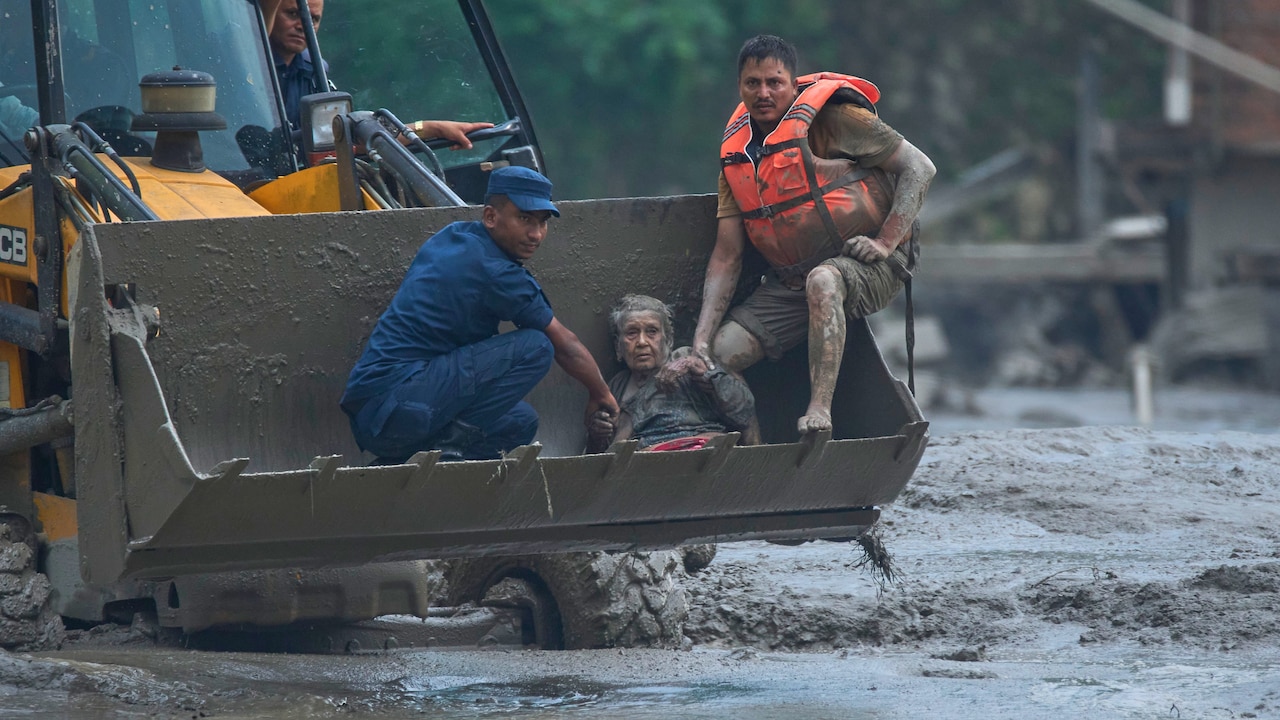
Official reports tally the cost with cold arithmetic. Two hundred and seventy dead. Thousands missing. Rescue workers navigating churned mud that used to be village streets. But numbers are a sanitized shield. They protect our comfort by turning human beings into statistics.
Let us strip away the numbers. Consider a hypothetical resident of a riverside hamlet in the Kathmandu Valley, whom we will call Ramesh. Ramesh woke up to a sound that defies language—not a roar, but a deep, structural groaning of the planet itself, like a tectonic plate shifting under a house of cards.
(Note: While Ramesh is a composite character, his experience mirrors the verified accounts collected by field relief workers across the disaster zones.)
Before he could pull a single blanket from the shelf, the floor was gone. Replaced by a brown, churning conveyor belt of corrugated iron roofing, uprooted sal trees, and household belongings swirling in a chaotic dance.
Flash floods are unique among natural disasters because of their intimate cruelty. Earthquakes shake the ground from beneath you, but floods arrive as an invasive guest, walking right through your front door, sitting at your kitchen table, and taking everything you built over forty years in less than forty seconds.
The Anatomy of a Sudden Catastrophe
Why do these events catch entire nations off guard? The answer lies in the physics of sudden topographical transformation. When monsoon rains exceed historic thresholds over saturated soil, drainage basins act less like funnels and more like overfilled bathtubs.
Meteorologists track precipitation rates in millimeters per hour. To a deskbound analyst, eighty millimeters of rain is a data point on a radar map. To a mountain community, it is an existential threat. The steep gradients of the terrain accelerate runoff, turning gentle mountain streams into liquid battering rams.
Infrastructure breaks down not because engineers are incompetent, but because our models were built for a climate that no longer exists. We design for the worst-case scenario of the past, completely blind to the unprecedented extremes of the present.
Rescue operations under these conditions resemble a race against geometry and time. Helicopters cannot fly through walls of blinding rain and swirling fog. Heavy machinery cannot reach remote settlements because the roads have slid down the mountainside, taking bridges with them.
The first forty-eight hours of any major flash flood rely almost entirely on local resilience. Neighbors pulling neighbors from rooftops using braided plastic sacks. Grandparents holding children aloft on thatched rafters while the water laps at their chins.
The Long Shadow Left Behind
When the rain finally stops, a strange, heavy silence descends. The mud begins to dry, hardening into a concrete-like crust that seals the ruins of homes beneath a grey shroud.
This is where the true weight of the tragedy settles in. The search and rescue phase transitions into the agonizing limbo of the missing. Thousands unaccounted for means thousands of open wounds in families scattered across displacement camps.
You look at a pair of muddy children's shoes half-buried by the roadside, and your mind rebels against the scale of it. How does a community rebuild when the very soil beneath its feet has washed down into the Ganges basin?
Governments promise relief packages. Aid organizations distribute water purification tablets and tarpaulins. These are vital interventions, acts of triage for a bleeding nation. Yet they address only the symptoms of a deeper geographical fracture.
We must confront an uncomfortable truth. The vulnerability of these mountain communities is not merely a failure of localized preparedness. It is the global bill coming due for decades of ecological strain, erratic weather patterns, and unplanned expansion into high-risk floodplains.
The water eventually recedes. The rivers shrink back to their meager summer trickles, acting innocent as if they had done nothing wrong. But the landscape is permanently altered, and the people who survived are left standing on the banks of a new reality, staring across a chasm where their yesterday used to be.