Water does not negotiate. It flows downward, seeking the lowest point, indifferent to property lines, municipal budgets, or the frantic engineering of humans who try to steer its course.
Stand on the banks of the Matanzas River in Florida on a quiet morning. The salt marshes stretch out like an endless green quilt, rustling in the Atlantic breeze. Ospreys wheel overhead. Below the surface, unseen grass beds pulse with life—mullet darting through the shallows, blue crabs scuttling across muddy bottoms. It feels ancient. It feels permanent.
It is neither.
For decades, the invisible pressure on this fragile estuary has been mounting. Every time a faucet turns on in St. Johns County, every time a new subdivision rises from what used to be pine flatwoods, the ecosystem pays a silent toll. We draw too much from the aquifer beneath our feet, pulling up ancient fresh water faster than the seasonal rains can replenish it. And when we are done using it, the treated discharge often finds its way back home, carrying nutrients that feed choking algal blooms, turning crystal-clear creeks into murky soup.
Change rarely arrives with a dramatic crash. Usually, it looks like a quiet Tuesday.
Consider what happens beneath the concrete and asphalt. Engineers and conservationists have spent years watching the numbers tick upward—population growth colliding head-on with ecological limits. The Matanzas River, designated as an Outstanding Florida Water, was slowly being loved to death.
Then came a $191.8 million shift in how we handle the most essential resource on Earth.
This is not a story about concrete pipes and electrical panels, though thousands of yards of the former and miles of the latter went into the ground. This is a story about drawing a line in the sand and deciding that convenience cannot indefinitely outweigh survival.
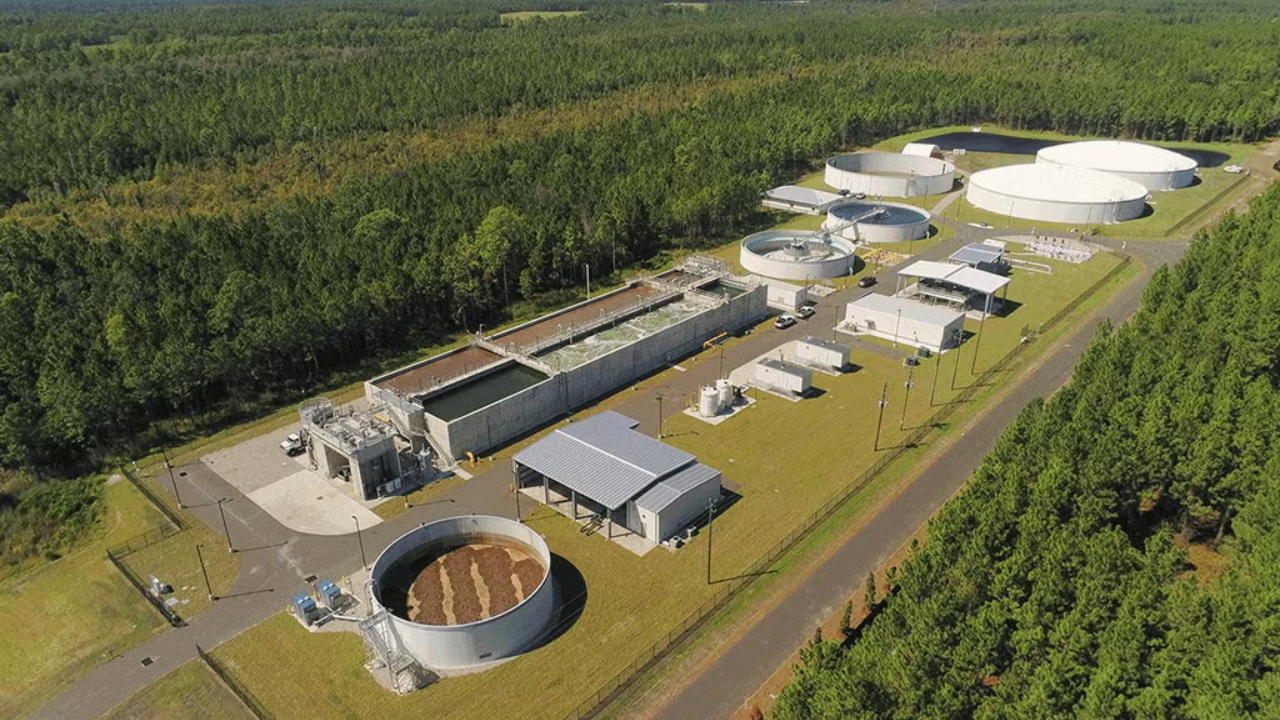
The centerpiece of this massive regional effort is a sprawling, state-of-the-art advanced water purification facility designed to do something radical: take treated wastewater that would otherwise disrupt natural waterways and clean it to a standard so high it borders on pristine. Instead of dumping excess freshwater runoff into vulnerable estuaries or over-relying on the Floridan Aquifer, this system captures, purifies, and reuses.
Imagine taking water that has already passed through human hands, scrubbing it through membrane filtration, advanced oxidation, and UV disinfection until it is stripped of impurities, and then safely returning it to recharge the underground freshwater reserves.
It sounds like science fiction. It is happening right now.
The mathematics of modern growth are unforgiving. Florida welcomes thousands of new residents every week. They need to shower, wash dishes, and water lawns. If local utilities relied solely on traditional groundwater pumping, the saltwater intrusion would eventually contaminate the coastal wells, rendering them useless. The aquifer is a savings account, and for generations, we have been withdrawing principal without making deposits.
The new facility changes the arithmetic. By injecting purified water back into the deep aquifer, the project acts as a subterranean shield. It pushes back against the encroaching saltwater from the Atlantic, protecting the drinking supply for generations who haven't even been born yet. At the same time, it keeps millions of gallons of nutrient-laden discharge out of the Matanzas River, allowing the seagrasses to breathe and the native fisheries to recover.
Progress is expensive. A price tag nearing $200 million stgers the imagination. Yet the alternative—a dried-up aquifer and a dead river—carries a cost that cannot be balanced on any spreadsheet.
When you walk along the tidal creeks of northeast Florida at dusk, the water mirrors the amber and violet of the fading sky. The tide turns. The current reverses, pushing back toward the sea. For a long time, human ambition meant fighting those natural rhythms, trying to bend nature to our permanent convenience.
The rustle of the marsh grass tells a different story now. It whispers of a fragile truce. We are finally learning to give back as much as we take.