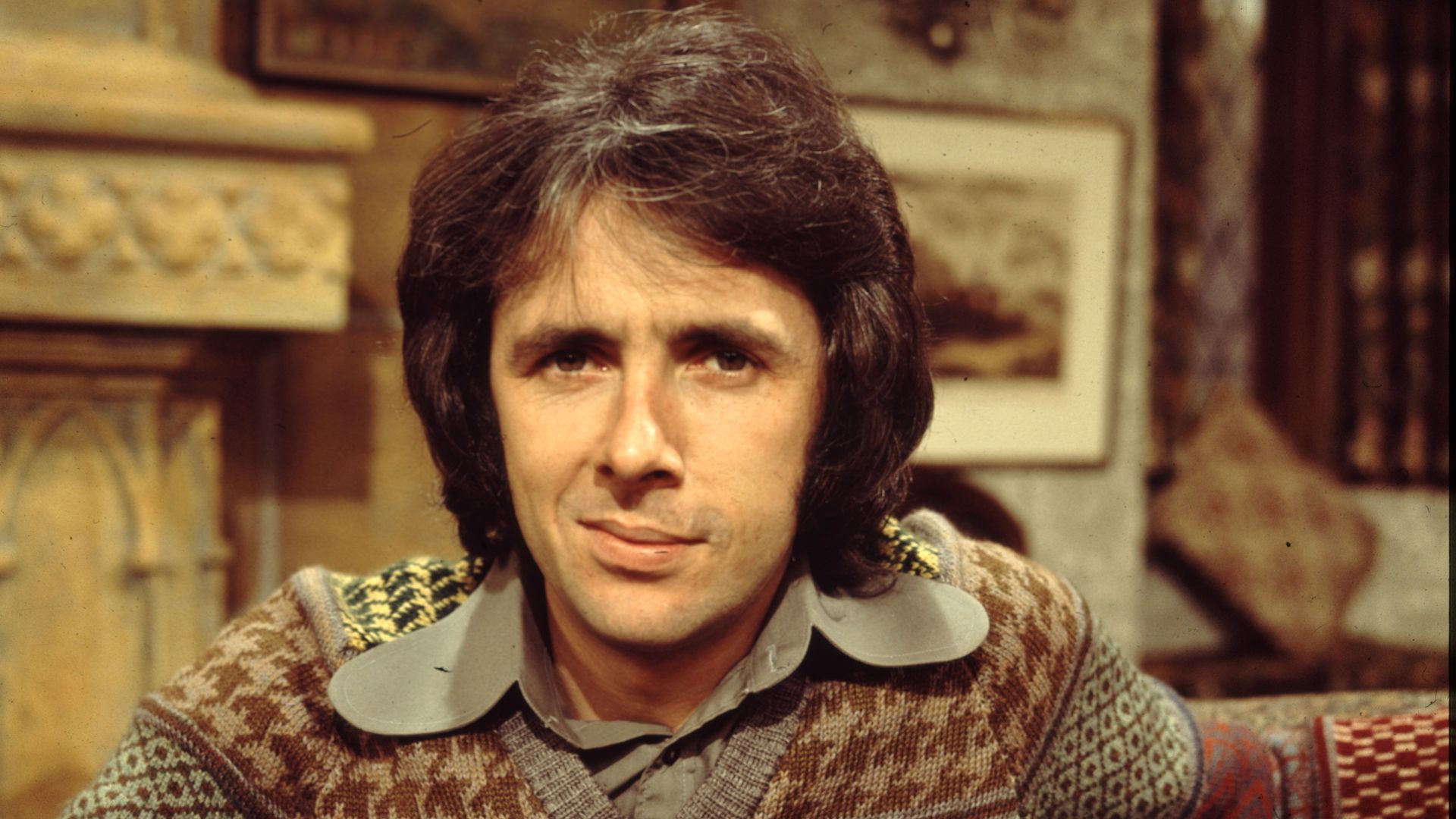
Television moves fast, discarding its architects with an indifference that borders on cruel. When Richard O'Sullivan died, the news arrived without the thunderous media saturation usually reserved for modern digital influencers or manufactured pop stars. Yet, for millions who grew up in Britain and across the Commonwealth during the 1970s and 1980s, O'Sullivan was not merely an actor. He was the reigning monarch of the British living room.
He anchored the landscape of weekend television with a rare blend of cheeky charm, physical dexterity, and impeccable comic timing. Shows like Man About the House, Robin's Nest, and Dick Turpin drew audiences that contemporary network executives can only visualize in fever dreams. Over fifteen million people regularly tuned in to watch him juggle domestic chaos, romantic misunderstandings, and period adventure. Meanwhile, you can explore other events here: The Behavioral Mechanics of Synchronized Performance in Werner Herzog Cinema.
Then, the cameras stopped rolling. The industry shifted its weight, tastes mutated, and O'Sullivan retreated into a quiet retirement that lasted decades. Understanding his trajectory requires looking past the canned laughter and pastel-colored sitcom sets. His career offers a masterclass in the mechanics of television stardom, the peculiar burden of typecasting, and the absolute ruthlessness of an entertainment machine that constantly devours its own past.
The Apprenticeship of a Child Star
Before he became the definitive bachelor of British suburban sitcoms, O'Sullivan was a veteran of the studio floor long before he could legally vote. Born in London in 1944, he entered the film industry as a child actor during the golden age of British post-war cinema. This was not the glamorous, insulated child stardom of modern Disney channels. It was an industrial apprenticeship. To see the complete picture, check out the detailed report by GQ.
He appeared in dozens of films throughout the 1950s and 1960s, playing the standard cinematic archetype of the cheeky schoolboy, the younger brother, or the earnest son. Films like The Young Visitors and major studio pictures like Cleopatra—where he played the young Ptolemy—immersed him in the grueling discipline of professional filmmaking.
This background shaped his absolute professionalism. While many child actors flame out or struggle with the transition to adult roles, O'Sullivan possessed a technical endurance. He understood lens blocking, microphone placement, and the rhythm of a scene long before he ever stepped onto the multi-camera soundstages of Thames Television. That foundational discipline prevented him from becoming a flash-in-the-pan teenage heartthrob. He understood that longevity in television required consistency, not just charisma.
The Sitcom Golden Age
The defining chapter of O'Sullivan's professional life arrived in 1973 with Man About the House. Created by Brian Cooke and Johnnie Mortimer, the premise capitalized on changing social mores regarding domestic arrangements. Robin Tripp was a struggling cooking student who shared an apartment with two female roommates, shocking conservative sensibilities while safely anchoring itself in broad, farce-driven comedy.
O'Sullivan played Robin with a specific physical vocabulary. He possessed the rubber-faced agility of classic farce actors combined with the accessible warmth of a next-door neighbor. He spent much of his screen time in an apron, handling frying pans with theatrical clumsiness, subverting traditional masculine tropes of the era without ever threatening the patriarchal comfort of the audience.
When Man About the House concluded, Thames Television immediately recognized his drawing power and spun him off into Robin's Nest, which ran from 1977 to 1981. Here, Robin graduated from student lodger to small-business owner, running a bistro with his fiancée and dealing with a notoriously difficult father-in-law played brilliantly by Tony Britton.
Sitcom Title         Original Run     Core Premise
------------------------------------------------------------------
Man About the House  1973–1976        Platonic flat-share comedy
Robin's Nest         1977–1981        Culinary enterprise & family friction
Dick Turpin          1979–1982        Action-adventure period drama
Butley               1974             Serious theatrical departure
These programs were not merely popular; they were cultural glue. In an era before multi-channel fragmentation, streaming, and on-demand viewing, these Friday night broadcasts served as shared national rituals. O'Sullivan was the engine driving those rituals. His face stared out from the covers of Radio Times and TV Times with monotonous regularity. He was wealthy, famous, and seemingly permanent.
Breaking the Mold
Typecasting in television is a professional cage built from golden bars. Once an actor achieves massive success embodying a specific type of charming, slightly roguish everyman, the industry loses all imagination regarding their capabilities. Producers stop offering dramatic parts because they can only see the character, not the performer.
O'Sullivan attempted to break that cage repeatedly. In 1979, while still deep in the grind of weekly sitcom production, he took on the title role in Dick Turpin. This historical adventure series allowed him to ditch the apron for a theatrical highwayman's costume, brandishing a sword and riding a horse across southern England.
While still lighthearted and family-friendly, Dick Turpin showcased a different facet of his physical presence. It was stunt-heavy, outdoor television that required genuine athletic endurance. The show proved an international success, particularly in parts of Europe and Australia, expanding his brand far beyond the confines of a South London kitchen set.
Yet, theatrical ambitions remained largely unfulfilled. He occasionally returned to the stage, but the gravitational pull of television comedy proved too strong. The British public wanted Robin Tripp. They wanted the witty comebacks and the raised eyebrow. When an actor becomes synonymous with the domestic comfort of millions, stepping outside that boundary often feels like a betrayal to the audience and a financial risk to commissioners.
The Great Television Shift
The landscape that made Richard O'Sullivan a household name began to disintegrate in the late 1980s. The arrival of Channel 4, the expansion of cable, and eventually satellite television fractured the unified British audience. At the same time, the studio-bound sitcom with a live studio audience—the format O'Sullivan had mastered—began to look archaic to a new generation of television executives influenced by alternative comedy and edgier, single-camera imports from America.
O'Sullivan's post-sitcom career trajectory slowed noticeably. Series like Me and My Girl, which ran through the mid-80s alongside Joanna Lumley, demonstrated that his appeal hadn't entirely vanished, but the hits were becoming harder to sustain. As ratings dipped and tastes veered toward cynical realism and satire, performers associated with the cosy, populist comedy of the 1970s found themselves sidelined.
There was no scandalous downfall, no public disgrace, and no bitter feud with network bosses. Instead, there was something far more common in the entertainment industry: quiet obsolescence. The roles dried up, the phone stopped ringing with compelling scripts, and O'Sullivan made a conscious, dignified choice. He stepped away.
The Art of Disappearing
In an era where modern celebrities fight desperately to remain visible through social media updates, reality television appearances, and tabloid stunts, O'Sullivan's retirement stands out for its absolute completeness. He retreated into private life, declining interviews, avoiding the nostalgic convention circuit that swallows many aging stars, and protecting his personal space with fierce dedication.
This disappearance transformed his legacy. Instead of diluting his brand through endless television panel show appearances or reality contests, his body of work remained frozen in its specific amber of British television history. When fans stumble upon old episodes of Man About the House on streaming platforms or late-night reruns, they encounter him exactly as he was at his peak: sharp, energetic, and effortlessly funny.
The modern television industry churns out content with terrifying velocity, prioritizing algorithm-driven engagement over human charisma. Stars are manufactured, optimized, and discarded within a single fiscal quarter. Richard O'Sullivan belonged to an older, sturdier lineage of performers who earned their keep through weekly repetition, live audience calibration, and sheer endurance. His passing closes the book on an era when television actors were trusted members of the extended family, welcomed into millions of homes without an algorithm in sight.