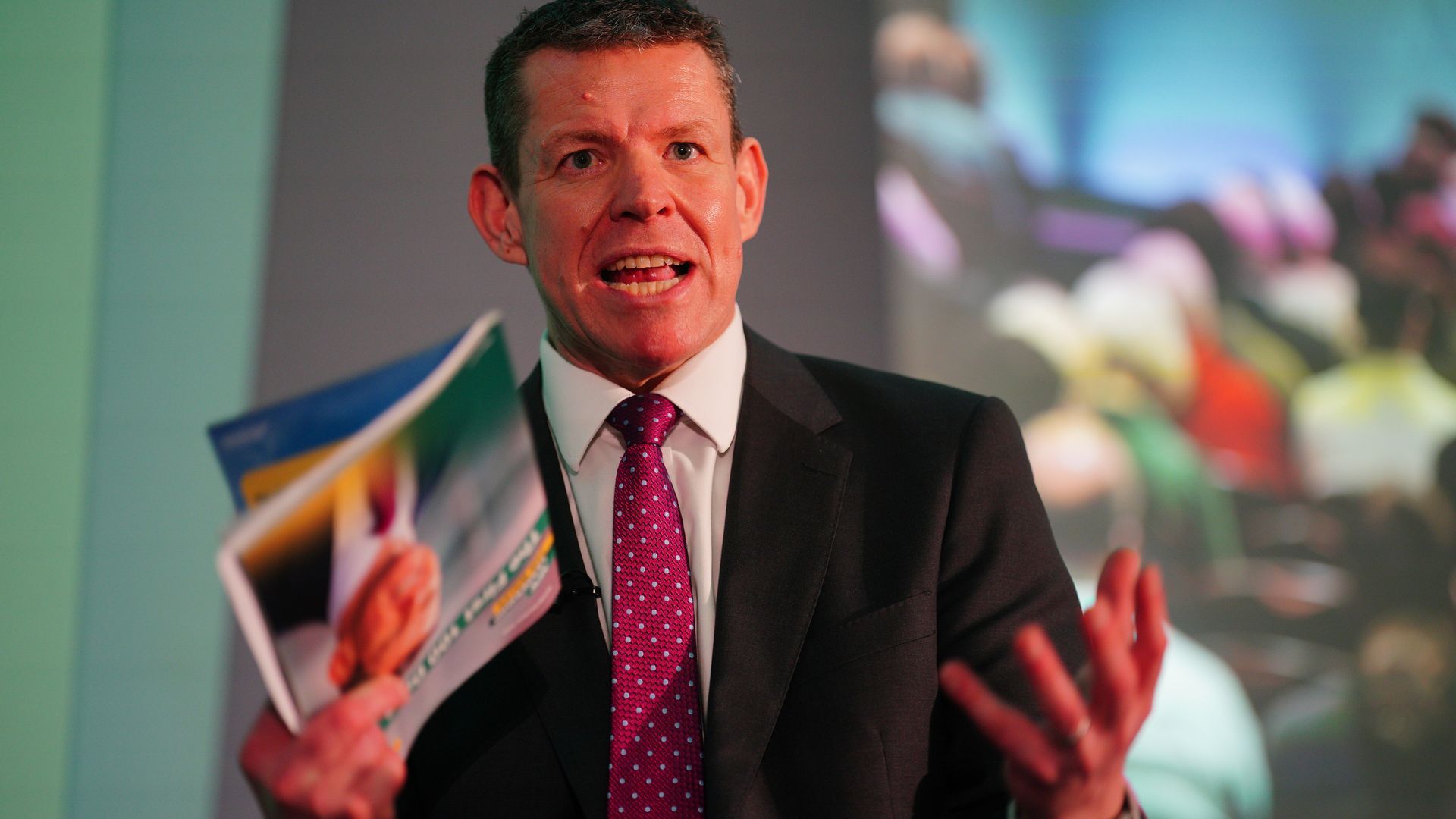
The Welsh political class is currently obsessed with a roadmap to nowhere. When Rhun ap Iorwerth stood before the Plaid Cymru conference to pledge a "clear route" to independence, he wasn’t offering a strategy. He was offering a security blanket. It’s a comfortable, nationalist myth that ignores the most basic laws of modern economic gravity.
Everyone is looking at the wrong map. The "lazy consensus" suggests that independence is a binary switch—a simple exit from a broken Union. It isn’t. In the current global climate, the traditional nation-state is becoming an obsolete vessel for power. If Wales wants to survive the next fifty years, it needs to stop asking for a seat at a table that is being chopped up for firewood.
The Fiscal Gap is a Feature Not a Bug
The standard unionist attack on Welsh independence is the "fiscal gap"—the roughly £13 billion difference between what Wales raises in taxes and what it spends. Nationalists usually counter this by claiming that "in an independent Wales, we’d control our own resources."
Both sides are wrong.
The fiscal gap isn’t a sign of Welsh incompetence; it is the natural outcome of a centralized UK economy that functions as a giant hoover for London and the South East. However, the nationalist fantasy that independence magically "unplugs" this vacuum is a dangerous delusion. Look at the data. Wales has one of the lowest GVA (Gross Value Added) rates in the UK. Breaking away doesn't fix the productivity problem; it just removes the subsidy that keeps the lights on while you try to figure it out.
If you want to talk about independence, you have to talk about a decade of brutal, eye-watering austerity that would make the 2010s look like a Caribbean holiday. You cannot build a Nordic-style welfare state on a post-industrial tax base without a transition period that no politician has the spine to describe to the voters.
The Sovereignty Trap
We are told that independence means "taking back control." This is the same lie that fueled Brexit, just translated into Welsh.
In a world dominated by massive trade blocs and digital infrastructure, "sovereignty" for a nation of three million people is a decorative ornament. Ask Ireland. They are technically independent, yet their entire corporate tax policy is dictated by Brussels and their housing market is a playground for US private equity.
True independence in 2026 isn't about having a different colored passport. It's about energy and data.
The Energy Paradox
Wales is energy-rich and cash-poor. We produce more electricity than we consume, yet our bills are set by a grid designed for a different century. Plaid Cymru argues that independence would allow Wales to "own" its water and wind.
Here is the truth: you don't need a new country to do that. You need a radical, aggressive shift in local ownership models within the current framework. Chasing a referendum that won't happen for twenty years is a distraction from the fact that we could be building municipal energy companies today. By the time Rhun ap Iorwerth gets his "route map" finalized, the private sector will have already stripped the assets.
The PAA Delusion: "Would Wales be better off?"
People always ask: "Would Wales be better off alone?"
It’s the wrong question. The real question is: "Can Wales survive the transition?"
I’ve seen organizations try to pivot their entire business model without a cash reserve. They go under within six months. A country is no different. You cannot "pivot" a nation's economy when you are tied to the pound sterling but have no control over the Bank of England.
Imagine a scenario where Wales declares independence tomorrow. Within forty-eight hours, the capital flight would be catastrophic. Without a central bank, a currency of its own, or a massive sovereign wealth fund (which doesn't exist), the new state would be forced to borrow at junk-bond rates.
The Scottish Shadow
Plaid Cymru is following the SNP playbook ten years too late. They are looking at a strategy that has currently stalled in a swamp of internal scandals and a Supreme Court wall.
The "route to independence" is a tactical error because it treats the UK government as a rational partner in a divorce. It isn't. The British state is an extractive machine that will not permit its western flank to leave without a fight that would bankrupt Cardiff.
Instead of a "route map," Wales needs a "leverage map."
The Counter-Intuitive Strategy: Radical Federalism
Stop trying to leave. Start making it impossible for them to govern you.
The most successful "small nations" in the next century won't be the ones with their own embassies. They will be the ones that have carved out "special economic zones" within larger entities.
- Total Tax Autonomy: Forget a few pence on income tax. Demand the right to set corporate tax and VAT locally.
- Infrastructure Veto: If a high-speed rail line doesn't touch Welsh soil, not a single penny of Welsh tax should pay for it.
- The Digital State: Instead of a Welsh army, build a Welsh digital infrastructure that makes the Westminster bureaucracy redundant.
This isn't "Independence Lite." This is "Independence by Stealth." It bypasses the need for a divisive referendum that half the country doesn't want and focuses on the actual mechanics of power.
The Myth of the "Celtic Tiger" 2.0
The comparison to Ireland is constant and flawed. Ireland’s "miracle" was built on being an English-speaking entry point for American capital into the EU during a period of massive globalization. That window is closed. Protectionism is back.
A "new" Wales wouldn't be entering a world of free trade; it would be entering a world of trade wars. Being a small, unaligned nation in the North Atlantic is a recipe for being bullied by both Washington and Beijing.
Stop Waiting for Permission
The most frustrating part of the Plaid Cymru strategy is the reliance on "the route." It implies that someone—London, the voters, the UN—has to give Wales permission to be successful.
It’s a loser’s mentality.
If Wales is to be a distinct entity, it has to stop acting like a victim of geography and start acting like a predator in the market. That means binning the romanticism of the 13th century and the grievances of the 1980s.
We need to stop talking about "The Route" and start talking about "The Revenue."
If you can’t show me how you’re going to pay for a national health service without a £13 billion transfer from the Treasury, you don’t have a plan. You have a poem. And you can't run a hospital on a couple of stanzas about the mountains and the sea.
Quit the roadmap. Build the bank. Collect the tax. Everything else is just noise for the party faithful.
Stop asking for a country. Start building a machine.