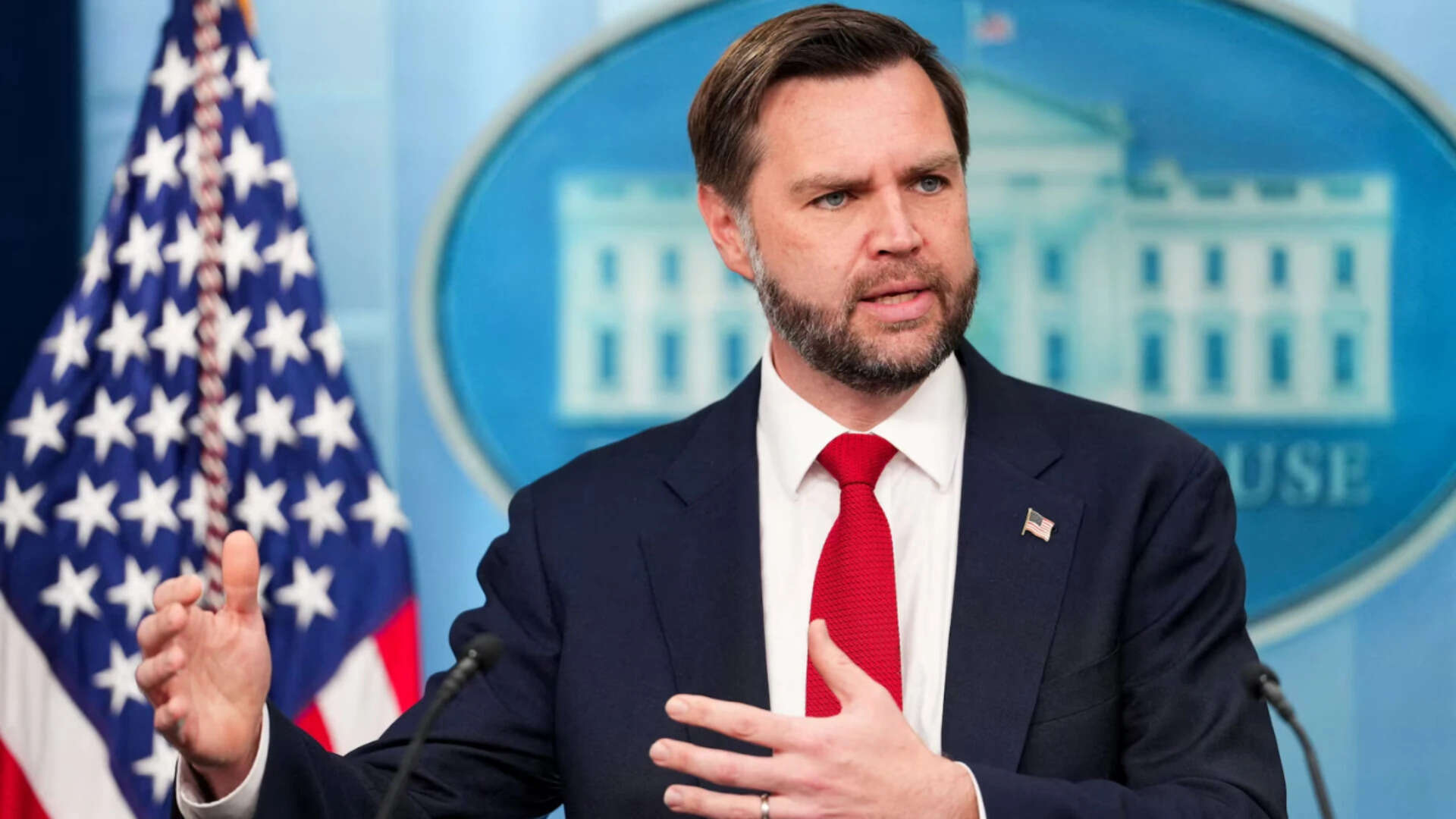
Geopolitical stabilization programs routinely fail when backchannel mechanisms cannot balance hard security constraints against domestic political risk. US Vice President JD Vance’s public remarks at the Lake Lucerne Summit in Switzerland—where he identified Second Lady Usha Vance and Pakistani Field Marshal Asim Munir as the two most important figures in his current operational landscape—represent a calculated exercise in asymmetric diplomacy rather than a casual personal reflection. By analyzing these statements through the lens of game theory and bilateral leverage structures, we can map how the United States is attempting to orchestrate an interim diplomatic architecture with Iran while managing the complex regional equilibrium between India and Pakistan.
The core problem in high-stakes multilateral negotiations is signaling. When the United States enters direct or mediated discussions with Iranian officials to establish a new bilateral framework, every public statement undergoes rigorous scrutiny by multiple foreign intelligence apparatuses. The casual narrative presented by general media outlets focuses heavily on the human interest angle of Vance’s dual personal-political reference. A structural decomposition of the briefing reveals a sophisticated three-pronged strategic framework designed to project domestic alignment, military backend guarantees, and regional neutrality.
The Tri-Border Equilibrium Framework
To understand the structural utility of Vance’s rhetoric, the communication must be broken down into three distinct functional pillars. Each pillar addresses a specific bottleneck in current US foreign policy objectives within the Middle East and South Asia.
                  [ US Diplomatic Objective ]
                               |
        +----------------------+----------------------+
        |                      |                      |
[ Domestic Alignment ]  [ Security Guarantees ]  [ Strategic Neutrality ]
  (Usha Vance Focus)       (Asim Munir Nexus)       (De-escalation Wedge)
Pillar 1: Domestic Alignment and Cultural Capital
The reference to Second Lady Usha Vance serves as an explicit assertion of cultural capital within a highly complex Indian-American electoral and economic matrix. In structural negotiations, a representative’s internal domestic stability dictates their external bargaining power.
- The Kinship Variable: Highlighting a personal, permanent bond with an individual of Indian descent signals long-term institutional alignment with New Delhi’s broader demographic and economic rise, without committing to formal treaty revisions.
- The Vulnerability Mitigation: By framing this alignment within a familial context, the administration insulates itself from domestic criticisms of selling out Western security priorities, transforming a geopolitical position into an unassailable personal reality.
Pillar 2: Military Backend Guarantees via the Rawalpindi Nexus
The inclusion of Pakistani Field Marshal Asim Munir targets an entirely different structural layer: operational execution. The statement that Vance has engaged in more direct communications with Munir over the past quarter than almost any other foreign official exposes the mechanics of the Lake Lucerne negotiations.
- The Backchannel Conduit: Pakistan’s military apparatus, headquartered in Rawalpindi, has historically served as a critical intermediary between Western powers and Iranian leadership.
- The Enforcement Mechanism: Mentioning Munir provides public validation for the Pakistani military's role as a guarantor of security commitments. If Iran or its proxy networks violate the terms of an interim agreement, the US signal indicates that the enforcement mechanism will operate through Pakistani security channels rather than direct, overt US kinetic intervention.
Pillar 3: Structural Neutrality as a De-escalation Wedge
The juxtaposition of an Indian spouse and a Pakistani military chief creates a deliberate rhetorical equilibrium. This balance is critical for managing the ongoing friction between New Delhi and Islamabad.
- The Zero-Sum Disruption: In South Asian geopolitics, any perceived tilt by Washington toward one nation triggers immediate defensive recalibration by the other.
- The Balancing Equation: Vance’s formulation explicitly cancels out potential regional anxieties. By elevating a representative from each nation to an identical tier of personal importance, the administration prevents either state from leveraging the Swiss summit to claim an exclusive strategic partnership with the United States.
The Cost Function of Asymmetric Rhetoric
While this rhetorical strategy provides immediate tactical flexibility at the negotiating table, it introduces specific structural vulnerabilities that could destabilize secondary security theatres.
+------------------------------------+------------------------------------+
| Tactical Advantage                 | Structural Risk                    |
+------------------------------------+------------------------------------+
| Establishes immediate balance      | Dilutes the formal institutional   |
| between competing regional powers. | weight of state-to-state organs.   |
+------------------------------------+------------------------------------+
| Validates backchannel mediators    | Aggravates civil-military friction |
| to accelerate immediate accords.   | within democratic partners.        |
+------------------------------------+------------------------------------+
The first limitation of this model is the institutional dilution of formal diplomatic channels. When a Vice President explicitly elevates a foreign military commander over traditional civilian heads of state—such as Pakistani Prime Minister Shehbaz Sharif, who was present during the proceedings—it alters the perceived hierarchy of international relations. This creates an operational bottleneck where civilian diplomatic corps are bypassed, increasing the probability of miscommunication during crises.
This reliance on personalized, security-centric relationships introduces a secondary vulnerability regarding long-term policy continuity. Agreements built on personal rapport with individual military commanders are highly susceptible to sudden succession shocks or internal domestic realignments within the host nation. If Field Marshal Munir’s domestic standing shifts, the entire backchannel communication architecture constructed over the past 90 days faces immediate depreciation.
Operational Execution for Multi-Theater Diplomacy
To maximize the utility of this diplomatic framework while insulating US interests from the associated volatility, strategic planners must execute a precise, three-part sequence.
- Formalize the Backchannel Architecture: Transition the informal communications established between the Office of the Vice President and Rawalpindi into structured, institutionalized intelligence-sharing protocols. This ensures that the operational insights gained over the last three months survive changes in personnel.
- Execute Parallel Bilateral Reassurances: Deploy secondary diplomatic delegations to New Delhi immediately following the Swiss summit. These teams must deliver concrete economic and technological milestones—specifically within semiconductor supply chains and defense co-production—to demonstrate that personal rhetoric does not replace structural, institutional prioritization.
- Calibrate the Iranian Enforcement Metrics: Utilize the validated Pakistani channel to establish rigid, quantifiable benchmarks for Iranian compliance regarding proxy de-escalation. The operational metrics must tie regional aid and sanctions-relief timelines directly to verifiable reductions in kinetic activity, using the Pakistani military as an independent verifier on the ground.
The final strategic move requires the administration to pivot away from high-visibility rhetorical balancing acts and toward hard economic integration. The United States must lock in the diplomatic leverage generated at Lake Lucerne by transforming vague personal acknowledgments into binding trilateral trade and security corridors that tie the financial stability of the mediating partners to the permanent enforcement of the newly negotiated Middle Eastern equilibrium.