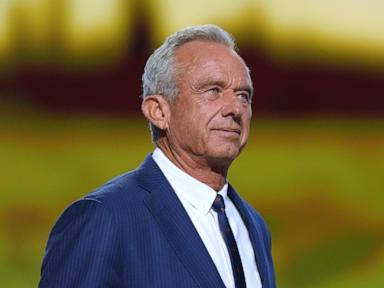
Health Secretary Robert F. Kennedy Jr. spent years building a massive political brand by warning Americans against corporate monopolies, institutional overreach, and the perils of trusting centralized authorities like big pharma and mainstream medical boards. So when he took the stage at a recent Make America Healthy Again summit and declared that artificial intelligence can provide a second opinion better informed than any human doctor in the country, the whiplash was instant.
You read that right. The leader of an anti-establishment populist health movement is now telling people to trust silicon chips built by big tech giants. It is an alliance that makes zero ideological sense on paper, leaving both his grassroots base and traditional medical experts scratching their heads.
The Ideological Short Circuit
To understand why this match-up is so jarring, look at who actually builds these large language models. They come from trillion-dollar technology conglomerates in Silicon Valley—the exact kind of corporate monoliths that the MAHA movement routinely targets.
At the summit in Washington, tech heavyweights like OpenAI and Anthropic were listed as corporate sponsors. That detail alone deeply alienated core grassroots activists who thought they were fighting to rid public health policy of corporate influence. Dr. Robert Malone, a prominent figure in the medical freedom movement, openly criticized the shift, noting that the voices of everyday grassroots mothers and independent researchers were getting drowned out by tech sponsors.
When the anti-establishment movement starts cozying up to the boardroom architects of artificial intelligence, betrayal starts to smell in the air.
Why Medical Experts Are Up in Arms
Traditional physicians took Kennedy’s comments as an outright assault on clinical practice. Kennedy suggested that patients could use chatbots to question conventional public health guidance, from masking and social distancing to standard vaccine schedules. He even claimed that tech leaders told him doctors would commit malpractice if they diagnosed patients without consulting a machine first.
Dr. Zeke Emanuel, a bioethicist at the University of Pennsylvania, didn't mince words when responding to the claims. He pointed out a fundamental contradiction in Kennedy's logic: algorithms don't think for themselves or rebel against institutional consensus. Instead, they aggregate the exact mainstream medical literature and peer-reviewed studies that anti-establishment figures love to criticize.
Put simply, you cannot claim an AI is freeing you from mainstream medical dogma when the AI was trained entirely on mainstream medical data.
Major medical bodies, including the American Medical Association and the American Academy of Pediatrics, fired back with a joint warning. They stressed that medicine is not just a search engine query or a checklist of discrete tasks. Real healthcare requires human empathy, physical examinations, and contextual judgment that a data center running math equations simply cannot replicate.
The Patient Reality Check
Despite the fierce pushback from doctors, you have to look at why Kennedy's message resonates with a frustrated public. Millions of Americans deal with months-long waiting lists just to see a primary care physician. Emergency rooms are perpetually slammed, and insurance denials make specialized care feel completely out of reach.
For a patient stuck in pain who cannot get a timely appointment, plugging symptoms into a chatbot feels like a lifeline rather than a threat. If a machine points out a rare condition that an overworked doctor missed during a rushed seven-minute consultation, patients don't care about ideological purity—they care about results.
This creates a fascinating gray area. While elite medical boards warn about chatbot hallucinations and diagnostic errors—issues that landed chatbot misuse near the top of safety hazard lists—ordinary people are using these exact tools to bridge the gaps in a broken healthcare system.
Where the Movement Goes From Here
The tension highlights a deep fracture in how populist health politics will operate moving forward. Can you tear down institutional medical authority by handing the megaphone to Silicon Valley algorithms?
If the MAHA movement leans too hard into tech solutions, it risks alienating the very traditionalists who joined out of a shared skepticism of corporate power. Yet, if it rejects technological tools entirely, it leaves supporters with zero practical alternatives to a medical establishment they no longer trust.
The reality is messy. Technology will inevitably weave its way into modern health decisions, whether traditional experts like it or not. But pretending that algorithms are neutral rebels fighting the establishment ignores the corporate code underneath the hood.
Beyond the Noise 114: RFK Jr Says Trust AI, Not Doctors, But AI Disagrees With Him
This video discusses Robert F. Kennedy Jr.'s statements regarding artificial intelligence and medical advice during a MAHA conference.