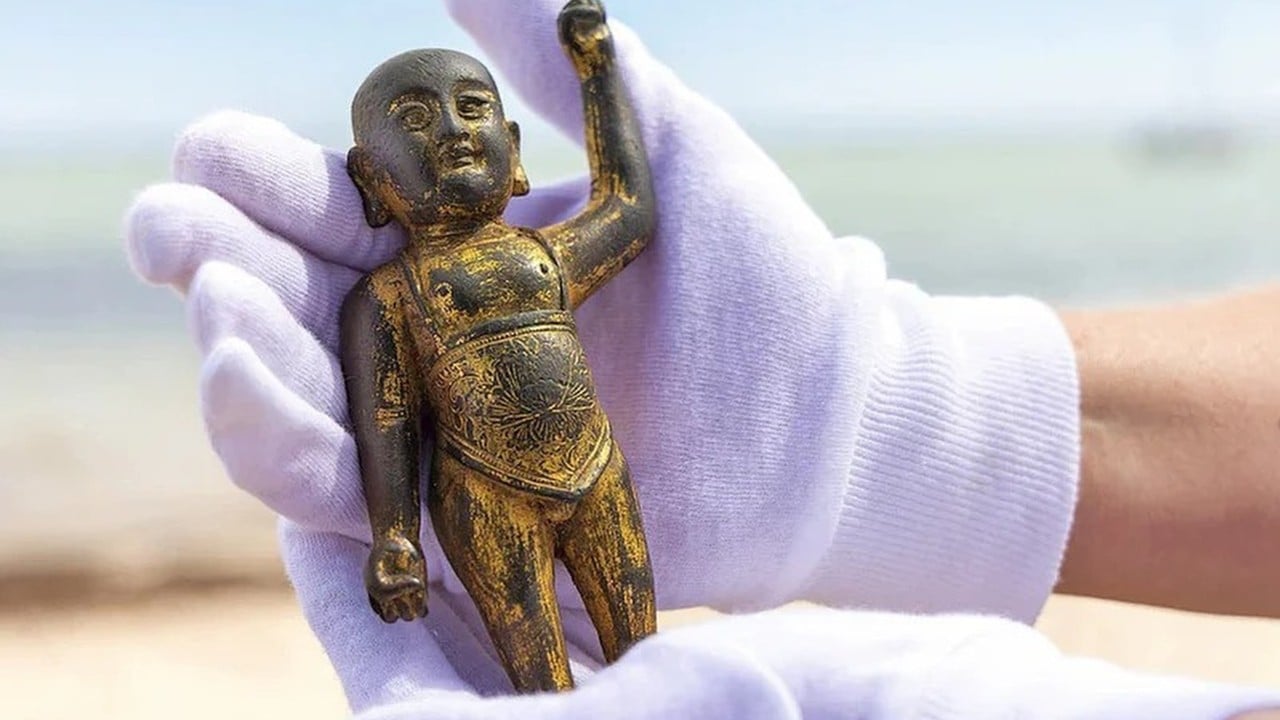
A tiny 15-centimeter bronze Infant Buddha sat under about 20 centimeters of Western Australian soil near Denham until two prospectors stumbled onto it in 2018. In October 2026, Australia officially returned that Ming dynasty Buddha to China on the Denham waterfront.
The handover felt warm, emotional, and full of goodwill. Yet the biggest question hasn't budged an inch. Nobody knows how a sculpture from China's Ming dynasty (1368–1644) ended up buried beside a remote road in Shark Bay.
Honestly, that gap between ceremony and certainty is what makes this story stick. A Ming dynasty Buddha can be handed back in a formal ritual, and diplomats can call it a bridge between nations, while historians still argue over centuries of missing context.
What Happened When Australia Returned the Ming Dynasty Buddha
Leon Deschamps and Shayne Thomson weren't digging up a lost temple when they found the figurine in 2018. They were testing metal-detecting gear near a roadside in the Shark Bay area while preparing documentary work.
Their detector signaled metal, and out came a 15-centimeter bronze statue portraying the Infant Buddha. Asian art specialist Lee Young authenticated it as genuine Ming dynasty work—the sort of figurine used in Buddha's birthday ceremonies when water is poured over the shoulder alongside mantras encouraging good deeds, speech, and thought.
Over eight years, Deschamps and Thomson spent tens of thousands of dollars chasing answers, consulting specialists, and working toward a promise made to their late friend Nick Pedrocchi, a Malgana man who felt a deep connection to the piece. At the October 2026 ceremony in Denham, Chinese consular officials received the statue, accompanied by red Shark Bay soil and a golden pearl shell, ahead of further technical examination and planned display in Beijing.
Leaders and community voices framed the return around friendship and respect. Australia had already returned another group of Chinese cultural relics in 2023—including customs seizures, a museum donation, and a private contribution—so the Denham handover fit a broader pattern of bilateral cultural cooperation.
Ming Dynasty Voyages or Nineteenth-Century Pearling Crews
People hear "500-year-old Chinese bronze found near an Australian coast" and immediately jump to grand treasure fleets. It's a fun theory. It's also shaky.
Mainstream historians largely doubt that Ming dynasty voyages reached Australia long before documented European arrivals in the seventeenth century. Finding an old object in topsoil isn't the same as excavating an undisturbed archaeological layer tied to a specific ship or settlement. Bronze figurines from the Ming era circulated across Asia and international trade networks for centuries, which means age of manufacture doesn't automatically equal date of arrival in Western Australia.
Look closer at Shark Bay itself, and a much more grounded story comes into view. Chinese workers played a major role in Western Australia's pearling industry starting in the mid-nineteenth century. An 1886 Shark Bay pearling census recorded 102 Chinese workers and seven Chinese-owned vessels—and at times in the bay's pearling history, Chinese residents outnumbered Europeans.
Think about what a small, portable religious figurine means in that setting. A sailor, trader, or pearl worker carrying a personal or ceremonial bronze keepsake from home makes complete practical sense. That doesn't prove a nineteenth-century pearler dropped it by the roadside, either, because hard proof is still missing. Still, linking the object to documented labor and maritime history in Shark Bay beats inventing fairy tales out of thin air.
Why Provenance Matters More Than Hype
When a headline shouts "mystery" or "rewrite history," readers often treat every speculation as equal. That's a mistake.
Good history separates three separate questions:
- Authenticity: Is the bronze genuinely from the Ming period, rather than a modern fake? Expert examination backed its Ming origin.
- Biographical life: Who owned or carried the figurine over the centuries? Often we simply don't know.
- Context of deposition: How and when did it enter the ground at that exact spot in Western Australia? Without strict archaeological recovery and documented records, that remains open.
Cultural restitution is real and meaningful, even when a piece lacks a neat paper trail. Returning an object to a country's museum system can support conservation, study, and public access. At the same time, celebrating goodwill shouldn't turn guesswork into settled fact.
How to Read Artifact Stories Without Getting Fooled
Next time a dramatic discovery pops up in the news, don't stop at the headline hook. Check the evidence behind the excitement.
- Separate age from arrival date: A 500-year-old object can travel or sit in a family trunk for centuries before reaching a new continent.
- Look for documented local history first: Check trade routes, migration records, and regional industries tied to the find spot before chasing fringe theories.
- Watch for archaeological context: Surface or metal-detector finds out of context tell a different story than items excavated with clear stratigraphic layers.
- Support local memory alongside global diplomacy: Repatriation can honor international ties, while local memorials and archives keep regional histories—like Shark Bay's pearling past and First Nations connections—visible at home.
The Mystery of the Ming Buddha That Finally Went Home After 500 Years
This video covers the 2018 Shark Bay discovery, the competing theories about how the statue reached Western Australia, and the October 2026 handover ceremony in Denham.