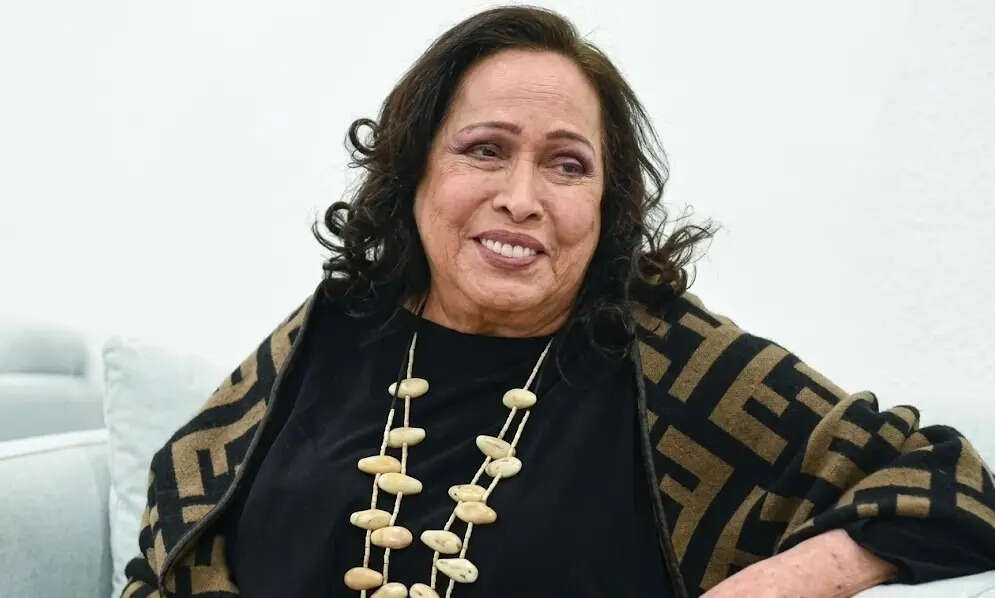
The rumors regarding the death of Hayat Al-Fahad at age 78 are categorically false. For the past several hours, social media feeds across the Gulf and the wider Middle East have been flooded with premature obituaries and mourning tributes for the "Lady of the Gulf Screen." This wave of misinformation stems from unverified digital tabloids and circular reporting that failed to check with official Kuwaiti sources or the actress’s own representatives. As of this moment, the veteran icon remains alive, though she has recently stepped back from the grueling pace of the Ramadan production cycle due to her health.
The Anatomy of a Celebrity Death Hoax
The speed at which this rumor traveled exposes a deep fracture in the modern entertainment news cycle. It usually starts with a cryptic post on a secondary social platform. A fan account or a "breaking news" bot posts a black-and-white photo of Al-Fahad with a prayer emoji. Within minutes, the lack of an immediate denial is treated as a confirmation.
Journalism in the region often struggles with this vacuum. When a figure as monumental as Hayat Al-Fahad—whose career spans over half a century—goes quiet for a few months, the industry gets nervous. At 78, she is at an age where health concerns are a reality, but the leap from a period of rest to a definitive passing is a chasm that too many outlets jumped across without looking.
The Source of the Confusion
The origin of the current buzz likely traces back to Al-Fahad’s absence from the 2024 and 2025 Ramadan drama seasons. For decades, a Ramadan without a Hayat Al-Fahad series was unthinkable. She was the anchor of the season. When she announced a hiatus to focus on her health and recover from exhaustion, the industry treated it like a final curtain call.
We see this pattern repeatedly with aging legends. The public confuses a career "sunset" with a physical one. However, sources close to the actress in Kuwait City confirm that while she is prioritizing medical care and rest, she is very much still with us.
A Legacy That Refuses to Fade
To understand why the Middle East reacted with such visceral grief to these false reports, one must understand what Al-Fahad represents. She is not just an actress; she is the social conscience of Kuwaiti and Khaleeji society.
She began her career in the early 1960s, a time when the very idea of a woman appearing on stage or screen in the Gulf was revolutionary. She didn't just participate in the industry; she built its foundations. Along with her contemporary, Suad Abdullah, Al-Fahad formed the "golden duo" that defined the region’s dramatic output for a generation.
Breaking the Mold of the Arab Mother
Before Al-Fahad, female roles in Gulf television were often flat or strictly subservient. She changed that. She played the matriarch not as a victim, but as a power player. In works like Basman Sheikha and Al-Daia'a, she portrayed the complexities of wealth, greed, and family honor with a grit that was often uncomfortable for the establishment.
She was never afraid to be unlikable. That is the hallmark of a true artist. In Um Hazem, she channeled the bitterness and desperation of a woman pushed to the edge by her circumstances. She didn't seek the audience's love; she sought their recognition of the truth.
The Weight of the Ramadan Industry
The "prolonged illness" mentioned in the fake reports isn't entirely a fabrication, but it has been wildly exaggerated. The real story is the physical toll that the Ramadan production machine takes on its stars.
The industry operates on a brutal schedule:
- 18-hour shoot days in the months leading up to the Holy Month.
- Heavy makeup, intense lighting, and the emotional exhaustion of high-drama scenes.
- The pressure of being the primary "draw" for advertisers.
For a woman in her late 70s, this environment is a meat grinder. Al-Fahad has been vocal about the declining quality of scripts and the grueling nature of the work. Her decision to step away wasn't necessarily a sign of a terminal condition, but rather a calculated move by a veteran who knows her own limits. She chose her health over the paycheck, a move that shocked an industry used to seeing its legends work until their final breath.
The Crisis of Succession
Part of the panic surrounding her rumored death is the realization that there is no one ready to take her place. The "Grandmother of the Gulf" leaves a void that the younger generation of influencers-turned-actors cannot fill.
The current talent pool is often criticized for prioritizing aesthetic over craft. Al-Fahad’s power came from her face—every wrinkle told a story of a Kuwait that no longer exists. She represented the transition from the pearl-diving era to the oil boom, and finally to the digital age. When people think they have lost her, they feel they are losing the last tangible link to that history.
Dissecting the Viral Misinformation Machine
Why did the "death" report gain so much traction this time? It comes down to the verification crisis on social media. When platforms removed the barrier for "verified" status, they effectively killed the ability of the average user to distinguish between a legacy news outlet and a rumor mill.
- The Echo Chamber: Once three or four mid-tier accounts shared the news, it hit the "trending" algorithms.
- The Emotional Trigger: Al-Fahad is a beloved figure. Users share the news not because they want it to be true, but because they want to be the first to express their grief.
- The Lack of Official Press Units: Unlike Hollywood stars, many Gulf icons do not have a 24/7 PR firm to issue immediate rebuttals. The silence is often misinterpreted as confirmation.
This isn't the first time Al-Fahad has been targeted by these "death hoaxes." In 2020 and again in 2023, similar rumors circulated. Each time, the actress had to eventually release a video or a phone recording to prove she was still breathing. It is a grim tax that legends have to pay in the age of click-based revenue.
The Harsh Reality of Aging in the Spotlight
There is a cruel irony in how the public treats Al-Fahad. When she is working, she is criticized for "taking roles from the youth" or for being too demanding on set. When she stops working, the world decides she must be dying.
The industry analyst’s perspective is clear: we are watching the slow retirement of a titan. Whether she returns for one final project or spends her remaining years in private reflection, Al-Fahad has earned the right to exit on her own terms. The rush to bury her digitally is a symptom of a culture that values the "scoop" over the person.
The "illness" she is battling isn't just physical; it is the exhaustion of being a public monument for sixty years. She has carried the weight of Gulf drama on her shoulders since the black-and-white era.
Moving Past the Rumors
Fans and industry professionals should look to official Kuwaiti state media or Al-Fahad’s verified social media channels for any actual updates. The tendency to treat every social media post as a primary source is a dangerous habit that causes unnecessary trauma to the artist's family and colleagues.
The focus should remain on her actual contributions to the arts. From her early work in Darb Al-Zalaq—widely considered the greatest Gulf comedy of all time—to her more recent, somber explorations of social change, she has provided the soundtrack and the visual history of a region in flux.
Instead of mourning a woman who is still with us, the industry should be asking how it can better protect its veterans from the predatory nature of the digital news cycle. We owe her more than a premature hashtag. We owe her the respect of waiting for the truth.
The next time a headline claims a legend has passed, ask who benefits from the click. Usually, it isn't the truth, and it certainly isn't the artist. Hayat Al-Fahad remains a living testament to the power of the Gulf’s cultural identity, and she deserves to be celebrated for her life, not exploited for a false report of her death.