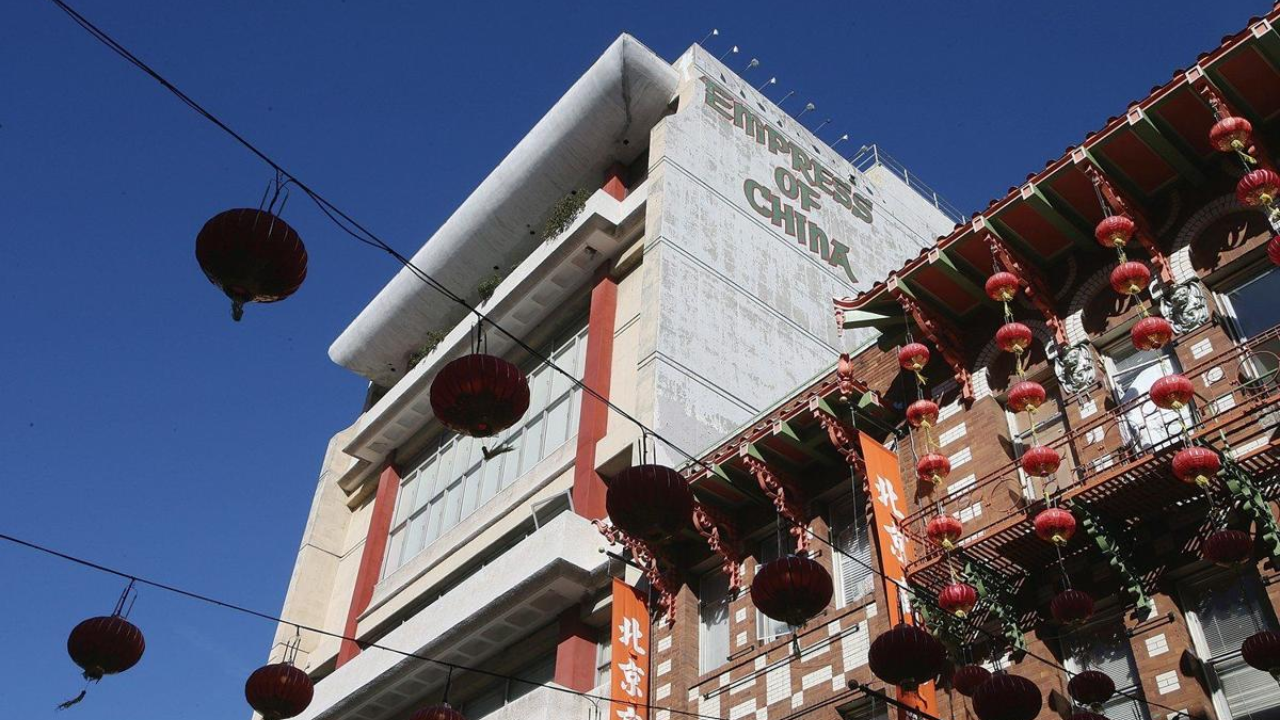
Everybody loves a triumphant community comeback story. The romantic narrative writes itself: a legendary pagoda-style architectural masterpiece opens its doors on Grant Avenue after a decade of silence, rescued from the jaws of real estate speculation by a coalition of noble nonprofits.
Except it is a financial fantasy.
Let us dispense with the feel-good sentimentalism peddled by mainstream coverage of the Empress of China building's recent resurrection in San Francisco's Chinatown. The lazy consensus views this multi-million dollar nonprofit acquisition and cultural campus conversion as a permanent victory for preservation. I have watched urban developers and civic romanticists burn tens of millions of dollars on vanity real estate projects while ignoring the crushing operational gravity that shuttered these properties in the first place.
Buying a landmark with philanthropic grants is the easy part. Paying the heating bills, structural maintenance, and code-compliance insurance on a massive vintage pagoda tower in a hyper-regulated municipal market is where reality bites back.
The Illusion of Community Ownership Without Endowment Math
The core fallacy of the nonprofit rescue model is assuming that shifting a title deed from a private investor to a collective of cultural organizations solves the underlying unit economics. It does not. It merely trades a private balance sheet with profit incentives for a collection of grant-dependent entities that must constantly chase public subsidies just to keep the lights on.
Imagine a scenario where a commercial property requires hundreds of thousands of dollars annually in baseline upkeep before a single public gallery or workshop opens its doors. When the initial wave of foundation grants from organizations like the Svane Family Foundation and local arts commissions dries up, where does the recurring revenue come from? Relying on fluctuating philanthropic goodwill to fund structural upkeep is like running an airline on donated jet fuel.
History shows us the brutal mechanics of this trap. Private owner J. Willis Yee purchased the building for $17.25 million back in 2016 precisely because the restaurant model could no longer carry the exorbitant overhead. When the Chinatown Media and Arts Collaborative stepped in to convert it into a community arts hub, they inherited a structural cost burden that defeated generations of hospitality veterans. Pretending that community aspiration substitutes for a cash-flow positive business model is how historic districts turn architectural triumphs into slow-bleed financial liabilities.
The Zoning and Red Tape Stranglehold
To understand why grand architectural revivals frequently implode, look at the regulatory penalty box surrounding urban real estate. San Francisco is a masterclass in bureaucratic friction. The city loves to celebrate cultural ribbon-cuttings while simultaneously enforcing archaic building codes and protracted entitlement processes that make commercial adaptation nearly impossible for independent operators.
When you stuff a multi-story historic pagoda with community workshops, digital media labs, and rotating art exhibits, you trigger an avalanche of compliance hurdles. ADA upgrades, seismic retrofitting mandates, and commercial kitchen code updates do not care about your mission statement. They demand hard capital.
"We all know fundraising is not easy. It is asking all our stakeholders and community to invest in their family's future."
That quote from former supervisor Rose Pak's successor figures neatly outlines the perpetual fundraising treadmill. Translation: we bought a monument we cannot afford to operate, and now we are going to pass the hat indefinitely. That is not economic sustainability. That is a permanent administrative charity case disguised as urban renewal.
Dismantling the People Also Ask Fallacy
Can historic preservation survive purely on cultural tourism and donations?
No. That is the exact delusion that keeps urban districts trapped in economic stagnation. Cultural tourism provides seasonal spikes, not predictable baseline revenue. Donations are sentiment-driven and dry up the moment macroeconomic conditions tighten or foundation priorities shift. If a historic building cannot generate enough commercial yield from its footprint to cover its own depreciation and operational friction, it is not a cultural asset; it is a financial parasite draining resources from the very community it claims to uplift.
Real revitalization requires a relentless commercial engine. Successful urban infrastructure does not rely on romantic nostalgia; it relies on high-margin anchor tenants, ruthless efficiency, and a clear-eyed understanding of what space actually costs to maintain in the twenty-first century.
Stop funding real estate wishful thinking with feel-good grants. If a landmark cannot pay its own way, let the market reprice it until someone builds a model that works without a handout.