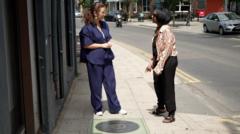
Municipal cultural initiatives routinely fail because they mistake physical markers for economic ecosystems. In March and July 2026, Brent Council unveiled the Harlesden Walk of Music, installing physical commuter plaques to commemorate 12 foundational figures of British reggae, including Dennis Brown, Janet Kay, and labels like Trojan and Jet Star Records. While mainstream reporting frames this purely as a sentimental nod to the Windrush generation, an asset-based evaluation reveals a complex intersection of post-colonial migration, hyper-local commerce, and modern municipal asset monetization.
To truly understand why Harlesden became the undisputed epicentre of British reggae requires breaking down the historical infrastructure into functional operational variables rather than vague cultural abstractions. If you liked this piece, you might want to look at: this related article.
The Tri-Partite Engine of Diaspora Cultural Densification
The emergence of Harlesden as a transatlantic music exporter was driven by three distinct structural pillars that operated in a tight economic loop.
- The Distribution Grid: The presence of physical retail and wholesale engines like Jet Star Records (once the world’s largest distributor of reggae music), Hawkeye Records, and Starlight Records provided immediate cash-flow liquidity for independent artists.
- Production Localization: Recording facilities like Sonny Roberts' Planetone—Britain's first Black-owned recording studio—and Orbitone lowered the capital barriers to entry for local musicians, creating a high-density cluster of technical expertise.
- The Consumption Network: Sound systems and local venues converted imported Jamaican acetate discs and homegrown UK dubplates into immediate public demand, bypasssing traditional white-dominated BBC radio programming.
This structural flywheel transformed migration patterns into measurable economic output. The physical proximity of these entities reduced transaction costs to near zero. A musician could rehearse at a local studio, cut a master tape, walk it down Harlesden High Street to Jet Star for manufacturing, and have it playing on a local sound system within a 48-hour cycle. For another look on this development, see the latest coverage from Reuters Business.
Quantifying the Placemaking Shift from Production to Commemoration
The transition of Harlesden from an active production hub into a curated historical zone represents a classic shift in municipal asset classification. By embedding commemorative stones into pedestrian pathways, the local council attempts to capture residual cultural capital to stimulate foot traffic and counter retail contraction.
[Historical Production Cluster] ➔ [Deindustrialization / Digital Shift] ➔ [Municipal Spatial Asset Monetization]
This strategic pivot relies on a calculated mechanism: transforming decentralized historical prestige into a concentrated cultural trail. The long-term plan explicitly ties these pavement markers to the proposed Reggae Museum at the former Picture Palace (CAVA Centre of Excellence). The strategy aims to alter the local economic mix by replacing traditional retail vacancies with experiential cultural tourism.
However, this model faces strict structural limitations. A street marker does not alter the baseline rent pressures facing modern independent record stores, nor does it subsidize contemporary recording studios. The framework acts exclusively as a lagging indicator of historical success rather than a leading driver of new domestic cultural production.
The Structural Limits of Commemorative Regeneration
Evaluating the long-term economic viability of the initiative requires acknowledging the friction between historical conservation and commercial gentrification. The public survey conducted by Brent Council between July and September 2025 indicated high community alignment, yet the operational sustainability of the resulting asset depends on ongoing structural support.
First, the capital injection sourced via the UK Government’s Shared Prosperity Fund operates on a fixed-term deployment schedule. Once initial installation costs are cleared, asset maintenance and security fall upon local municipal budgets already under fiscal constraint.
Second, the project assumes a linear conversion rate between foot traffic and local business revenue. For a historical trail to yield quantifiable economic returns, the surrounding retail landscape must possess complementary offerings—such as hospitality and specialized retail—capable of capturing visitor spend. Without these secondary monetization channels, the physical infrastructure risks becoming an insular monument rather than an economic catalyst.
The definitive play for Brent Council requires moving beyond static pavement markers. The survival of Harlesden's cultural status relies entirely on converting the historical prestige of Trojan, Aswad, and The Cimarons into active capital grants and subsidized creative spaces for contemporary practitioners. If the municipal strategy concludes with the installation of stone plaques, the project will achieve nothing more than the aesthetic curation of a vanished industry.