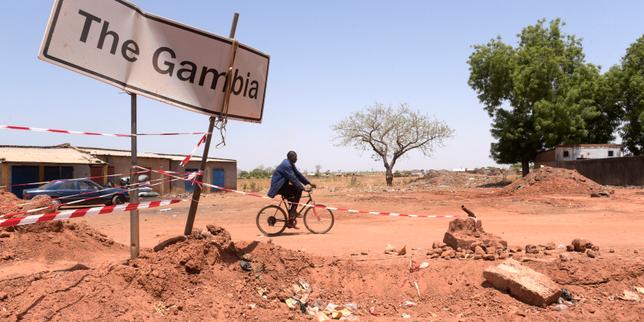
Everyone loves a neat map. Give analysts a pencil and a colonial border dispute, and they immediately default to the lazy consensus: redraw the lines, fix the map, heal the nations. Articles surface daily lamenting how the Senegalese-Gambian border, a jagged British knife carved into French territory, creates administrative nightmares, smuggles contraband, and divides identical ethnic groups. The standard narrative preaches that cartographic correction is the cure for economic stagnation.
It is a comforting lie.
I have spent years watching regional officials chase ghosts across this frontier, blowing millions on bilateral commissions, border posts, and technical committees while ignoring the actual mechanics of how people survive. Redrawing the boundary between Senegal and the Gambia will not solve a single structural problem in West Africa. In fact, it will accelerate the exact inefficiencies everyone claims to hate.
The obsession with colonial cartography misses the point entirely. The map is not the disease; it is the symptom.
The Myth of the Natural Border
Let us dismantle the foundational fiction of modern African geopolitics: the belief that borders derived from the Berlin Conference are inherently illegitimate simply because Europeans drew them with rulers and ink.
Critics love to point out that the Gambia is an anthropological anomaly—a narrow sliver of land carved along the Gambia River, effectively bisecting Senegal. They argue that this geographic absurdity creates an administrative bottleneck. But look at the data on cross-border trade volume. The informal economy thriving along this corridor does not exist despite the border; it exists because of it.
Arbitrage requires friction. When tariffs, fuel prices, and tax structures differ between Dakar and Banjul, the border becomes an economic engine. Traders do not want a seamless, harmonized administrative zone. A seamless zone kills the margin.
Imagine a scenario where diplomats succeed in straightening the frontier, absorbing the Gambia entirely into Senegal or rationalizing customs regimes to European standards. Overnight, tens of thousands of youth engaged in re-export trade lose their primary livelihood. The state calls it regularization. The street calls it economic suicide.
When you eliminate administrative friction in a region lacking industrial manufacturing, you do not create a European-style single market. You create mass unemployment.
Sovereignty as a Luxury Good
The lazy consensus treats sovereignty as a fixed moral asset. If a country has a flag and a seat at the United Nations, it possesses the institutional machinery to manage its territory.
That is not how reality works.
The Gambian state operates under severe capacity constraints. Its borders are porous not because the British drew them poorly in 1889, but because institutional capacity does not extend to every mangrove swamp and dirt track. Moving the line five kilometers north or south does not inject bureaucratic competence into local administration.
Talk to customs officers on both sides of the Senegambian frontier. They will tell you off the record that the inefficiency is a feature, not a bug. Informal taxation—call it what it is, institutionalized rent-seeking—sustains local bureaucracies that central governments cannot adequately pay.
When international think tanks demand comprehensive border modernization, they ignore the political economy of corruption. Fix the border, and you choke off the informal patronage networks that keep fragile political coalitions from collapsing.
The Dangerous Seduction of Regional Integration
Politicians love signing treaties. The Economic Community of West African States (ECOWAS) framework champions free movement of goods and persons. On paper, it sounds revolutionary. In practice, implementation is a battlefield of bureaucratic protectionism.
Senegal and the Gambia have signed numerous protocols on joint border management, transit corridors, and security cooperation. Yet, every time a truckload of rice or timber crosses the ferry at Banjul or the border post at Karang, it faces an obstacle course of unofficial fees, sudden regulatory shifts, and bureaucratic obstruction.
Why? Because Dakar views the Gambia as an economic leakage point, a porous sponge soaking up duties that should belong to the port of Dakar. Conversely, Banjul views its sovereignty as an existential shield against complete economic annexation by its much larger neighbor.
This dynamic is not going away because an academic writes a paper on post-colonial reconciliation.
If you want to understand why Senegambian relations remain tense beneath the diplomatic handshakes, look at the incentive structures. As long as Dakar's industrial policy relies on protectionism and Banjul's economy relies on low-tariff re-exports, their interests are fundamentally adversarial. A new map will not change a zero-sum economic reality.
The Real Agenda
Stop asking how to fix the border. The question itself is a trap designed to keep you looking at the map while the real wealth extraction happens elsewhere.
The structural problems plaguing both nations—youth disenfranchisement, fragile currency regimes, over-reliance on imported foodstuffs, and weak domestic tax collection—have nothing to do with where the British put their pens in the nineteenth century.
Real reform requires abandoning the comfort of blaming dead European mapmakers. It requires building actual productive capacity, shifting from rent-seeking trade economies to value-added manufacturing, and accepting that porous borders are a rational adaptation to weak states.
Until policymakers stop treating cartography as a magic wand, the Senegambian frontier will remain what it has always been: a masterclass in political distraction.
Burn the blueprints. Fix the economy.