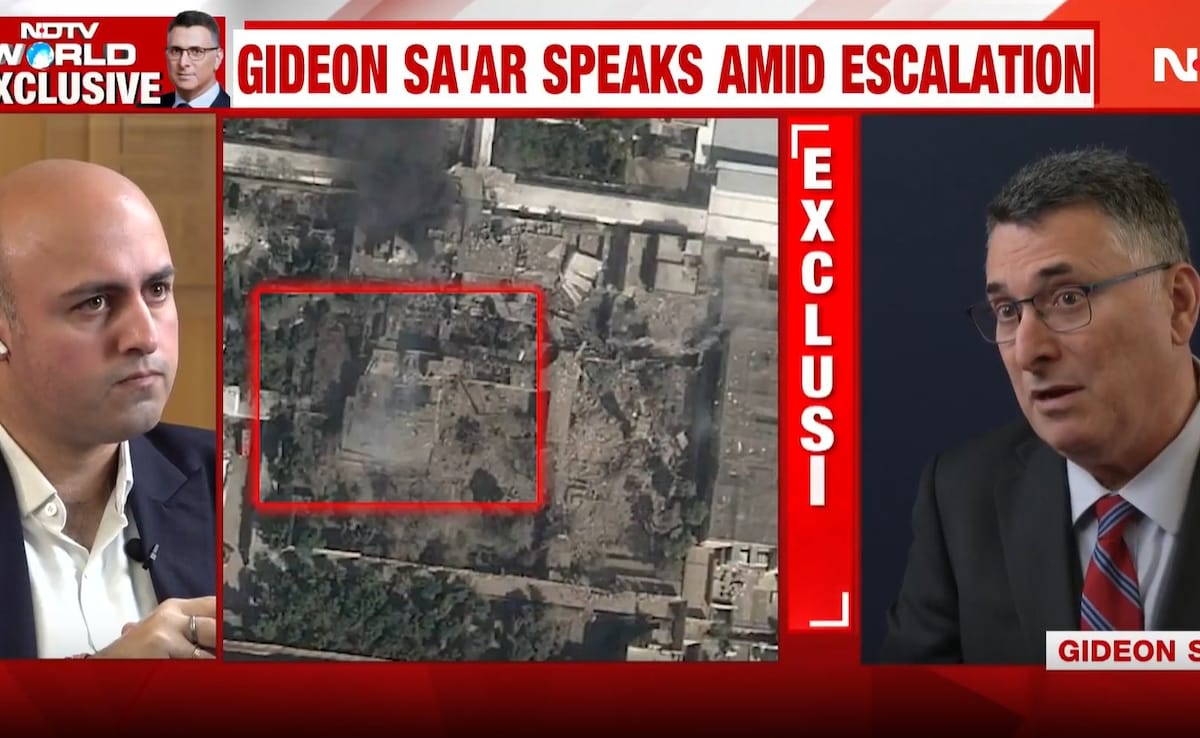
The recent escalation of kinetic operations across the Iranian plateau marks a terminal departure from the "shadow war" era. For decades, the friction between the United States, Israel, and Iran existed in a state of controlled volatility—a mix of cyber-sabotage, maritime harassment, and targeted assassinations. That period is over. The transition to high-intensity aerial bombardment targeting dual-use infrastructure and command centers signals a new doctrine where the distinction between military and civilian logistics has effectively vanished.
The human cost is staggering. When precision munitions strike urban or peri-urban centers, the concept of a "surgical strike" becomes a mathematical impossibility. Dense population centers in Iran are not just incidental to military targets; they are often the host. By embedding primary air defense hubs, drone manufacturing facilities, and ballistic missile storage within or beneath residential and commercial zones, the Iranian security apparatus has created a scenario where any effective strike by the U.S. or Israel carries an inherent, high-fatality risk for non-combatants.
This isn't just about collateral damage. It is about the complete erosion of the traditional battlefield.
The Shift from Sabotage to Direct Kinetic Engagement
The intelligence community has long tracked the buildup of IRGC (Islamic Revolutionary Guard Corps) assets. However, the decision to pivot from Stuxnet-style digital paralysis to 2,000-pound bunker busters represents a strategic admission. It is an admission that containment has failed. The U.S. and Israel are now operating under the assumption that only the physical destruction of launch capabilities can prevent a regional conflagration.
This shift is driven by the rapid advancement of Iranian missile technology. When a nation can mass-produce precision-guided munitions and export them to proxies across the Levant and the Arabian Peninsula, "containment" becomes a hollow word. The strikes we are seeing today are an attempt to reset the clock on Iran’s regional reach. But the clock is built into the bedrock of cities like Isfahan, Karaj, and Tehran.
The Myth of the Surgical Strike in Urban Warfare
We are told that modern warfare is a matter of sensors and logic. The reality is far messier. A "target" is rarely a single building in a vacuum. It is a node in a massive, sprawling network of electricity, water, and transport.
When an Israeli or American strike package targets a suspected "command and control" center located in a high-rise district, the kinetic energy alone ensures that neighboring structures are compromised. The thermal pulse and overpressure from modern warheads don't respect property lines. Furthermore, the reliance on "dual-use" infrastructure—civilian airports used for military transport, or telecommunications hubs used for drone piloting—means that even a perfectly aimed missile can paralyze an entire city's emergency response capability.
The Problem of Intelligence Latency
No matter how advanced the satellite imagery or the signals intelligence, there is always a gap between a target being identified and the ordnance hitting the ground. In that window, civilian presence can fluctuate. History shows us that intelligence is often "stale" by the time the pilot pulls the trigger. In the Iranian context, where the IRGC frequently utilizes "human shields" by placing assets in residential basements, the margin for error is non-existent.
The Economic Architecture of Conflict
To understand why these strikes are happening now, one must look at the Iranian economy. Decades of sanctions have forced the Iranian military to become its own industrial base. This has led to a unique fusion of the private and military sectors.
Many of the factories being targeted are officially listed as commercial enterprises. They produce automotive parts by day and missile components by night. To the U.S. and Israel, these are legitimate military targets. To the families working there and living nearby, they are simply places of work. This ambiguity is a feature of the Iranian defensive strategy, not a bug. It forces the attacker to choose between letting a threat grow or incurring the international wrath that follows high civilian casualty counts.
The Failure of Regional Deterrence
Deterrence is a psychological game. It only works if your opponent believes you are too afraid of the consequences to act. For years, Tehran operated on the belief that the West’s aversion to a "Third Gulf War" would provide a permanent shield for their nuclear and missile programs. That shield has shattered.
The current strikes demonstrate that the risk of a nuclear-armed Iran is now perceived as greater than the risk of a messy, high-casualty conventional war. This is a cold, hard calculation made in war rooms in Tel Aviv and Washington. It ignores the protests, the diplomatic outcry, and the humanitarian reports in favor of a singular objective: the degradation of the IRGC’s "First Strike" capability.
The Role of Proxy Networks
One cannot discuss the strikes within Iran without looking at the periphery. The "Ring of Fire" strategy—Iran’s use of Hezbollah, the Houthis, and various militias in Iraq and Syria—was designed to keep the war away from Iranian soil. By striking targets deep within Iran, the U.S. and Israel are signaling that the proxy buffer is no longer effective. If the hand moves, the head will be struck.
The Humanitarian Vacuum
When the dust settles after a massive aerial campaign, the immediate focus is on the body count. But the long-term devastation lies in the "unseen" casualties.
- Medical Infrastructure: Hospitals in Iran are already struggling under the weight of sanctions. A sudden influx of thousands of trauma patients from an air raid breaks the system entirely.
- Displacement: Urban strikes lead to massive internal migration. Refugees from the cities flee to the countryside, straining food and water supplies in regions already suffering from drought.
- Psychological Warfare: The constant hum of drones and the sudden, thunderous arrival of missiles creates a generational trauma that fuels future radicalization.
The irony of these strikes is that they often strengthen the very regime they are meant to weaken. In the face of a foreign "invader" striking civilian areas, the population—even those who despise the IRGC—often rallies around the flag. Nationalism is a powerful anesthetic for the pain of authoritarianism.
The Technical Execution of the Campaign
The hardware used in these strikes is the most advanced in human history. We are seeing the deployment of F-35 stealth fighters, electronic warfare suites that can blind entire radar networks, and autonomous loitering munitions.
- Electronic Suppression: Before the first bomb drops, the "invisible" war is won. Jamming signals and spoofed radar signatures make the Iranian air defense systems see ghosts or nothing at all.
- Kinetic Impact: Once the path is clear, heavy bombers and precision fighters move in. They use GPS and laser guidance to hit specific coordinates with terrifying accuracy.
- Post-Strike Assessment: Drones hover over the wreckage to determine if the target was destroyed. If not, a second wave is called in.
Yet, for all this technology, the results are often primitive: fire, blood, and rubble. The "smart" bomb is only as smart as the policy behind it. If the policy accepts "hundreds killed" as a necessary price for a destroyed centrifuge or a collapsed tunnel, then the technology has simply become a more efficient way to commit a tragedy.
The Geopolitical Fallout
Russia and China are watching these developments with intense interest. For Moscow, any distraction for the U.S. is a win. For Beijing, the stability of the energy markets is the primary concern. The strikes in Iran threaten to close the Strait of Hormuz, an act that would send global oil prices into a vertical climb and potentially trigger a worldwide recession.
The U.S. is betting that Iran will not take that final step. They are betting that the regime cares more about its own survival than it does about global economic revenge. It is a high-stakes poker game where the chips are human lives.
The Unseen Casualties of Information Warfare
In the aftermath of these strikes, the war moves to the airwaves. The Iranian state media will maximize the images of dead children to stir international condemnation. The Western and Israeli press will focus on the "neutralized threats" and the "surgical precision" of the operation.
The truth lies somewhere in the wreckage of a leveled apartment complex in suburban Tehran. It is found in the silence of a family that was simply in the wrong place at the wrong time. As an analyst, one must look past the propaganda of both sides to see the reality: we are witnessing the birth of a new kind of perpetual conflict.
This is a war without a front line, without a clear end date, and without any true concern for the "civilian" designation. In the modern Middle East, the target is whatever the missile hits, and the justification is written in the blood of those who happen to live near the gears of war.
The only remaining question is how many more "redlines" will be crossed before the regional map is permanently altered. The precedent has been set. The taboo of striking the Iranian heartland is gone. We are now in a world where the cost of doing business is measured in the lives of those who never asked to be part of the transaction.
Look at the patterns of the last forty-eight hours. The frequency of the sorties is increasing, not decreasing. This suggests that the initial wave of strikes did not achieve the desired "decapitation" of the missile program. It suggests that the campaign is moving into a secondary phase—one that will likely involve even more targets in even more populated areas.
Wait for the next satellite pass. It will show the scars of a conflict that is only beginning to reveal its true scale.