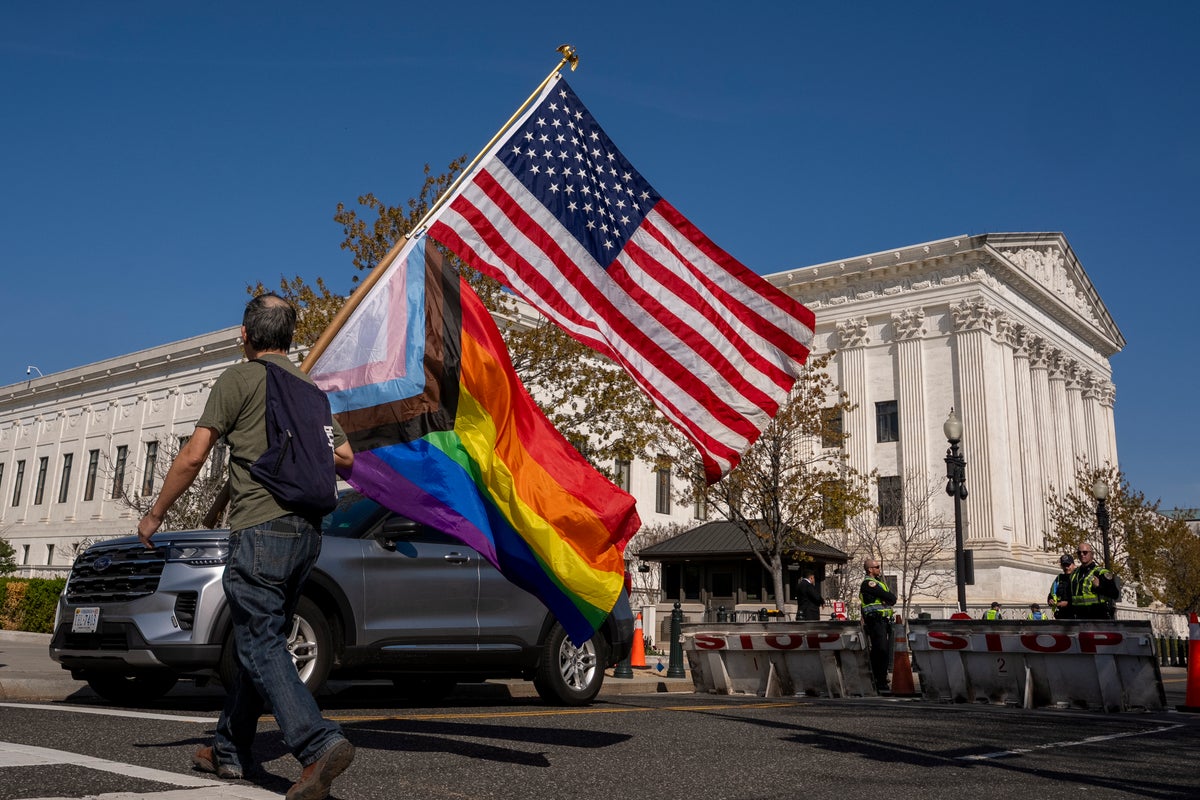
A quiet but highly coordinated legislative push is underway across conservative America to displace June’s traditional status as Pride Month, replacing it with an alternative designation known as Fidelity Month. Spearheaded by prominent conservative legal scholar Robert P. George of Princeton University, the movement calls on citizens and lawmakers to spend the month of June rededicating themselves to God, family, community, and country. What began in 2023 as an individual declaration on social media has rapidly transformed into state-level policy, with Arkansas and Utah officially recognizing the designation and a growing list of federal and local politicians endorsing the alternative framework.
The strategy avoids direct confrontation with the LGBTQ+ community, operating instead under the banner of civic and spiritual renewal. Yet the timing and institutional backing reveal a sophisticated long-term effort to reclaim corporate and cultural real estate during one of the most visible marketing months of the year.
The Origin of the Myrtle Wreath
The movement did not emerge from a typical political action committee. It began with data. In early 2023, a Wall Street Journal/NORC poll revealed a sharp, historic decline in the percentage of Americans who viewed patriotism, religion, community involvement, and having children as very important values.
Alarmed by the rapid erosion of what he termed foundational American ideals, Robert P. George issued a public proclamation on social media. He declared June as Fidelity Month under "the authority vested in me by absolutely no one," adopting the myrtle wreath—a classical antiquity symbol of faithfulness—as the movement's official logo.
The initiative quickly gathered momentum through the Witherspoon Institute, a conservative think tank in Princeton, New Jersey, and captured the attention of major religious and legal institutions. Leaders from the Southern Baptist Theological Seminary and the Alliance Defending Freedom immediately lent their public support, viewing the initiative as a constructive vehicle for traditionalist counter-programming.
From Internet Hashtag to Executive Proclamation
By 2025, the symbolic social media campaign reached the halls of Congress when U.S. Senator Mike Lee introduced a federal resolution to recognize the designation. The real legislative breakthrough occurred in May 2026, when Arkansas Governor Sarah Huckabee Sanders issued an official executive proclamation designating June as Fidelity Month in her state.
FIDELITY MONTH LEGISLATIVE MOMENTUM (2023-2026)
│
├── 2023: Grassroots launch by Prof. Robert P. George
├── 2025: First major federal resolution introduced by Sen. Mike Lee
└── 2026: Official state proclamations signed in Arkansas and Utah
The Arkansas declaration asserts that the state's collective identity relies on spiritual and civic institutions, arguing that cultivating fidelity contributes to a stable, well-ordered society. Utah Governor Spencer Cox followed with his own state recognition, while the Kentucky Senate and local municipalities like Glendale, Arizona, passed similar measures.
Concurrently, Tennessee Governor Bill Lee executed a parallel strategy, signing a proclamation to designate June as Nuclear Family Month. This rapid legislative adoption indicates a highly organized, multi-state effort to establish a permanent policy precedent.
Reclaiming the Civic Square
Organizers publicly insist that Fidelity Month is not intended as a direct attack on LGBTQ+ celebrations. George has noted that in a free country, no individual or group holds a monopoly on any specific month of the calendar year.
The institutional strategy focuses on providing an alternative destination for cultural and economic investment. For over a decade, major American corporations have faced intense pressure to align their brands with Pride Month marketing campaigns. By establishing a legally recognized alternative centered on patriotism and traditional family structures, conservative lawmakers are providing corporations and local governments with a politically safe exit ramp from polarized cultural debates.
The true impact of this shift is visible at the municipal level, where local school boards, library trustees, and city councils face annual battles over pride flag displays and public funding for seasonal events. Local officials can now point to official state proclamations to justify redirecting public resources toward broader civic themes like Flag Day and Father's Day, effectively diluting the singular cultural focus on June.
A Testing Ground for the American Semiquincentennial
The acceleration of the movement aligns precisely with national preparations for the 250th anniversary of the United States. High-profile supporters, including Speaker of the House Mike Johnson, have explicitly linked the initiative to the upcoming American Semiquincentennial, framing the preservation of traditional values as an essential requirement for maintaining a functioning constitutional republic.
This long-term framing appeals directly to working-class demographics and traditional faith communities, including Roman Catholics, Southern Baptists, Orthodox Jews, and Muslims. Organizers are successfully bypassing legacy media channels by distributing toolkits directly to local parishes, synagogues, and mosques. These packages contain pre-written bulletin announcements, high school essay contests, and community event guides designed to build a durable, self-sustaining civic infrastructure.
Whether this alternative framework will achieve mainstream cultural dominance remains an open question. The institutional backing, the rapid rate of legislative adoption in red states, and the calculated appeal to historic patriotism indicate that the battle over the cultural meaning of June is no longer confined to online commentary. It is now a permanent fixture of state policy.