The air inside a military reception barracks at 0300 smells of floor wax, damp canvas, and a specific brand of low-grade anxiety. For decades, the first few days of basic training have followed an unyielding choreography. You run. You sweat. You get your head shaved. And, with absolute certainty, you line up in a fluorescent-lit hallway to receive what recruits affectionately call the "peanut butter shot" alongside a battery of other vaccinations.
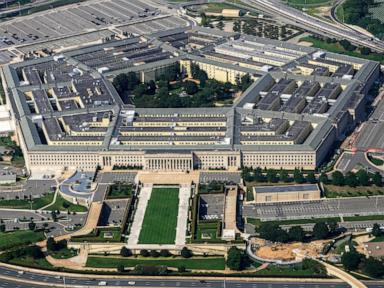
But a few months ago, the Pentagon decided to test a variable. They paused the mandatory influenza vaccine for incoming recruits, shifting the policy to a voluntary model.
The rationale seemed straightforward on paper. By allowing young, exceptionally fit individuals to choose or skip the annual flu shot, the military could streamline the chaotic onboarding process and gauge modern compliance rates in a generation heavily shaped by recent public health debates. It was a calculated risk built on an assumption that a 19-year-old capable of running five miles in combat boots could easily shake off a seasonal respiratory bug.
The virus disagreed.
Within weeks, the barracks at a major training depot became a closed-loop ecosystem of transmission. One cough during a midnight fire watch turned into ten by morning chow. By the end of the month, nearly 300 recruits were confined to medical bays, burning with fever and struggling to breathe. The training pipeline, a precision machine designed to turn civilians into soldiers on a strict eight-week timeline, ground to a sudden halt.
To understand why a simple flu outbreak matters so much to national security, you have to look past the spreadsheets of infection rates and stand in the boots of a platoon leader.
Consider a hypothetical recruit named Jackson. He arrives at basic training at the peak of physical conditioning. He can do eighty push-ups without stopping. His lungs are clear. But Jackson has never been exposed to the specific strain of influenza swirling through his crowded bay. Because the vaccine was optional, and because teenagers rarely choose a needle unless forced, his immune system is entirely unprotected.
When the virus hits Jackson’s barracks, it doesn't just make him sick. It creates a domino effect.
In a standard corporate office, a sick employee stays home, opens a laptop, and logs in remotely. In basic training, isolation means operational failure. When Jackson falls ill, he is pulled from his unit. He misses the rifle qualification. He misses the land navigation course. He misses the vital team-building exercises that transform a group of strangers into a cohesive unit.
Because the military operates on a rigid cohort system, missing three days of training means Jackson cannot graduate with his platoon. He is "recycled"—dropped back to a new company to start the cycle over again. The financial cost to the taxpayer to feed, house, and re-train a recycled recruit runs into thousands of dollars per individual. The psychological cost to the recruit, who watches his peers march to graduation while he stays behind, is immeasurable.
Multiply Jackson by nearly 300, and the scale of the crisis becomes clear. Entire companies were decimated. Drill sergeants, who live in closer proximity to these recruits than anyone else, began falling ill. The virus was no longer a minor medical nuisance; it was an adversary that successfully compromised a domestic military installation without firing a single shot.
Faced with a rapidly emptying training grid, the Pentagon acted with the kind of swift, unsentimental correction that defines military bureaucracy. The voluntary experiment was terminated. The mandate was restored. Moving forward, every single individual stepping off the bus into basic training will receive the flu shot. No exceptions. No debate.
This sudden reversal cuts to the heart of a fundamental tension in modern society: the line where individual autonomy ends and collective readiness begins.
Outside the military gates, public health has increasingly become a matter of personal philosophy and individual risk assessment. If a civilian decides to skip their annual flu shot, they are making a personal wager based on their own health history and comfort level. If they get sick, the consequences are largely contained to their own household and immediate workplace.
Inside the perimeter fence, that philosophy collapses under the weight of mission capability.
The military is not a collection of individuals; it is a single organism. A basic training platoon lives in a state of hyper-proximity. Recruits sleep in bunks spaced less than three feet apart. They eat from the same mess trays, breathe the same stagnant air during classroom lectures, and push their bodies to the brink of exhaustion, which naturally suppresses the immune response. In this environment, an unvaccinated individual is not exercising personal freedom; they are maintaining a vulnerability that threatens the entire collective.
Historically, the military has always understood this. During the Revolutionary War, George Washington realized that smallpox was a greater threat to his army than the British redcoats. In an era before modern immunology, he ordered the mandatory inoculation of the Continental Army using a primitive and dangerous method called variolation. It was a highly controversial move at the time, but it kept his army intact long enough to win a war.
The recent experiment with voluntary flu shots was an attempt to see if modern hygiene, better ventilation, and peak physical fitness could bypass the need for such rigid historical mandates. The data returned a definitive answer: biology does not care about modern sensibilities.
When nearly 300 young men and women are sidelined simultaneously, the readiness of the entire force takes a hit. The pipeline that supplies infantrymen, mechanics, medics, and technicians to active-duty units worldwide suddenly develops a bottleneck. The ripple effect stretches far beyond the walls of the clinic.
The Pentagon's swift return to the mandate isn't a political statement; it is a logistical necessity. It is an acknowledgment that some environments are too fragile, and some stakes are too high, to leave public health to chance.
The training bays are quiet again now, save for the rhythmic sound of boots hitting the pavement and the sharp commands of drill instructors echo across the parade deck. The long lines outside the medical clinics have formed once more. Recruits roll up their sleeves, take the sting of the needle, and move on to the next task. They are learning, perhaps earlier than most, that entering this world means surrendering a piece of yourself to protect the person standing next to you.